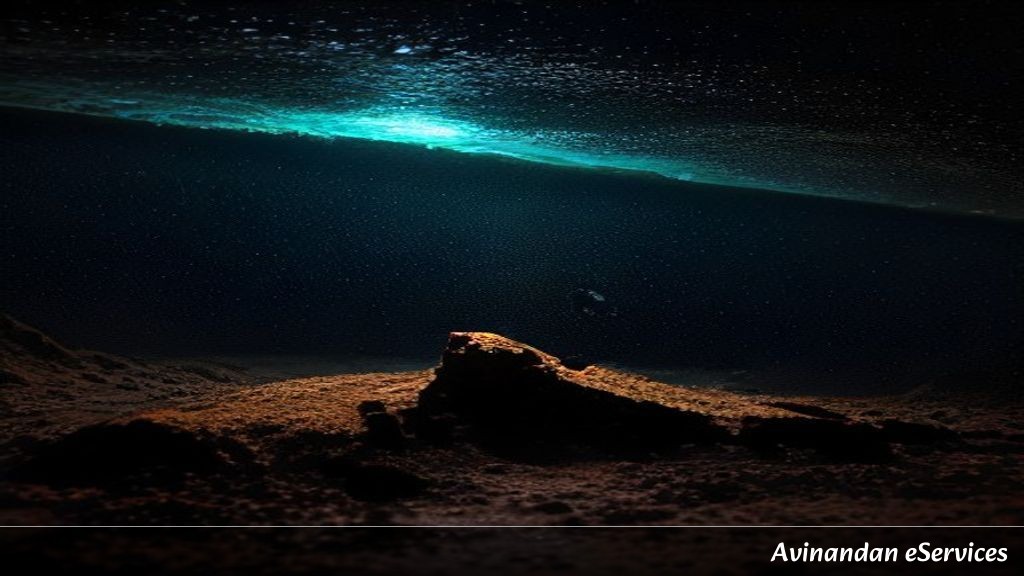
Rohan: Priya, I was watching a documentary about the ocean, and I saw something super weird! It looked like a river, but it was flowing *under* the sea! How is that even possible? Rivers are on land, right?
Priya: That's a fantastic question, Rohan! You're right, rivers are usually on land, but what you saw was probably a real thing called a 'submarine river' or 'underwater river'. It's one of those amazing science facts that sounds impossible but is totally true!
Rohan: Underwater river? Does that mean there’s fresh water flowing into the salty ocean? That sounds like it would mix up everything!
Priya: Exactly! It sounds like it should, but these underwater rivers are formed by something really clever: density. You know how oil and water don't mix because oil is less dense? Well, these underwater rivers are made of water that is denser than the surrounding seawater.
Rohan: Denser? So, it's heavier? But how does water become heavier than other water?
Priya: Great follow-up! There are a few ways. Sometimes, it's because the water is much colder. Cold water is denser than warm water. Other times, it's because the water has a lot more salt in it – it's saltier. This saltier, colder water flows from areas where there's a lot of salt being deposited on the seafloor, or from rivers that carry a lot of sediment and minerals. Because this water is heavier, it sinks and flows along the bottom of the ocean, just like a river flows along the land.
Rohan: Wow! So, it's like a hidden river flowing on the ocean floor. Are they as big as regular rivers?
Priya: Some of them are absolutely massive, Rohan! The largest one discovered is in the Mediterranean Sea, and it's called the 'underwater river of the Hellespont'. It's actually four times larger than the River Thames in London! Imagine a river flowing at the bottom of the sea, carrying so much water that it’s much bigger than some of the most famous rivers on land.
Rohan: Four times bigger? That's incredible! How did scientists even find these things? You can't exactly see them from a boat, can you?
Priya: You're right, you can't see them from the surface. Scientists found them using special underwater robots called ROVs (Remotely Operated Vehicles) and by looking at changes in the ocean floor. They noticed strange currents and differences in the water's salinity and temperature. It took a lot of careful observation and technology to map them out. They even look a bit like muddy rivers from the ROV cameras because they carry sediment and create their own channel on the seabed!
Rohan: So they carve out their own path on the ocean floor? That's amazing! What happens to all that water that's flowing?
Priya: It eventually mixes with the surrounding seawater. Think of it like a very slow, controlled leak. The denser water flows along the bottom, and as it moves, it gradually mixes with the lighter seawater above and around it. It's a natural process that helps distribute water with different properties throughout the ocean. Some of these underwater rivers can carry enormous amounts of water, around 7,000 cubic meters per second in the case of the Hellespont river!
Rohan: 7,000 cubic meters a second? That's like filling up a whole swimming pool in just a blink! So, these underwater rivers are important for the ocean?
Priya: Yes, they are! They play a big role in how water moves around the ocean, which is called ocean circulation. This circulation helps to move heat and nutrients around the globe, affecting weather patterns and supporting marine life. By understanding these hidden rivers, scientists can better understand how the whole ocean system works, from the deepest trenches to the surface. It's a reminder that the ocean is full of surprises and complex systems we are still discovering!
So, What Did We Learn Today?
- Priya: We learned that there are actual rivers flowing *under* the sea! They're called submarine rivers.
- Priya: They are formed because the water in these 'rivers' is denser than the surrounding seawater, usually due to being colder or saltier.
- Priya: This denser water sinks and flows along the ocean floor, creating its own channel.
- Priya: Some of these underwater rivers are incredibly large, even bigger than famous rivers on land!
- Priya: They are important for ocean circulation, helping to move heat and nutrients, and scientists discover them using underwater robots and by studying water properties.
- Rohan: So the ocean isn't just one big, still body of water. It has its own hidden rivers flowing around! That's so cool!