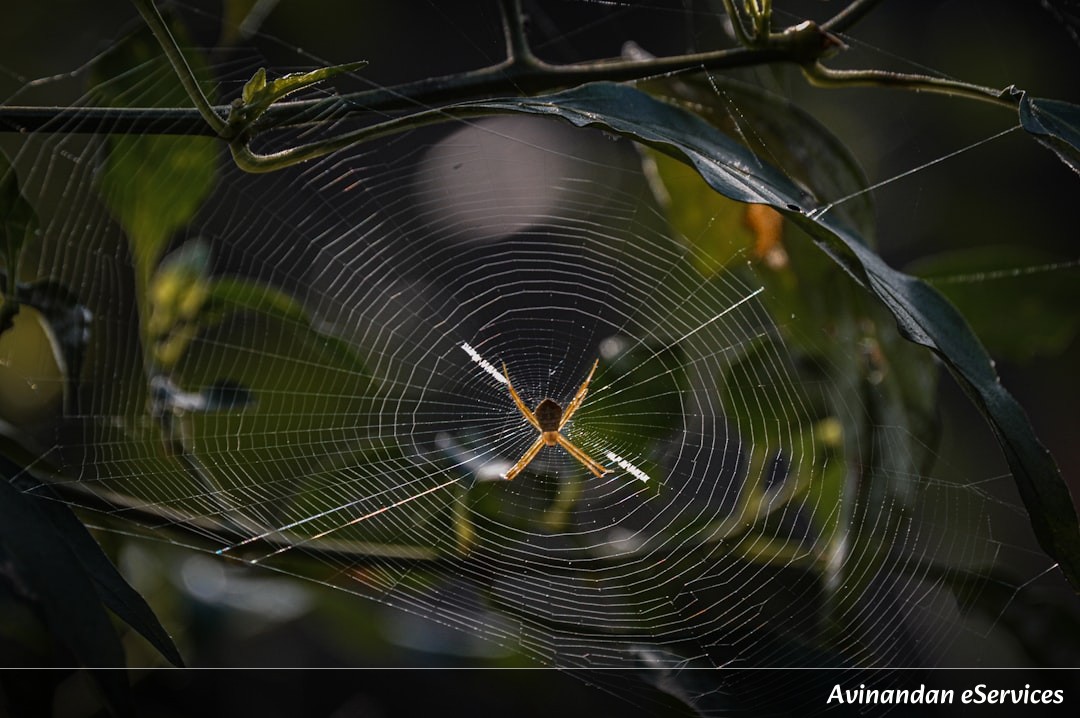
Samir: Saanvi, guess what I was thinking about today? I was watching a spider spin its web, and it looked so intricate, like a tiny silver net. And then I wondered, could it actually carry electricity? Like, is it like a wire?
Saanvi: That's a super interesting question, Samir! You're right, spiderwebs do look a bit like tiny, delicate wires. And believe it or not, the answer is yes, in a way! Spider silk can conduct electricity, but not in the same way a metal wire does.
Samir: Whoa, really? How? I thought only metal could do that. My dad’s charger wire is made of copper, and that’s metal.
Saanvi: That's a great point. Metal wires are excellent conductors because they have free-moving electrons that can easily carry an electric charge. Spider silk, on the other hand, is made of proteins. But scientists have found that when spider silk is treated in a special way, it can become a pretty good conductor!
Samir: Treated? What do you mean, treated? Did they dip it in something?
Saanvi: Yes, exactly! Researchers in China did some cool experiments. They took ordinary spider silk and soaked it in a solution of a chemical called isopropyl alcohol. Then, they baked it at a high temperature. This process makes the protein molecules in the silk rearrange themselves and allows them to conduct an electric charge.
Samir: That's so cool! So, a spider could technically spin an electric wire? Imagine that! What did they do with the electrified silk?
Saanvi: Well, they haven't quite made an electric fence out of spiderwebs yet! But they've used this conductive silk to create some neat things. For example, they made a flexible electronic display, kind of like a tiny screen you could bend and fold. They also made a super-sensitive touch sensor, like the ones on our phones, but made from natural spider silk!
Samir: Wow! So, it's not just about carrying electricity, but also about making our gadgets better? That's amazing! Why is spider silk so special?
Saanvi: Spider silk is naturally very strong, flexible, and lightweight. These properties make it a fantastic material for many things, even for us to use. The protein structure is key. The special treatment helps to make it more conductive by allowing electrical charges to flow through it.
Samir: So, if a spider spun a web across a puddle, and it got rained on, would the whole web light up with static?
Saanvi: That's a fun thought! While the treated silk can conduct electricity, it's not going to generate its own electricity or light up like a Christmas tree on its own from static. It needs an electrical source to conduct. But, the potential is there for scientists to use this property to create all sorts of new, eco-friendly electronic materials.
Samir: That makes sense. So, even though spiders don't know about electricity, their webs have this hidden superpower!
Saanvi: Precisely! It's a great example of how nature has incredible materials and properties that we are only just beginning to understand and use. Think about it – a material that's strong, flexible, can be made to conduct electricity, and is produced naturally by a tiny spider!
Samir: It's like science is all around us, even in a spider's web. What else could we do with it?
Saanvi: Scientists are exploring lots of possibilities! They think conductive spider silk could be used in wearable electronics, like smart clothing that can monitor your health. It could also be used in biomedical devices because it's a natural material, which might be safer for our bodies than some artificial materials.
So, What Did We Learn Today?
Saanvi: Well, Samir, we learned that spider silk, which looks so delicate, can actually be made into an electrical conductor! It happens when scientists treat the silk with special chemicals and heat, which changes how the protein molecules are arranged, allowing electricity to flow through.
- Spider silk is a natural material made of proteins.
- Scientists can treat spider silk (using chemicals and heat) to make it conductive.
- This conductive silk can be used to create new technologies like flexible electronic displays and touch sensors.
- Spider silk's natural strength and flexibility make it a promising material for future electronics and biomedical devices.
Samir: And it's all thanks to a tiny spider spinning its amazing web! Who knew something I'll definitely be looking at differently now!