Aarav: Saanvi, I was playing with my new laser pointer the other day, and I noticed something really weird. When I shone it on a wall, and my dad was playing music really loud, it looked like the light beam was… wiggling a little!
Saanvi: Ooh, Aarav, that's a fantastic observation! It sounds like you might have stumbled upon something called acousto-optics. It's a super cool science phenomenon where sound can actually affect light!
Aarav: Sound affecting light? That sounds like magic! How can that happen? I thought sound was just waves in the air and light was something completely different.
Saanvi: It does sound magical, but it's pure science! You're right, sound is a wave that travels through a medium, like air, by making it vibrate. Light is also a wave, but it's an electromagnetic wave and doesn't need a medium to travel.
Aarav: So, if they're so different, how can one mess with the other?
Saanvi: Well, imagine that laser beam of light traveling through something, like a special type of glass or even water, which has tiny vibrations in it. When sound waves pass through that same material, they can create tiny, temporary changes in its density. Think of it like ripples on a pond, but happening inside the material!
Aarav: Ripples inside glass?
Saanvi: Exactly! And because light waves can be bent, or 'refracted,' by changes in a material's density, those tiny sound-induced ripples can actually bend the light beam just a little bit. When the sound is loud, the vibrations are bigger, and the bending is more noticeable. That's probably what you saw – the light beam wiggling because of the music!
Aarav: Wow! So the music was making the glass vibrate, and the glass made the light wiggle. That's amazing! Was this discovered a long time ago?
Saanvi: Yes, the principles behind it were being explored quite a while back. But the real understanding and application of acousto-optics, especially using devices called acousto-optic modulators, became more prominent in the mid-20th century. Scientists realized they could use this interaction to control and manipulate light in very precise ways.
Aarav: Control light? What do people use that for?
Saanvi: All sorts of things! These acousto-optic modulators are like little light gatekeepers. They can be used to:
- Control the brightness of a light beam: They can quickly turn the light on and off, or make it dimmer and brighter.
- Change the direction of a light beam: They can steer the light without physically moving anything.
- Separate different colors of light: Like a fancy prism!
Aarav: That sounds super useful for science experiments!
Saanvi: It is! They are used in many high-tech fields. For example, in laser printing, they help control where the light beam goes to create the images. In some scientific instruments, they help analyze materials by precisely controlling light. They're also used in some advanced telecommunications systems.
Aarav: So, that wiggling light I saw is actually a really important scientific idea?
Saanvi: Absolutely! It shows how seemingly different things in nature, like sound and light, are actually connected. And it led to inventions that help us do amazing things, from printing documents to exploring the universe. It's a great example of how curiosity, like yours, noticing something unusual, can lead to big discoveries!
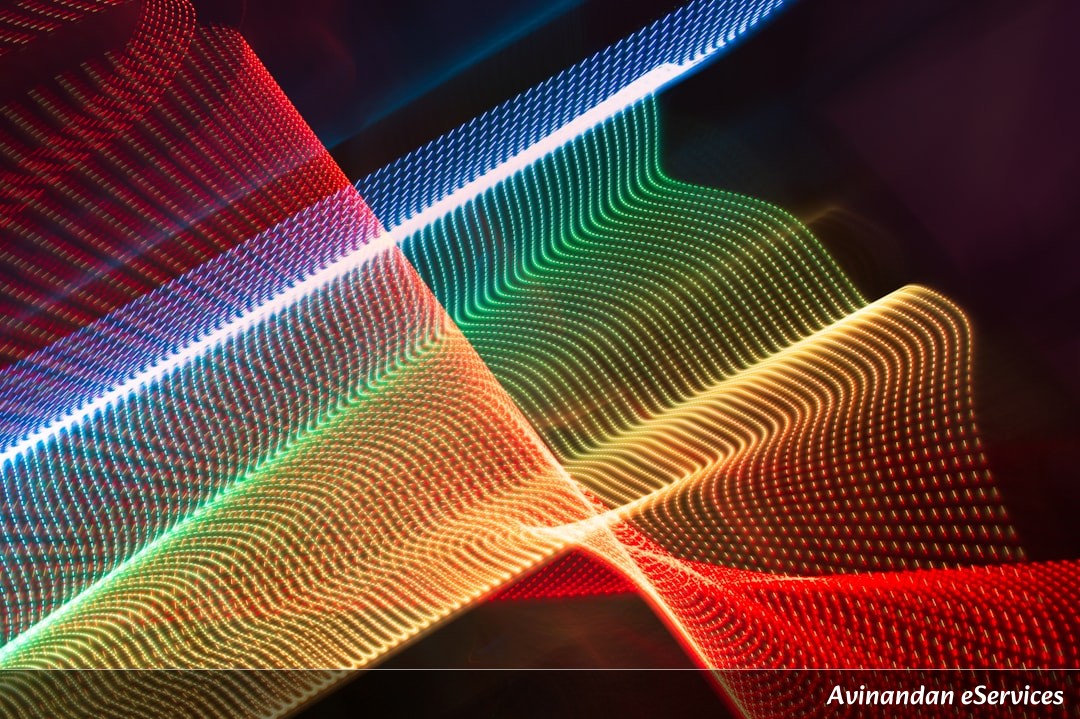
Aarav: So, if I play a really loud song next to that special glass, I can make a light show?
Saanvi: You certainly can! You're creating a small, real-world demonstration of acousto-optics. It's a reminder that science isn't just in textbooks; it's happening all around us, often in the most unexpected ways.
So, What Did We Learn Today?
Saanvi: We learned that sound waves can actually influence light waves through a phenomenon called acousto-optics. Here’s the quick rundown:
- Sound waves, when passing through certain materials, create tiny vibrations or changes in density.
- Light waves, when passing through these same materials, can be bent or refracted by these vibrations.
- This interaction allows us to control light in various ways, like changing its brightness or direction.
- Acousto-optic devices have important applications in technologies like laser printing and scientific instruments.
Aarav: And the most important thing is that even when things seem different, they might be connected in super cool ways! I'm going to experiment more with my laser pointer!