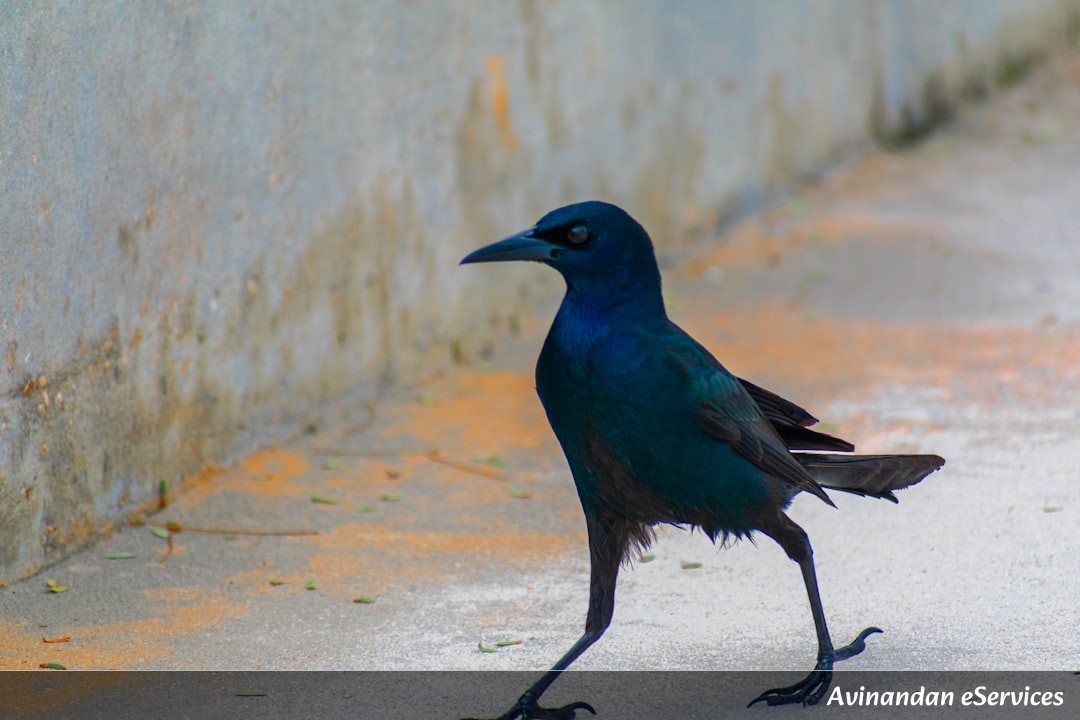
Arjun: Mira Didi, I think I just saw a crime happen in the backyard! Well, not a human crime, but a bird crime. A crow just made a sound like a hawk, scared away a smaller bird, and then swooped down to steal the piece of bread that bird was eating!
Mira: Haha! Arjun, you’ve just witnessed a bit of 'tactical deception.' It’s actually a very advanced scientific concept. But if you think that crow was sneaky, you should hear about the ultimate con artist of the bird world: the Fork-tailed Drongo.
Arjun: A Drongo? That sounds like a funny name for a thief. Is it a real bird?
Mira: It is very real! The Fork-tailed Drongo lives in the Kalahari Desert in Africa. It’s a beautiful, glossy black bird with a very distinct forked tail. But don’t let its looks fool you. It is a professional liar.
Arjun: Wait, a bird can actually lie? I thought only humans knew how to do that. How does a bird tell a lie without speaking?
Mira: That’s the fascinating part! In the wild, many animals use 'alarm calls' to warn others when a predator, like a leopard or a hawk, is nearby. When a meerkat hears a 'hawk' alarm, it drops everything and bolts for its burrow. The Drongo has figured out how to perfectly mimic the alarm calls of over 50 different species, including meerkats and other birds.
Arjun: So, it waits for a meerkat to find a juicy scorpion, and then it screams 'HAWK!' even if the sky is empty?
Mira: Exactly! The meerkat thinks it's about to be eaten, drops its delicious scorpion, and runs for cover. Then, the Drongo just flies down, picks up the scorpion, and enjoys a free lunch without doing any of the hard work of digging.
Arjun: That is so mean! But wait, if the Drongo keeps lying, wouldn't the meerkats eventually stop believing it? It’s like the story of the 'Boy Who Cried Wolf,' right?
Mira: Spot on, Arjun! That is a very smart observation. Scientists, specifically a researcher named Dr. Tom Flower, spent thousands of hours watching these birds to answer that exact question. He found that if a Drongo uses its own Drongo alarm call to lie too many times, the meerkats do start to ignore it.
Arjun: Aha! So the meerkats are smart too!
Mira: They are, but the Drongo is one step ahead. When the meerkats stop responding to the first lie, the Drongo switches its strategy. It stops using its own voice and starts mimicking the *meerkats' own* alarm call! It’s like a person lying to you in your own voice. The meerkats hear what sounds like one of their own brothers or sisters shouting 'Run!' and they can’t help but believe it.
Arjun: Wow, that’s almost like the bird is a spy or an actor. How can their tiny brains remember so many different sounds?
Mira: It’s a huge puzzle for biologists! This ability suggests that the Drongo might have something called 'Theory of Mind.' That’s a fancy way of saying the bird might actually understand what is going on inside the meerkat's head. It knows what the meerkat is afraid of and uses that knowledge to manipulate them.
Arjun: Does it only steal from meerkats?
Mira: No, it targets all sorts of neighbors, like a bird called the Pied Babbler. Scientists found that Drongos get about 23% of their daily food just by stealing! They are like the pirates of the Kalahari. But interestingly, they aren't *always* bad neighbors. Sometimes they give 'true' alarm calls when a real predator is there. This keeps the other animals trusting them just enough for the lies to work later.
Arjun: So it’s a protector and a thief at the same time? That’s some high-level strategy for a bird.
Mira: It really is. It shows that intelligence in nature isn't just about building things or using tools; it's also about social complexity and figuring out how to survive in harsh environments like the desert where food is hard to find.
So, What Did We Learn Today?
- Tactical Deception: This is when an animal uses a signal to trick another animal for its own benefit, like the Drongo using fake alarms.
- Master Mimicry: The Fork-tailed Drongo can mimic the sounds of over 50 different species, including alarms that meerkats use for themselves.
- The Boy Who Cried Wolf: To prevent other animals from getting used to their lies, Drongos constantly change the type of alarm call they use to keep the trick fresh.
- The Kalahari Con: Drongos get nearly a quarter of their food by stealing it from other animals like meerkats and babblers.
- Smart Survival: This behavior shows a level of intelligence that scientists are still studying to see if birds can understand the thoughts of others.
Arjun: I guess I’ll have to keep a closer eye on that crow in the backyard. Who knows what kind of secret plans he’s making for my sandwich!
Mira: Just remember, Arjun—in nature, sometimes being the smartest isn't about being the strongest, it's about being the best storyteller!