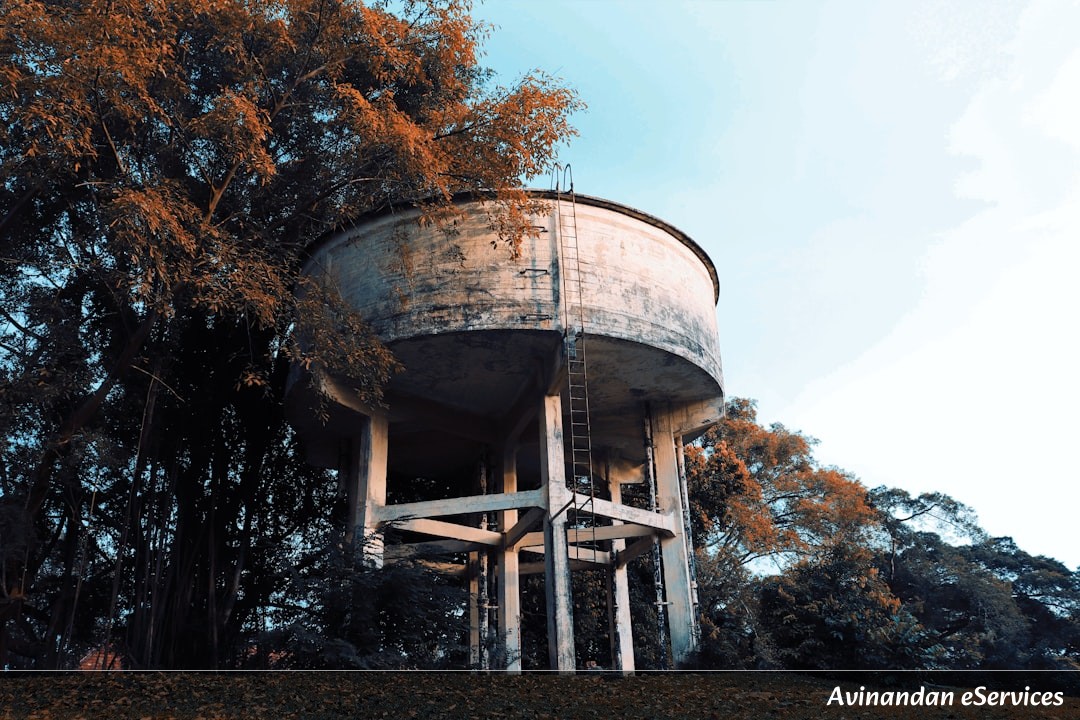
Introduction to Pipes and Cisterns for RRB Exams
Mathematics is a cornerstone of the Indian Railway Recruitment Board (RRB) examinations, including RRB NTPC, Group D, and Technician categories. Among the various arithmetic topics, Pipes and Cisterns is one of the most scoring and logically structured sections. If you have already mastered 'Time and Work,' you will find this topic remarkably similar, as it follows the same fundamental principles of efficiency and rate of work.
In the context of RRB exams, Pipes and Cisterns problems involve calculating the time taken by multiple pipes (inlets and outlets) to fill or empty a tank. Understanding the nuances of positive and negative work is the key to cracking these questions quickly. This guide is designed to take you from the basics to advanced shortcuts, ensuring you can solve any problem within seconds during the actual exam.
Topic Weightage and Importance
In RRB exams, the Mathematics section usually consists of 25 to 35 questions depending on the specific post (NTPC Tier 1, Tier 2, or Group D). Based on previous year analysis:
- RRB NTPC (CBT 1 & 2): You can expect 1–2 questions directly from Pipes and Cisterns.
- RRB Group D: 1 question is almost guaranteed in every shift.
- RRB Technician (Grade I & III): 1–2 questions focusing on logical application.
While the weightage might seem low numerically, these are "sure-shot" marks. Unlike complex Geometry or Algebra, Pipes and Cisterns follows a fixed pattern. Mastering this topic ensures you don't lose precious marks in the arithmetic segment.
Key Concepts and Formulas
To solve these problems, we treat the tank as the "Total Work" and the pipes as "Workers." The main difference is that some workers (inlet pipes) do positive work, while others (outlet pipes/leaks) do negative work.
1. Basic Terminology
- Inlet Pipe: A pipe that fills the tank (Positive Work).
- Outlet Pipe (Waste Pipe): A pipe that empties the tank (Negative Work).
- Cistern: The container or tank being filled or emptied.
2. Fundamental Formulas
If a pipe can fill a tank in 'x' hours, then the part filled in 1 hour = 1/x.
If a pipe can empty a full tank in 'y' hours, then the part emptied in 1 hour = 1/y.
| Scenario | Formula / Net Work in 1 Hour |
|---|---|
| Two Inlet Pipes (A fills in x, B in y) | (1/x) + (1/y) |
| One Inlet (x) and One Outlet (y) | (1/x) - (1/y) [If x < y, tank fills; if x > y, tank empties] |
| Time taken to fill tank together | (xy) / (x + y) |
3. The LCM Method (The Ultimate Shortcut)
Instead of working with fractions, we use the LCM (Least Common Multiple) method:
- Find the LCM of the times given for all pipes. This LCM is the Total Capacity of the tank (in units).
- Divide the Total Capacity by the individual time of each pipe to find their Efficiency (units per hour/minute).
- Add efficiencies for inlets and subtract for outlets to find the Net Efficiency.
- Time Taken = Total Capacity / Net Efficiency.
Solved Examples (Step-by-Step)
Example 1: Basic Two-Pipe System
Question: Pipe A can fill a tank in 20 minutes and Pipe B can fill the same tank in 30 minutes. If both pipes are opened together, how long will it take to fill the tank?
Solution:
- Step 1: LCM of 20 and 30 is 60. Let Total Capacity = 60 units.
- Step 2: Efficiency of A = 60/20 = 3 units/min.
- Step 3: Efficiency of B = 60/30 = 2 units/min.
- Step 4: Combined Efficiency = 3 + 2 = 5 units/min.
- Step 5: Time Taken = 60 / 5 = 12 minutes.
Example 2: Inlet and Outlet (Negative Work)
Question: Pipe P can fill a tank in 10 hours, while Pipe Q can empty the full tank in 15 hours. If both are opened simultaneously, in how much time will the empty tank be filled?
Solution:
- Step 1: LCM of 10 and 15 is 30. Total Capacity = 30 units.
- Step 2: Efficiency of P (Inlet) = +30/10 = +3 units/hour.
- Step 3: Efficiency of Q (Outlet) = -30/15 = -2 units/hour.
- Step 4: Net Efficiency = 3 - 2 = 1 unit/hour.
- Step 5: Time Taken = 30 / 1 = 30 hours.
Example 3: Leakage at the Bottom
Question: A pipe can fill a tank in 8 hours. Due to a leak in the bottom, it takes 10 hours to fill the tank. If the tank is full, how much time will the leak take to empty it?
Solution:
- Step 1: LCM of 8 and 10 is 40. Total Capacity = 40 units.
- Step 2: Efficiency of Pipe = 40/8 = 5 units/hr.
- Step 3: Efficiency of (Pipe + Leak) = 40/10 = 4 units/hr.
- Step 4: Efficiency of Leak = (Pipe + Leak) - Pipe = 4 - 5 = -1 unit/hr.
- Step 5: Time for Leak to empty tank = 40 / 1 = 40 hours.
Common Mistakes to Avoid
- Ignoring the Negative Sign: Always treat outlet pipes or leaks as having negative efficiency. Forgetting this leads to adding their work instead of subtracting it.
- Confusing Rate and Time: Remember that Time and Efficiency are inversely proportional. A faster pipe has a higher efficiency but takes less time.
- Units Inconsistency: Ensure all times are in the same units (either all minutes or all hours) before calculating the LCM.
- Final Answer Check: If the net efficiency is negative, it means the tank is being emptied. Read the question carefully to see if it asks for the time to fill or the time to empty.
Practice Questions with Solutions
Q1. Three pipes A, B, and C can fill a tank in 12, 15, and 20 hours respectively. If all are opened together, how long will it take to fill the tank?
Q2. Two pipes can fill a cistern in 14 hours and 16 hours respectively. Both pipes are opened, but due to a leak, it takes 32 minutes \textra to fill the cistern. Find the time the leak alone takes to empty the full cistern.
Q3. Pipe A is four times as fast as Pipe B and takes 45 minutes less than Pipe B to fill a tank. When will the tank be full if both are opened together?
Q4. A tank has two inlets that can fill it in 4 hours and 6 hours. An outlet can empty it in 3 hours. If all three are opened at the same time, in how much time will the tank be 50% full?
Q5. Pipe A can fill a tank in 20 hours. Pipe B can fill it in 30 hours. Both are opened, but when the tank is 1/3 full, a leak develops which removes 1/3 of the water supplied by both pipes. What is the total time to fill the tank?
Solutions:
S1. LCM(12, 15, 20) = 60. Efficiencies: A=5, B=4, C=3. Total = 12. Time = 60/12 = 5 hours.
S2. LCM(14, 16) = 112. Efficiencies: A=8, B=7. Normal Time = 112/15 hrs = 7 hrs 28 min. With leak = 7 hr 28 min + 32 min = 8 hrs. Net Eff = 112/8 = 14. Leak Eff = 14 - (8+7) = -1. Time = 112/1 = 112 hours.
S3. Ratio of Efficiency A:B = 4:1. Ratio of Time A:B = 1:4. Difference (4-1=3 units) = 45 min. So, 1 unit = 15 min. A takes 15 min, B takes 60 min. Together = (15*60)/(15+60) = 900/75 = 12 minutes.
S4. LCM(4, 6, 3) = 12. Eff: A=+3, B=+2, C=-4. Net Eff = 3+2-4 = 1. Time for full tank = 12/1 = 12 hours. For 50% tank = 12 * 0.5 = 6 hours.
S5. Total Cap = 60. Eff: A=3, B=2. Combined = 5. To fill 1/3 (20 units): Time = 20/5 = 4 hrs. Remaining 40 units: New Eff = 5 - (1/3 * 5) = 10/3. Time = 40 / (10/3) = 12 hrs. Total Time = 4 + 12 = 16 hours.
Frequently Asked Questions (FAQs)
1. How is Pipes and Cisterns different from Time and Work?
The logic is identical. The only major difference is the concept of "negative work" introduced by outlet pipes or leaks, which is rarely present in standard Time and Work problems where people usually work together to complete a task.
2. What if the tank is already half full in the question?
In such cases, you only calculate the time required to fill the remaining "units." For example, if the total capacity is 60 units and the tank is half full, you only need to find the time to fill 30 units using the net efficiency.
3. Can the LCM method be used for more than three pipes?
Yes, the LCM method is universal. Whether there are two pipes or ten, find the LCM of all their individual times to set the total capacity, and the steps remain the same.
Conclusion and Final Tips
Pipes and Cisterns is a highly logical topic that rewards students who use the LCM method over the traditional fraction method. To excel in this topic for RRB NTPC or Group D exams, focus on understanding the net flow of water. Always visualize the tank and the pipes as a system of adding and subtracting units of work.
Final Tip: Practice problems involving "Alternate Pipe Opening" (where Pipe A is open for the first hour, Pipe B for the second hour), as these are increasingly popular in recent RRB exams. Keep practicing, stay consistent, and your goal of securing a railway job is well within reach!