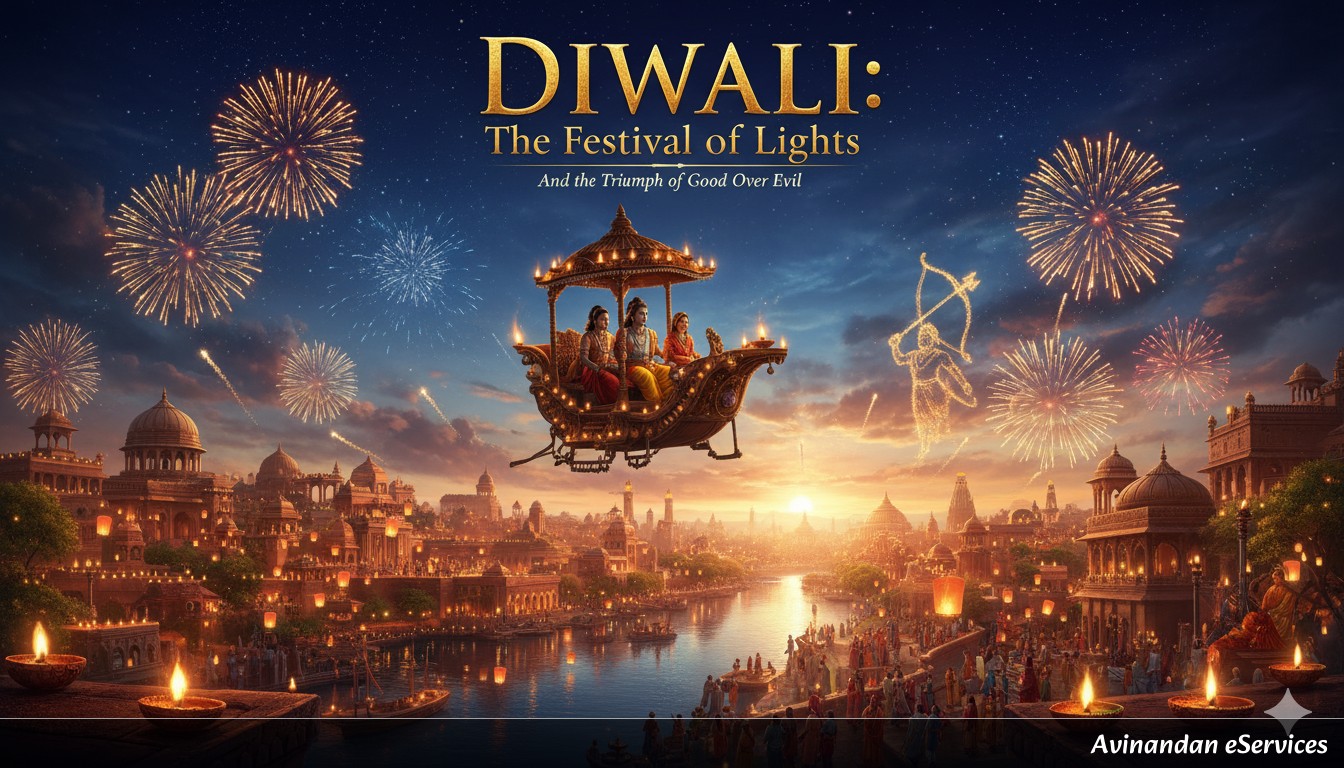
Diwali: A Simple Guide to the Festival of Lights
Have you ever seen streets and homes twinkling with countless tiny flames, a warm and happy glow filling the air? That's the magic of Diwali, the festival of lights! It's one of the most beautiful and important festivals, celebrated by millions of people worldwide. But what’s the story behind this dazzling celebration?
What is Diwali?
Diwali, also known as Deepavali, literally means "row of lights". It's a five-day festival that celebrates the victory of light over darkness, good over evil, and knowledge over ignorance. This is a time for families to come together, clean and decorate their homes, wear new clothes, and share delicious sweets.
The Many Stories of Diwali
One of the most popular stories behind Diwali is about the return of Lord Rama to his kingdom of Ayodhya after 14 years in exile. He had defeated the demon king Ravana, and to welcome him back and light his path, the people of Ayodhya lit rows of clay lamps called diyas. This is why lighting diyas is such an important part of Diwali.
But that's not the only story! In other parts of India, Diwali marks the day Lord Krishna defeated the demon Narakasura. For Jains, it's a celebration of Lord Mahavira attaining enlightenment, or nirvana. And for Sikhs, it marks the day their sixth guru, Guru Hargobind, was freed from prison.
How is Diwali Celebrated?
The celebrations of Diwali span over five days, with each day having its own special significance.
- Dhanteras: This is the first day, when people clean their homes and shop for new things, especially gold, silver, or new utensils, to bring good fortune.
- Naraka Chaturdashi (Choti Diwali): The second day is about getting rid of everything bad. Some people take a special oil bath before sunrise.
- Lakshmi Puja: This is the main day of Diwali! Families gather to worship Goddess Lakshmi, the goddess of wealth and prosperity, and light up their homes with diyas and candles. This is also a time for a big family feast and fireworks.
- Govardhan Puja: The fourth day celebrates the bond between husband and wife in some regions, while in others, it's a day to honor Lord Krishna's victory.
- Bhai Dooj: The final day is a celebration of the special bond between brothers and sisters.
Beautiful Diwali Traditions
- Lighting Diyas and Candles: This is the most iconic tradition, symbolizing the victory of light.
- Rangoli: People create beautiful and colorful patterns on the floor using colored powder or sand to welcome guests and the goddess Lakshmi.
- Feasting and Sweets: Diwali is a time for delicious food! Families prepare special meals and share sweets, known as 'mithai', with friends and neighbors.
- Gifts: Exchanging gifts is a way of showing love and good wishes.
A Festival for Everyone
While Diwali has its roots in different Indian religions like Hinduism, Jainism, and Sikhism, it has become a festival that is celebrated by people from all walks of life. It’s a time of joy, togetherness, and the beautiful reminder that light will always triumph over darkness.