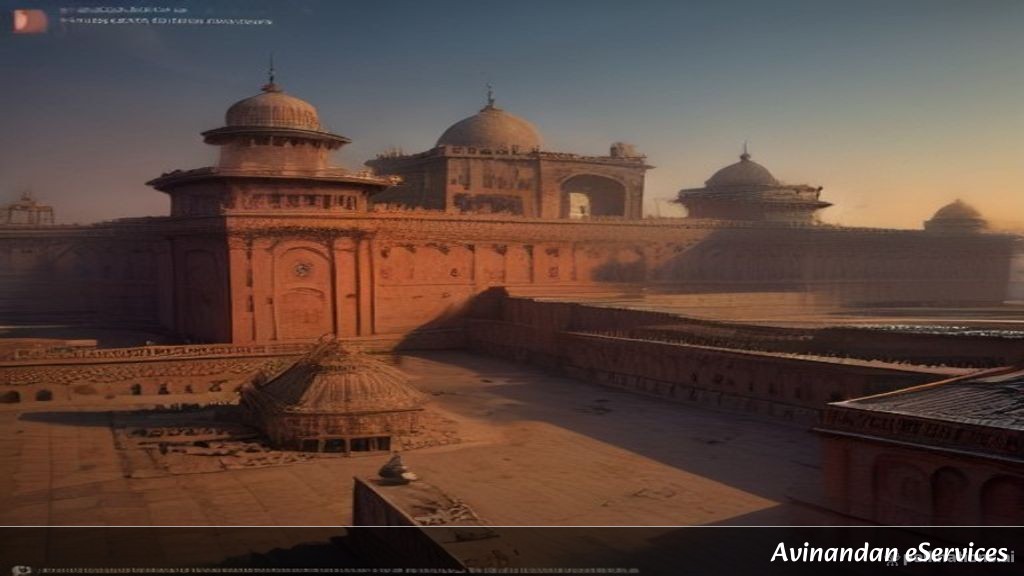
Introduction to the Delhi Sultanate for RRB Exams
The Delhi Sultanate refers to the period in Indian history spanning from 1206 CE to 1526 CE, during which five successive dynasties ruled over large parts of the Indian subcontinent from Delhi. For aspirants preparing for Indian Railway Recruitment Board (RRB) exams such as NTPC, Group D, and Technician posts, Ancient and Medieval Indian History forms a crucial part of the General Awareness syllabus. Questions regarding the rulers, administrative reforms, monuments, and battles of the Delhi Sultanate frequently appear in Computer Based Tests (CBT). A thorough understanding of this era is essential to secure high marks in the history section.
Topic Weightage and Importance
In RRB NTPC and Group D examinations, General Awareness carries a significant portion of the total marks. Within History, Medieval Indian History contributes approximately 2 to 4 questions per shift. Out of these, at least 1 or 2 questions are directly related to the Delhi Sultanate. Topics like the founding rulers, famous architectural marvels (such as Qutb Minar or Alai Darwaza), economic reforms of Alauddin Khalji, and the administrative policies of Muhammad bin Tughlaq are high-probability areas. Mastering this topic ensures that you can comfortably tackle questions ranging from chronological ordering to direct factual queries.
Key Concepts and Chronology of Dynasties
The Delhi Sultanate was ruled by five distinct Turkish and Afghan dynasties in chronological order. Remembering this sequence is vital for chronological arrangement questions:
- Mamluk or Slave Dynasty (1206 – 1290 CE): Founded by Qutb-ud-din Aibak. Notable rulers include Iltutmish, Razia Sultan, and Ghiyas-ud-din Balban.
- Khalji Dynasty (1290 – 1320 CE): Founded by Jalal-ud-din Khalji. The most powerful ruler was Alauddin Khalji, known for market control and military expansions.
- Tughlaq Dynasty (1320 – 1414 CE): Founded by Ghiyas-ud-din Tughlaq. Notable rulers include Muhammad bin Tughlaq (famous for his experiments) and Firoz Shah Tughlaq (known for public works).
- Sayyid Dynasty (1414 – 1451 CE): Founded by Khizr Khan. This was a relatively weak dynasty.
- Lodi Dynasty (1451 – 1526 CE): Founded by Bahlul Lodi. The last ruler was Ibrahim Lodi, defeated by Babur in the First Battle of Panipat (1526 CE).
Important Administrative and Architectural Terms
RRB exams often test terminology related to the administration and culture of the Delhi Sultanate:
- Iqta System: Land revenue assignment given to nobles and military commanders (Iqtadars).
- Diwan-i-Arz: Military department established by Balban.
- Diwan-i-Kohi: Department of agriculture created by Muhammad bin Tughlaq.
- Qutb Minar: Construction started by Qutb-ud-din Aibak and completed by Iltutmish.
Solved Examples (Step-by-Step)
Let us look at some standard multiple-choice questions modeled on previous years' RRB papers.
Example 1: Chronology of Dynasties
Question: Which of the following is the correct chronological order of the dynasties of the Delhi Sultanate?
Options: A) Khalji - Slave - Tughlaq - Lodi, B) Slave - Khalji - Tughlaq - Sayyid - Lodi, C) Tughlaq - Slave - Khalji - Lodi - Sayyid, D) Slave - Tughlaq - Khalji - Lodi - Sayyid
Solution: The correct chronological order is Slave (Mamluk), Khalji, Tughlaq, Sayyid, and Lodi. Therefore, the correct option is B.
Example 2: Ruler and Reforms
Question: Who among the following Delhi Sultans introduced market control regulations and price fixation?
Options: A) Balban, B) Muhammad bin Tughlaq, C) Alauddin Khalji, D) Firoz Shah Tughlaq
Solution: Alauddin Khalji introduced strict market control measures and price fixation to maintain a large standing army without overstraining the royal treasury. Therefore, the correct option is C.
Example 3: Capital Transfer
Question: Which Sultan shifted his capital from Delhi to Daulatabad (Devagiri)?
Options: A) Qutb-ud-din Aibak, B) Muhammad bin Tughlaq, C) Sikandar Lodi, D) Ibrahim Lodi
Solution: Muhammad bin Tughlaq shifted his capital from Delhi to Daulatabad in 1327 to centrally govern the vast empire. Therefore, the correct option is B.
Common Mistakes to Avoid
Students often lose marks in medieval history due to minor confusions. Keep these points in mind:
- Confusing Founders: Do not confuse Qutb-ud-din Aibak (founder of Slave Dynasty) with Iltutmish (real consolidator of the empire).
- Chronology Errors: Always remember that the Khalji dynasty came *after* the Slave dynasty, not before.
- Capital Shifts: Remember that Muhammad bin Tughlaq shifted the capital *to* Daulatabad and later shifted it back to Delhi, causing immense hardship.
- Battle Dates: Memorize key battle years like the First Battle of Panipat (1526 CE) which marked the end of the Delhi Sultanate.
Practice Questions with Solutions
Test your preparation with these practice questions:
Q1: Who was the first woman ruler of the Delhi Sultanate?
Q2: The famous traveler Ibn Battuta visited India during the reign of which Sultan?
Q3: Which Sultan founded the city of Agra in 1504?
Q4: Who wrote the famous historical text 'Tughlaqnama'?
Q5: Which dynasty ruled for the shortest duration in the Delhi Sultanate?
Q6: What was the official language of administration during the Delhi Sultanate?
Solutions to Practice Questions
1. Razia Sultan: She ruled from 1236 to 1240 CE as the first and only Muslim woman ruler of Delhi.
2. Muhammad bin Tughlaq: Ibn Battuta, the Moroccan traveler, arrived in India during his reign and was appointed as a Qazi.
3. Sikandar Lodi: He founded Agra and made it his secondary capital in 1504.
4. Amir Khusrau: The 'Parrot of India', Amir Khusrau, authored the Tughlaqnama detailing the rise of Ghiyas-ud-din Tughlaq.
5. Khalji Dynasty: It ruled for only 30 years (1290–1320 CE), which is the shortest span among the five main dynasties.
6. Persian: Persian was adopted as the official court language of the Delhi Sultanate.
Frequently Asked Questions (FAQs)
Q1: Are questions from Medieval History important for RRB NTPC CBT 1 and CBT 2?
Yes, General Awareness in both CBT 1 and CBT 2 features questions from Indian History, with medieval history contributing 1-2 questions consistently.
Q2: Do I need to memorize all the rulers and their regnal years?
You do not need exact dates for all rulers, but you must know the order of dynasties and the important achievements of prominent rulers like Iltutmish, Balban, Alauddin Khalji, and Muhammad bin Tughlaq.
Q3: How should I revise this topic quickly before the exam?
Make a single-page summary chart containing dynasty names, founders, last rulers, capital cities, and important architectural monuments.
Conclusion and Final Tips
Mastering the Delhi Sultanate is a stepping stone toward scoring high in the General Awareness section of RRB NTPC, Group D, and Technician exams. Focus on dynasties, major administrative policies, economic measures, and architectural landmarks rather than drowning in excessive dates. Regular revision and practicing previous years' questions will boost your confidence. Stay consistent, maintain a positive attitude, and success will be yours!