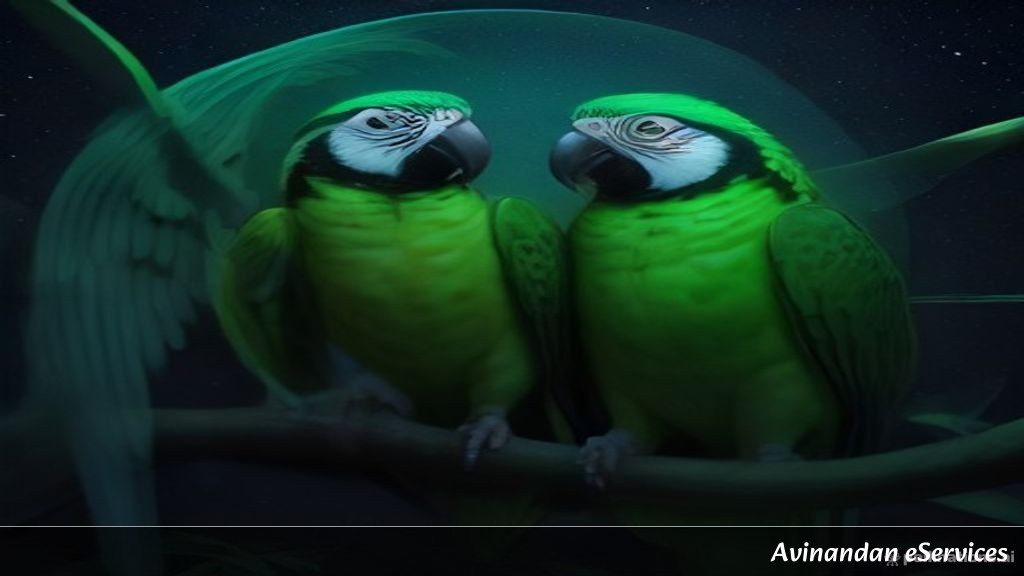
Aarav: Priya, look at this magazine photo! Someone shined a special purple flashlight on a green parrot, and the bird started glowing neon red and orange!
Priya: That is amazing, Aarav! You just discovered biofluorescence. Certain birds have special chemicals in their feathers that catch invisible ultraviolet light and turn it into bright, visible colors!
Aarav: Ultraviolet light? You mean the same light from the sun that gives us a sunburn? How do parrot feathers do that?
Priya: Exactly! Inside the parrot's green feathers, there are tiny structures and special pigments. When invisible UV light hits these feathers, the electrons absorb the energy and instantly release it back as a longer wavelength of light, which our eyes see as glowing red or orange.
Aarav: Wow, that sounds like magic! But why would a parrot want to glow like a neon sign in the dark jungle? Does it help them hide from predators?
Priya: Actually, scientists think it might be the opposite! In the dim, leafy canopy of the rainforest, ultraviolet light is scattered everywhere. To other birds that can see UV light, a glowing patch might act like a flashing billboard saying, "Hey, look over here! Let's be friends!"
Aarav: That is so cool. So it helps them communicate with each other? Are parrots the only birds that can do this trick?
Priya: Not at all! Scientists have found biofluorescence in puffins, owls, and even flying squirrels. Nature is full of glowing surprises if you know the right light to look with!
So, What Did We Learn Today?
- Biofluorescence happens when a living creature absorbs invisible UV light and glows with a bright, new color.
- Parrots use special pigments and feather structures to transform ultraviolet light into neon red and orange.
- This glowing trick helps birds communicate and spot each other in dense, shady forests.
Aarav: I am definitely going to ask for a UV flashlight for my birthday so I can check out all the glowing animals outside!