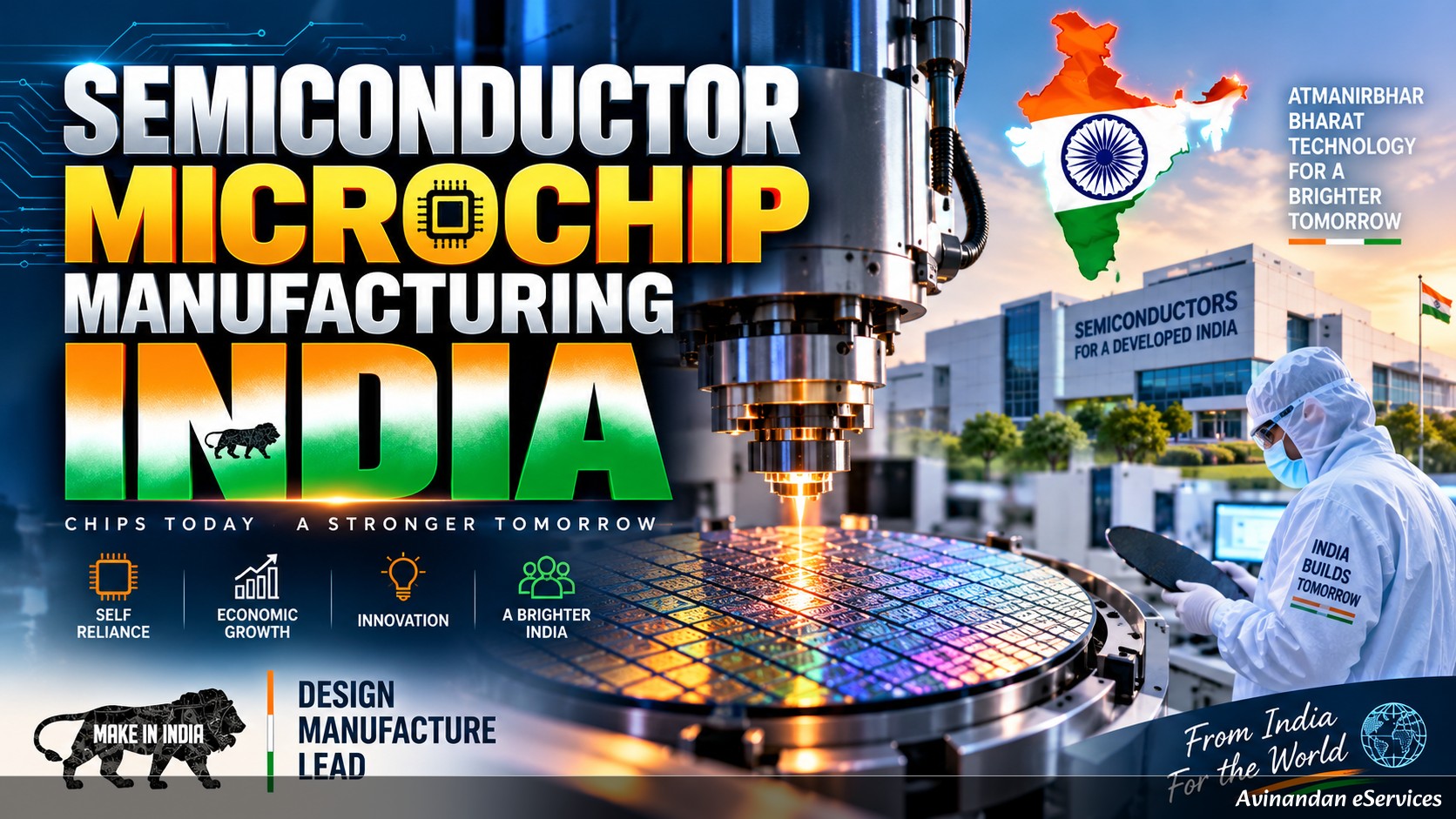
NEW DELHI — Marking a monumental leap in India’s technological self-reliance, the fifth edition of SEMICON India concluded successfully today at Yashobhoomi, New Delhi. Held from 17–19 September 2026 under the visionary theme “Silicon to Systems: Building the Ecosystem,” the three-day flagship conference showcased India’s rapid and undeniable progression from policy discussions and conceptual project planning to actual commercial semiconductor manufacturing. Inaugurated by Prime Minister Narendra Modi and spearheaded by the Ministry of Electronics and Information Technology (MeitY), the landmark event witnessed massive global participation, strategic global MoUs, and the official rollout of the ambitious Semicon 2.0 framework.
The conference drew monumental engagement, recording 51,656 total registrations and a cumulative footfall of approximately 40,000 visitors. The event floor buzzed with activity, hosting over 600 exhibitors—including nearly 300 international participants from 52 countries—alongside 150 industry-leading speakers. Six dedicated Country Pavilions representing Japan, South Korea, Malaysia, the Netherlands, Singapore, and Sweden, coupled with 12 State Pavilions, a Startup Pavilion, a Workforce Development Zone, and a vibrant Innovation Showcase & Student Hackathon, displayed the immense breadth and depth of the burgeoning global semiconductor value chain right in the heart of India's capital.
Key Highlights & Major Announcements
- Commercial Production Milestone: Prime Minister Narendra Modi virtually inaugurated commercial production lines at CDIL Semiconductor (Mohali) and Suchi Semicon (Surat), bringing the total number of operational commercial semiconductor units under the 12 approved Semicon 1.0 projects to five.
- Launch of Semicon 2.0: The government announced the ambitious transition to Semicon 2.0, backed by a massive financial outlay of ₹1,27,500 crore. The new framework is structured around six critical pillars: design, machines and materials, new fabs, advanced packaging, research, and talent development.
- Strategic MoUs: Across three dynamic days, the conference witnessed 56 MoUs, strategic announcements, and collaborative initiatives spanning chip design, advanced fabrication, packaging, equipment, power electronics, AI, high-performance computing (HPC), and green logistics.
- Massive Global Engagement: Six exclusive Country Roundtables (India-USA, India-Japan, India-Singapore, India-Europe, India-South Korea, and India-Malaysia) attracted hundreds of international delegates, cementing global supply chain partnerships.
- Youth & Startup Empowerment: The Digital India RISC-V Grand Challenge under the Chips to Startup Programme engaged 1,236 teams comprising 5,045 participants, rewarding top innovators building indigenous VEGA and SHAKTI processor-based SoCs.
From Policy Blueprint to Commercial Reality
The overarching sentiment at SEMICON India 2026 was one of tangible execution. Having successfully laid down foundational policy frameworks under the initial semiconductor mission, India is now swiftly transitioning into active commercial manufacturing and deep-tech scaling. During the inauguration, Prime Minister Modi personally interacted with young chip designers and engineering students, emphasizing that India's talent pool is the cornerstone of the global electronics and semiconductor revolution.
Union Minister for Electronics and Information Technology, Shri Ashwini Vaishnaw, detailed the implementation strategy for Semicon 2.0 during Day 2 sessions. He underscored that India is moving beyond mere fabrication capacity building to curate a comprehensive, resilient domestic ecosystem. This includes domestic production of high-purity gases, precision chemical manufacturing, advanced packaging substrates, specialized machinery, and cutting-edge intellectual property (IP).
“India is rapidly transforming from a consumer of technology into a trusted global producer and innovator. With Semicon 2.0 and our unwavering commitment to a 'Silicon to Systems' approach, we are building a resilient, future-ready semiconductor ecosystem that will power the digital economies of the world.”
Fostering Indigenous Innovation and Global Partnerships
A major highlight of the concluding day was the strong emphasis on deep-tech entrepreneurship and indigenous intellectual property. Through collaborative hackathons organized by global industry leaders like KLA, Synopsys, and Lam Research in partnership with CeNSE-IISc, over 3,800 teams from more than 900 colleges tackled critical, real-world semiconductor engineering challenges. These initiatives ensure that India's academic institutions remain closely aligned with cutting-edge industry requirements.
Furthermore, international diplomacy took center stage via high-impact bilateral roundtables. The India-USA and India-Japan roundtables on Day 1 drew over 180 and 200 participants respectively, focusing intensely on robust supply chain resilience, advanced equipment sourcing, and joint R&D initiatives. Subsequent roundtables with Singapore, Europe, South Korea, and Malaysia on Days 2 and 3 further fortified cross-border investments, technology commercialization, and specialized workforce training.
Significance & National Impact
The successful conclusion of SEMICON India 2026 solidifies India's position as an indispensable pillar in the global semiconductor supply chain. In an era marked by geopolitical shifts and global supply chain vulnerabilities, India offers the twin advantages of a massive domestic market and a highly skilled, technologically proficient workforce. By committing ₹1,27,500 crore to Semicon 2.0, the Government of India is systematically de-risking global technology supply chains while creating lakhs of high-value engineering jobs.
The integration of the entire value chain—spanning design, raw materials, fabrication, advanced packaging, and systems engineering—ensures that Indian enterprises and startups can compete globally. As operational units multiply and homegrown processors like VEGA and SHAKTI power commercial devices, India is well on its way to realizing its ultimate ambition of becoming a global electronics manufacturing and semiconductor hub.
Frequently Asked Questions (FAQs)
1. What is the financial outlay for Semicon 2.0 announced at SEMICON India 2026?
Semicon 2.0 has been launched with a substantial financial outlay of ₹1,27,500 crore, designed to build comprehensive capabilities across six pillars: design, machines and materials, new fabs, advanced packaging, research, and talent development.
2. How many commercial semiconductor units are currently operational in India?
Following the virtual inauguration of commercial production lines at CDIL Semiconductor (Mohali) and Suchi Semicon (Surat) by Prime Minister Narendra Modi, the total number of operational commercial semiconductor units among the 12 approved under Semicon 1.0 has reached five.
3. What was the core theme of SEMICON India 2026?
The fifth edition of SEMICON India, held from 17–19 September 2026 at Yashobhoomi, New Delhi, was held under the theme “Silicon to Systems: Building the Ecosystem.”
4. How does the government support deep-tech startups and students in the semiconductor sector?
Through programs like the Chips to Startup (C2S) initiative, Digital India RISC-V Grand Challenge, and industry-sponsored hackathons (in collaboration with KLA, Synopsys, Lam Research, and CeNSE-IISc), the government provides students and startups with cash prizes, internships, advanced software tools, and compute credits to foster indigenous innovation.
Official Source & Verification
This article is grounded on the official press release issued by the Press Information Bureau (PIB), Government of India (Release ID: 2312606, Ministry of Electronics & IT). Access the official document: https://pib.gov.in/PressReleasePage.aspx?PRID=2312606&lang=1.