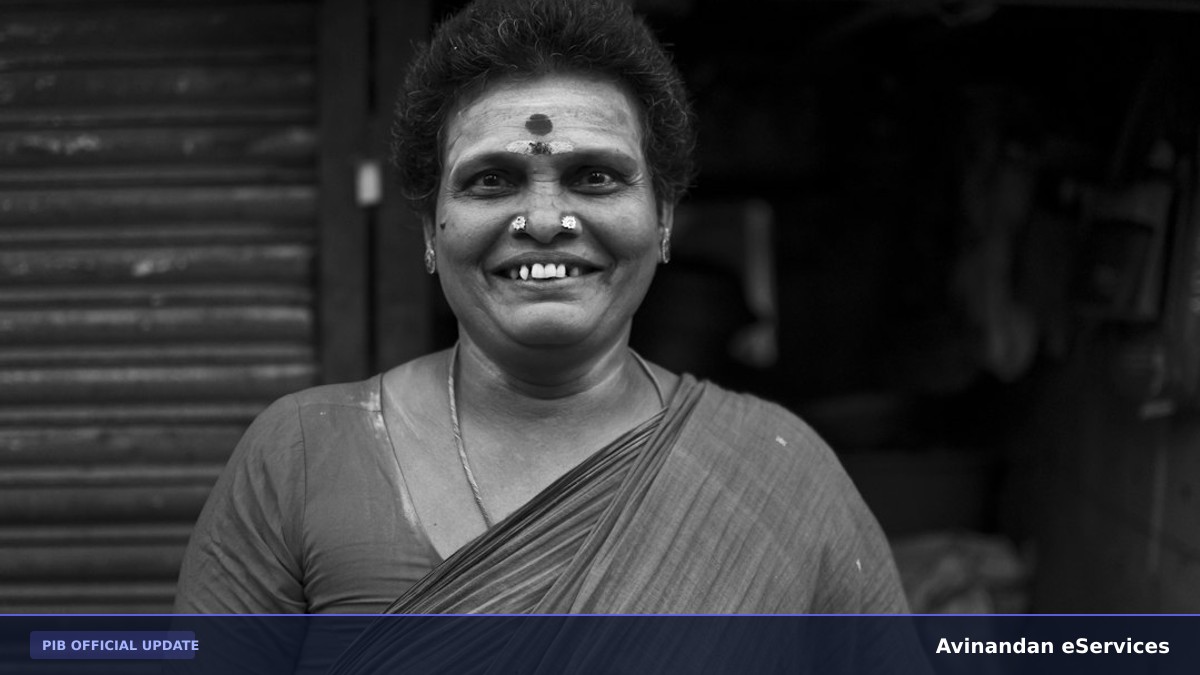
In an inspiring narrative of resilience, grit, and targeted welfare intervention, the Ministry of Social Justice & Empowerment, Government of India, has highlighted the remarkable journey of Smt. Hemlata Dilip Kharatmal. Released officially by the Press Information Bureau (PIB) on September 19, 2026, her story exemplifies how timely institutional credit, combined with unyielding personal determination, can pull families out of distress and put them firmly on the path of economic independence.
Following the untimely demise of her husband, Smt. Kharatmal, a resident of Kalwa in Thane, Maharashtra, found herself facing immense personal grief alongside the daunting responsibility of raising and securing the future of her two children. Rather than succumbing to adversity, she chose the path of self-reliance, leveraging a crucial government financial intervention to establish a sustainable livelihood.
Key Highlights & Major Announcements
- Beneficiary Profile: Smt. Hemlata Dilip Kharatmal, a single mother residing in Kalwa, Thane, Maharashtra.
- Financial Assistance: Received a term loan of Rs. 3.75 lakh under the National Scheduled Castes Finance and Development Corporation (NSFDC) scheme.
- Implementation Agency: Facilitated through the local LIDCOM office after initial guidance from a community social worker.
- Business Venture: Successfully launched and established a fish-selling business located on Pokhran Road in Thane.
- Economic Outcome: Achieved a stable, net monthly income ranging between Rs. 40,000 and Rs. 50,000, funding her children's education and elevating her household standard of living.
The Turning Point: Accessing Institutional Credit Through NSFDC
For millions of families across India, the loss of the primary breadwinner often triggers a downward spiral into financial vulnerability. For Smt. Kharatmal, the immediate challenge was ensuring that her children did not miss out on quality education and a secure upbringing. However, starting an independent venture requires capital—a resource that is notoriously difficult for marginalized individuals to source through traditional, high-interest commercial channels.
The turning point arrived when she connected with a local social worker who introduced her to the welfare schemes administered by the Ministry of Social Justice & Empowerment. Specifically, she learned about the term loan offerings by the National Scheduled Castes Finance and Development Corporation (NSFDC). By approaching the local Mahatma Phule Backward Class Development Corporation (LIDCOM) office, she navigated the application process for financial backing.
On November 25, 2024, her loan application for Rs. 3.75 lakh was officially sanctioned and disbursed. This timely injection of institutional capital provided the foundational brick for her entrepreneurial venture: a fish-selling business strategically set up on Pokhran Road in Thane.
Translating Capital into Sustainable Livelihoods
Capital alone does not guarantee business success; it requires sweat equity, market understanding, and operational resilience. Smt. Kharatmal poured her energy into daily operations, demonstrating how grassroots entrepreneurship can flourish when given the right institutional push. Through meticulous hard work and consistency, she transformed the small retail setup into a dependable, daily source of revenue.
Today, her enterprise yields a net monthly income of approximately Rs. 40,000 to Rs. 50,000. This income has completely altered the financial trajectory of her household. Beyond merely covering basic household needs, she is comfortably financing her children's schooling, securing their academic future, and enjoying an enhanced quality of life characterized by dignity and self-sufficiency.
"The financial assistance gave me an opportunity to stand on my own feet and support my children. Through hard work, I have been able to build a stable livelihood and look towards their future with confidence."
— Smt. Hemlata Dilip Kharatmal
Significance & National Impact of Government Credit Schemes
The journey of Smt. Kharatmal is far more than an isolated success story; it serves as a micro-level validation of macro-level governance policies designed by the Ministry of Social Justice & Empowerment. Public sector bodies like NSFDC and state-level corporations like LIDCOM are engineered precisely to bridge the credit gap for socio-economically disadvantaged communities.
Key takeaways from this policy implementation framework include:
- Empowering Women-Led Households: Financial inclusion of single mothers directly impacts child development, health, and generational education outcomes.
- Fostering Grassroots Entrepreneurship: Micro-loans transform daily wage earners and job-seekers into micro-entrepreneurs who eventually create localized economic velocity.
- Reducing Informal Debt Dependency: Providing institutional credit at subsidized rates shields vulnerable families from exploitative private moneylenders.
By streamlining outreach through local social networks and dedicated state corporation windows, the government ensures that welfare schemes reach the last mile, converting passive beneficiaries into active contributors to India’s economic growth story.
Frequently Asked Questions (FAQs)
1. What is the NSFDC Term Loan Scheme?
The National Scheduled Castes Finance and Development Corporation (NSFDC) provides financial assistance in the form of term loans, micro-credit finance, and educational loans to eligible individuals belonging to target groups, helping them start income-generating ventures.
2. How can eligible candidates apply for NSFDC loans in Maharashtra?
Applicants can apply for these schemes through designated state channelizing agencies. In Maharashtra, agencies like the Mahatma Phule Backward Class Development Corporation (LIDCOM) process these applications at the district and local levels.
3. What was the exact financial assistance provided to Smt. Hemlata Kharatmal?
Smt. Kharatmal received a total term loan amount of Rs. 3.75 lakh, which she utilized to establish her fish-selling business in Thane, Maharashtra, eventually scaling her net monthly income to Rs. 40,000–Rs. 50,000.
Official Source & Verification
This article is grounded on the official press release issued by the Press Information Bureau (PIB), Government of India (Release ID: 2312440, Ministry of Social Justice & Empowerment). Access the official document: https://pib.gov.in/PressReleasePage.aspx?PRID=2312440&lang=1.