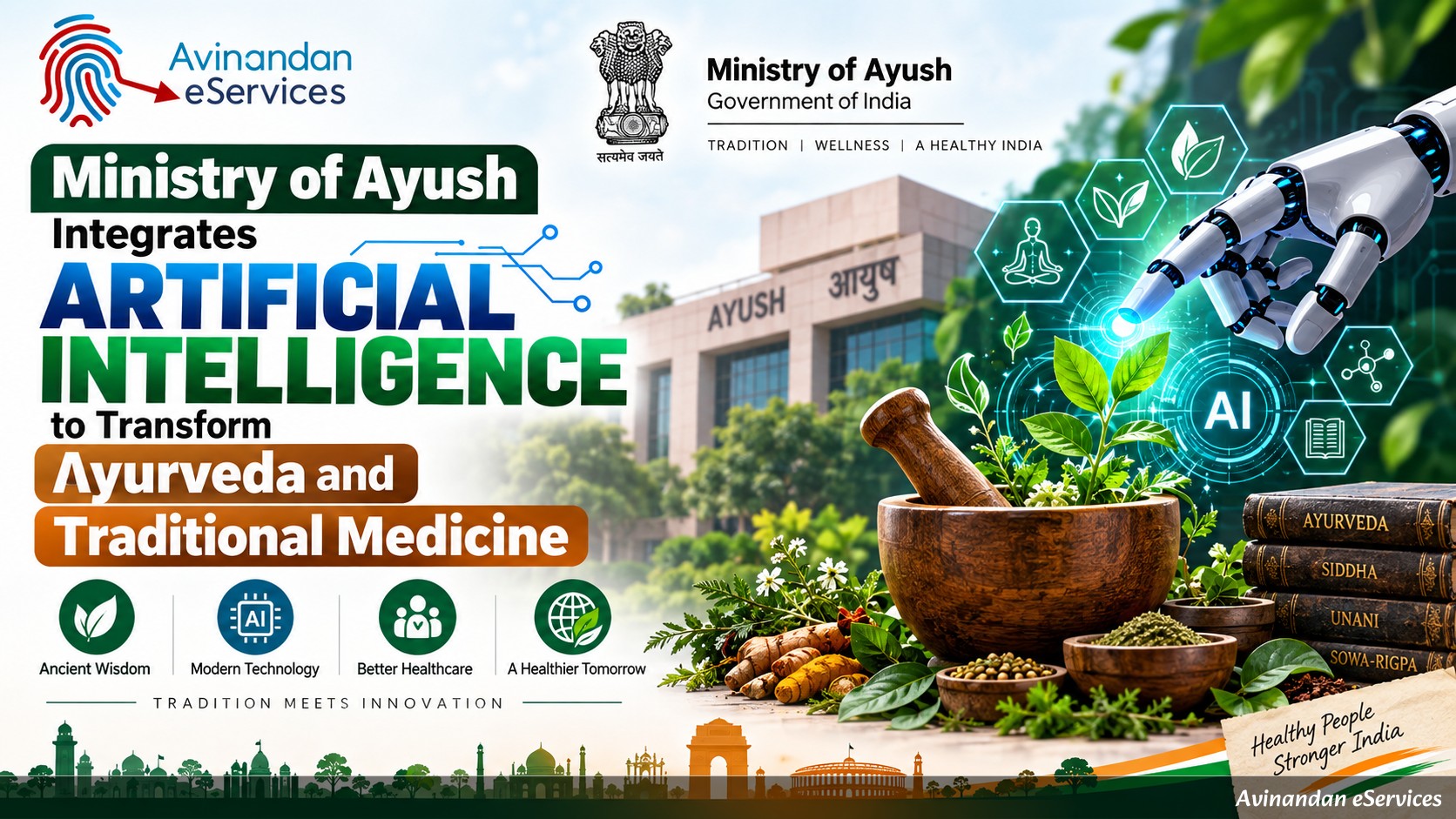
In a major leap forward for traditional healthcare systems in India, the Ministry of Ayush has officially announced the expansive integration of Artificial Intelligence (AI) as the next technological frontier for Ayurveda, Yoga, Unani, Siddha, and Homeopathy. Building firmly upon the robust digital infrastructure previously laid by the Ayush Grid, this strategic initiative aims to modernize healthcare delivery, elevate research methodologies, streamline educational frameworks, and catalyze investment facilitation across the entire traditional medicine ecosystem.
Released officially via the Press Information Bureau (PIB) on September 19, 2026, from New Delhi, this ambitious policy move highlights India's dedication to blending ancient therapeutic wisdom with cutting-edge digital intelligence. Rather than substituting traditional knowledge with algorithms, the Ministry's initiative focuses on amplifying, connecting, and verifying ancient texts and practices to make them exceptionally discoverable and evidence-based for modern citizens globally.
Key Highlights & Major Announcements
- Expansion of Ayush Grid: Transitioning from passive digital portals to interactive, highly intelligent, user-oriented AI services.
- Citizen and Student-Facing Chatbots: Deployment of specialized AI tools including MAISP, ARP Research Assistant, eLMS, e-CHARAK, Yoga Saarthi, and Nivesh Saarthi.
- Global Recognition: Featured prominently at the IndiaAI Impact Summit 2026 via an AI Impact Casebook developed in partnership with the World Health Organization (WHO).
- IndiaAI Innovation Challenge: Active participation focused on developing voice-based Electronic Health Records (EHR), disease-trend detection, and personalized treatment support.
- Multilingual Accessibility: Collaboration with the Digital India Bhashini Division (MeitY) to make Ayush portals accessible across all 22 scheduled languages of India.
Revolutionizing Ayush Through Specialized AI Applications
The core of this digital transformation rests on a suite of sophisticated AI-driven assistants designed to cater to distinct stakeholders within the Ayush landscape—ranging from casual citizens and diligent students to experienced practitioners, researchers, and global investors.
Citizen Engagement and Information Access
At the forefront of citizen-facing utilities is the MAISP Chatbot, engineered to deliver accurate, easily understandable information regarding Ayush systems directly through a conversational interface. Furthermore, the introduction of Yoga Saarthi acts as an intelligent yoga recommendation chatbot, guiding individuals toward personalized wellness routines.
Empowering Research and Academic Institutions
For researchers navigating dense historical and modern literature, the ARP Research Assistant leverages Generative AI (GenAI) to \textend the capabilities of the Ayush Research Portal. This tool drastically reduces the time required to synthesize traditional pharmacology and clinical studies. Simultaneously, the eLMS Chatbot introduces comprehensive AI-based Student Life Cycle Management across Ayush educational institutions, modernizing administration and learning paths.
Pharmacology, Trade, and Investment
Bridging traditional medicine with commercial viability, the e-CHARAK Chatbot serves as an advanced medicinal-plant trade assistant, connecting conversational AI with the supply chains and pharmacological ecosystems underpinning Ayurveda. Additionally, the Nivesh Saarthi AI assistant is tailored to stimulate and streamline investments within the burgeoning Ayush sector.
"The intent is not to replace traditional Ayurvedic knowledge with technology, but to use Artificial Intelligence to strengthen, connect and amplify that knowledge, making it more discoverable, evidence-based and accessible to citizens in India and around the world." — Ministry of Ayush
Global Validation and National Innovation Frameworks
The convergence of artificial intelligence and traditional medicine has also garnered significant international applause. At the IndiaAI Impact Summit 2026, the WHO-partnered AI Impact Casebook on Health featured a dedicated snapshot from the Ministry titled "AI-driven Decision Support for Ayurveda: A Retrieval-Augmented Generation (RAG) Approach." This inclusion validates the technical robustness of employing RAG architectures to ground Generative AI outputs firmly in verified Ayurvedic texts, eliminating hallucinations and ensuring clinical reliability.
Domestically, the Ministry is actively engaging with national technology initiatives through the IndiaAI Innovation Challenge. Key developmental use cases include:
- Voice-based Electronic Health Records (EHR): Facilitating seamless documentation for practitioners in rural and urban clinics.
- Disease-Trend Detection: Utilizing predictive analytics to monitor public health trends through traditional medicine utilization.
- Personalized Treatment Support: Providing practitioners with evidence-based, data-backed clinical recommendations.
Bridging Linguistic Divides via Bhashini and AI Kosh
Recognizing India's linguistic diversity, the Ministry has forged strategic collaborations with IndiaAI and the Digital India Bhashini Division (DIBD) under the Ministry of Electronics and Information Technology (MeitY). Through Bhashini, critical Ayush Grid portals have been rendered accessible in all 22 scheduled languages of India. Moreover, official Ministry artifacts have been securely hosted on AI Kosh, ensuring researchers nationwide have unimpeded access to specialized datasets for advancing traditional medicine research.
Frequently Asked Questions (FAQs)
What is the primary objective of introducing AI to the Ayush sector?
The primary objective is to amplify, validate, and connect traditional Ayurvedic and Ayush knowledge using modern artificial intelligence, making healthcare delivery, research, and education more evidence-based, accessible, and user-friendly.
What are some of the key AI chatbots launched under this initiative?
Key chatbots include the MAISP Chatbot for general information, ARP Research Assistant for literature review, eLMS Chatbot for student lifecycle management, e-CHARAK for medicinal plant trade, Yoga Saarthi for wellness recommendations, and Nivesh Saarthi for investment facilitation.
How does the Ministry ensure the accuracy of AI-generated Ayurvedic information?
The Ministry utilizes advanced approaches such as Retrieval-Augmented Generation (RAG), which grounds AI responses strictly in verified, authentic traditional literature and clinical research databases rather than relying solely on open-ended generative parameters.
How are regional languages supported in this digital overhaul?
Through a strategic partnership with the Digital India Bhashini Division (MeitY), key Ayush Grid portals and services are now accessible in all 22 scheduled languages of India.
Official Source & Verification
This article is grounded on the official press release issued by the Press Information Bureau (PIB), Government of India (Release ID: 2312436, AYUSH). Access the official document: https://pib.gov.in/PressReleasePage.aspx?PRID=2312436&lang=1.