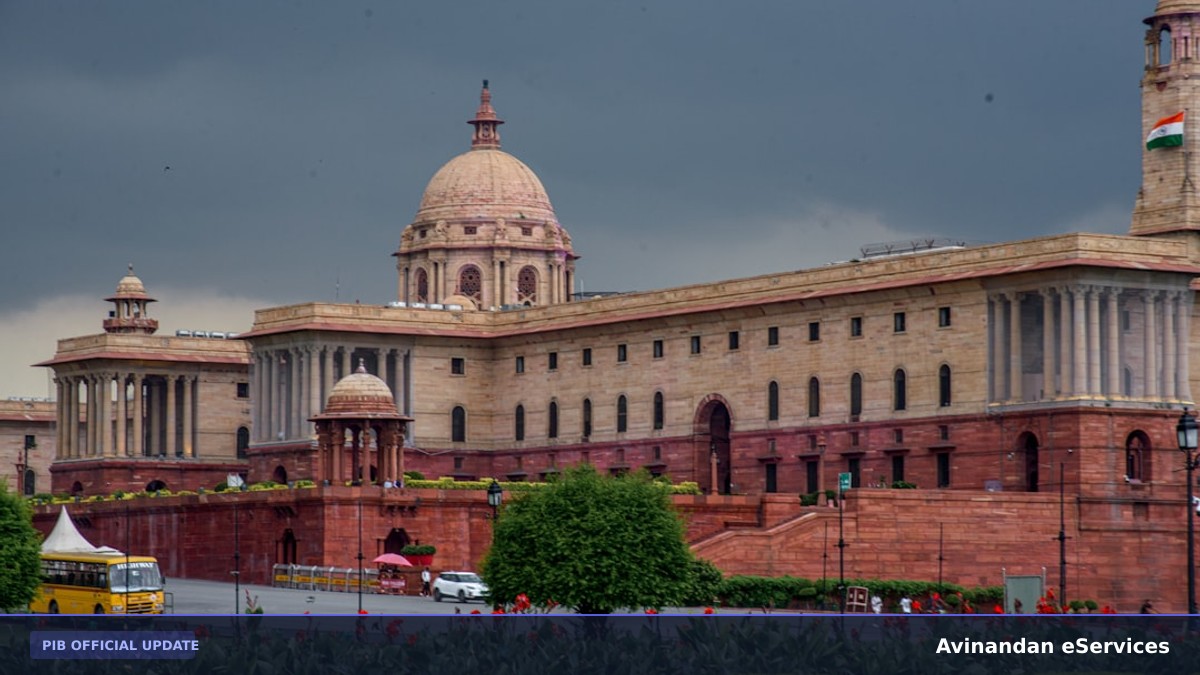
In a major collaborative push toward achieving the vision of a developed nation, the two-day high-level Conference on “Financing India’s Journey towards Viksit Bharat” successfully concluded in New Delhi today. Organized by the Ministry of Finance, Government of India, the landmark event brought together a formidable gathering of Union ministers, chief ministers, deputy chief ministers, and state finance ministers alongside top-tier experts from academia, industry, banking, and policymaking to chart comprehensive financial pathways for broad-based and inclusive national growth.
The conference underscored a fundamental premise: India's ambitious journey toward becoming a developed economy by 2047 cannot rely solely on government budgets. Instead, it necessitates a deep, multi-tiered partnership between the Union and the States, aggressive mobilization of private-sector financing, innovative financial instruments, and robust macroeconomic stability.
Key Highlights & Major Announcements
- High-Level Participation: Chaired by the Union Minister for Finance & Corporate Affairs, the conference witnessed active attendance from Chief Ministers and Finance Ministers representing a vast spectrum of Indian States and Union Territories.
- Macroeconomic Strength: The Department of Economic Affairs (DEA) highlighted recent global recognitions, notably four sovereign rating upgrades over the past 16 to 17 months, including Japan Credit Rating Agency's (JCR) recent upgrade of India from BBB+ to A-.
- Gross Domestic Savings Target: Former 15th Finance Commission Chairman N.K. Singh emphasized that India's gross domestic savings rate must rise from its current level of ~34% to 38–40% of GDP to sustainably fuel a 7–8% annual growth trajectory.
- Fiscal Transparency: Experts strongly advocated for rigorous State-wise debt sustainability assessments, alongside enhanced transparency regarding off-budget borrowings, guarantees, and arrears.
- Technological Integration in Taxation: Leveraging artificial intelligence (AI) and machine learning alongside established tax databases was identified as a primary catalyst for broadening the effective tax base and closing compliance gaps.
- Sectoral Working Groups: The conference established dedicated working groups involving active state participation to translate thematic deliberations into actionable sectoral financing recommendations.
Contextual Analysis: Laying the Foundation for Viksit Bharat 2047
Unlocking Domestic Savings and Private Capital
A central theme across the two-day deliberations was the necessity of transitioning from public-led financing to a catalytic public-private model. While government expenditure remains crucial for infrastructure creation and social welfare, the sheer scale of investment required to hit India's long-term growth targets demands a massive mobilization of private capital. Economists at the conference noted that achieving a domestic savings rate of 38–40% is entirely feasible provided structural incentives are aligned to encourage household and institutional savings.
Strengthening State-Level Public Finances
With States acting as frontline executors of India's growth story, the fiscal health of sub-national governments is paramount. Deliberations focused heavily on instituting a 'Fiscal Golden Rule' at the state level. Experts emphasized that long-term fiscal resilience depends not merely on increasing tax rates, but on smarter revenue mobilization driven by data analytics, AI, and digital governance. Furthermore, addressing contingent liabilities, state-owned enterprise borrowings, and ensuring complete fiscal transparency were underlined as critical steps to maintain macroeconomic stability.
Transforming Factor Markets and Agriculture
Sustainable growth requires comprehensive factor-market reforms touching upon capital, labor, and land. Discussions highlighted the need to moderate the cost of capital, boost labor productivity through targeted skilling and university-industry linkages, and streamline land-use efficiency via digitized land records. Day two of the conference shifted focus toward agricultural transformation, evaluating reliable market access, post-harvest infrastructure, food processing logistics, and scalable financial instruments in collaboration with global partners like the International Fund for Agricultural Development (IFAD).
"The scale of transformation to attain Viksit Bharat cannot be met by Government Budgets alone. Private-sector financing, innovative financing mechanisms and stronger cooperation across levels of government will play a critical role." — Ministry of Finance, Government of India
Significance & National Impact
The New Delhi conference marks a paradigm shift in cooperative federalism concerning economic policy. By bringing state executives face-to-face with central policymakers, banking titans, and macroeconomic experts, the Ministry of Finance has fostered a unified national agenda. Addressing structural bottlenecks—from agricultural supply chains and land logistics to state fiscal management—creates an integrated investment climate capable of weathering global economic headwinds.
Ultimately, these collaborative deliberations ensure that the roadmap to Viksit Bharat is decentralized, inclusive, and grounded in fiscal prudence. As working groups begin translating these insights into policy recommendations, India steps closer to solidifying its position as a resilient, high-growth global economic powerhouse.
Frequently Asked Questions (FAQs)
What was the primary objective of the Viksit Bharat conference in New Delhi?
The conference aimed to deliberate on India's long-term financing requirements, foster cooperative federalism between the Union and States, and identify pathways for sustained, inclusive, and broad-based economic growth leading up to Viksit Bharat 2047.
Which key macroeconomic milestone was highlighted during the conference?
Officials highlighted India's robust macroeconomic fundamentals, including a strong Q1 FY 2026-27 GDP growth rate of 7.8 percent and recent sovereign rating upgrades, most notably Japan Credit Rating Agency upgrading India from BBB+ to A-.
How do experts propose bridging the investment gap for Viksit Bharat?
Experts emphasize that government budgets alone cannot fund the required transformation. Solutions include raising the gross domestic savings rate to 38-40% of GDP, leveraging private-sector financing, deploying innovative financial instruments, and utilizing AI-driven tax compliance.
What role will the newly announced working groups play?
The working groups, comprising representatives from both the Centre and the States, will take forward the thematic conference deliberations to identify specific sectoral financing requirements and formulate actionable policy recommendations.
Official Source & Verification
This article is grounded on the official press release issued by the Press Information Bureau (PIB), Government of India (Release ID: 2312592, Ministry of Finance). Access the official document: https://pib.gov.in/PressReleasePage.aspx?PRID=2312592&lang=1.