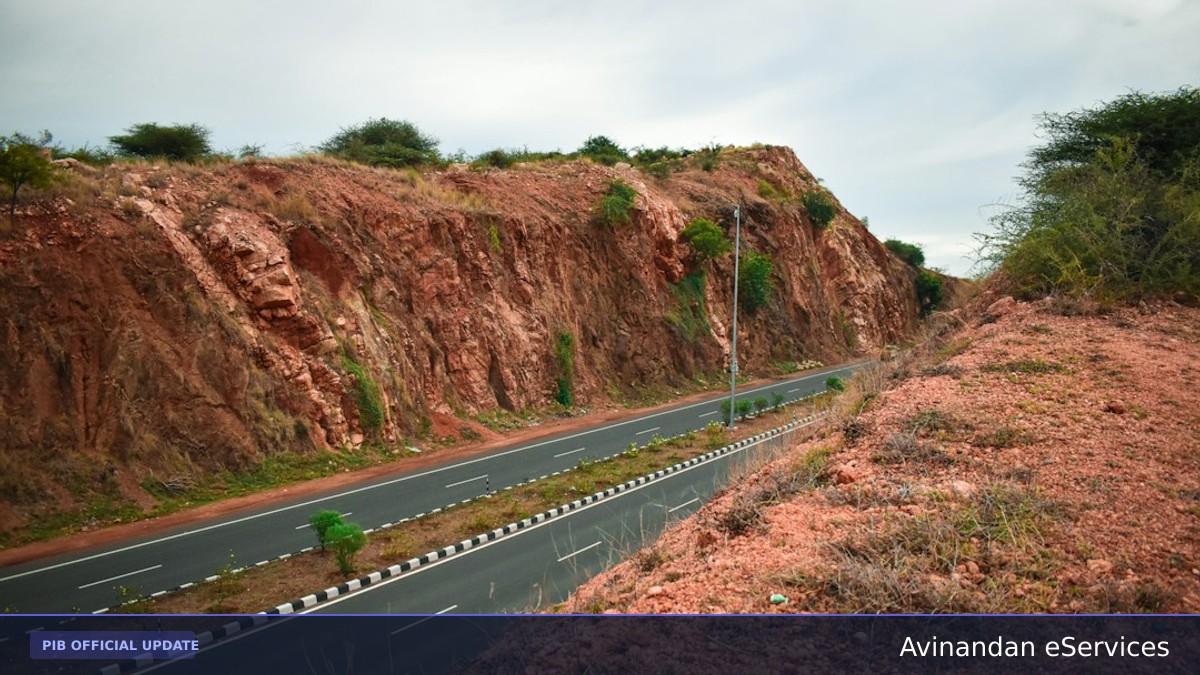
In a major milestone for urban infrastructure development in Andhra Pradesh, the CSIR-Central Road Research Institute (CSIR-CRRI), New Delhi, has officially stepped forward to lend its premier scientific and technical expertise to the Visakhapatnam Metropolitan Region Development Authority (VMRDA) and the Greater Visakhapatnam Municipal Corporation (GVMC). Announced following a high-level meeting convened by the Member of Parliament for Visakhapatnam, Shri M. Bharath Garu, this strategic collaboration aims to engineer smarter, safer, and highly durable roads across the coastal city, addressing unique geographical and infrastructural challenges.
Key Highlights & Major Announcements
- Collaborative Leadership: The high-level meeting was chaired by Hon'ble MP Shri M. Bharath Garu, featuring CSIR-CRRI Director Dr. Ch. Ravi Sekhar, GVMC Municipal Commissioner Shri Ketan Garg, IAS, and senior engineers from both civic bodies.
- Massive Upgradation Scope: GVMC and VMRDA are executing a massive infrastructure upgrade covering 228 km of roads, transitioning gravel and Water Bound Macadam (WBM) roads to Bituminous (BT) or Cement Concrete (CC) standards across eight constituencies.
- Advanced Technological Intervention: CSIR-CRRI will introduce proven technologies for flexible pavements, subgrade improvement for weak and waterlogged grounds, and intelligent urban road safety systems.
- Formal MoUs on the Anvil: Memoranda of Agreement (MoA/MoU) are being finalized to formalize the partnership between CSIR-CRRI and the municipal bodies (GVMC and VMRDA) for long-term technical consultancy and execution.
- Immediate Ground Action: Joint site surveys have already commenced, with engineers evaluating road conditions, geometric designs, traffic signs, junction layouts, and pedestrian infrastructure.
Addressing Urban Infrastructure Challenges in a Coastal Metropolis
Visakhapatnam is not only a rapidly growing metropolitan and industrial hub but also hosts a major international port alongside a long, demanding coastline. These unique geographical features subject the city's road network to severe environmental stressors, including coastal erosion, high water tables, heavy industrial traffic, and occasional urban flooding during seasonal downpours.
Recognizing these vulnerabilities, the local civic leadership under the guidance of the Hon'ble MP has prioritized a science-backed overhaul of the city's transit corridors. The ongoing mega-programme involves upgrading approximately 228 kilometers of roads, constructing 34 kilometers of central medians, installing over 1,550 modern street lights, and systematically improving critical traffic junctions. Integrating CSIR-CRRI's seventy-five years of premier road research ensures that these heavy investments translate into long-term national assets rather than short-term fixes.
Core Focus Areas of the CSIR-CRRI and Civic Bodies Partnership
During the comprehensive discussions at the VMRDA office, multiple technical domains were identified for immediate research, auditing, and implementation:
1. End-to-End Pavement Solutions and Subgrade Improvement
Many urban pockets suffer from weak subgrade soils and waterlogging issues. CSIR-CRRI experts presented specialized technologies for subgrade stabilization and flexible pavement performance evaluation. This guarantees that newly laid BT and CC roads will withstand heavy commercial loads without premature cracking or subsidence.
2. Urban Road Safety and Intelligent Systems
Road safety remains a top priority for the city administration. The deliberations emphasized the deployment of an i-RASTE-type intelligent road-safety system, comprehensive road safety audits, scientific rationalization of speed breakers, and dedicated infrastructure for pedestrian safety under the "Right-to-Walk" framework.
3. Coastal Engineering and Flood Mitigation
Given its proximity to the sea, Visakhapatnam requires specialized interventions against coastal erosion, road edge scouring, and urban water accumulation. CSIR-CRRI will conduct dedicated scientific studies to formulate structural remedies against water-induced road distress.
4. Asset Management and Capacity Building
To ensure sustainability, the partnership will roll out a modern computerized Road Asset Management System (RAMS). Furthermore, structured training programs will be conducted for local engineers and contractors to upgrade their technical acumen in contemporary road construction and quality control practices.
"Visakhapatnam, with its major port, industrial base, growing metropolitan region and long, demanding coastline, needs durable, scientifically engineered roads. We must ensure detailed planning and a clear, time-bound action plan so that the city can boast of the best road infrastructure in the country."
Significance & National Impact
This collaborative framework between a premier national research institution like CSIR-CRRI and hyper-local civic administrators (GVMC and VMRDA) serves as a blueprint for urban development across India. Too often, urban local bodies struggle with recurrent road failures due to a lack of localized geological studies and standard quality control. By leveraging institutional science, Visakhapatnam is setting a benchmark for evidence-based urban governance.
The initiative aligns with India's broader vision of building world-class, resilient, and safe urban infrastructure that supports economic vitality while minimizing maintenance expenditures over time. With nodal officers already designated and joint site inspections underway on the ground, the project promises swift execution and tangible improvements for citizens, commuters, and industrial transporters alike.
Frequently Asked Questions (FAQs)
1. What is the primary objective of the partnership between CSIR-CRRI, GVMC, and VMRDA?
The partnership aims to provide scientific, technical, and engineering support to upgrade, maintain, and secure Visakhapatnam's road network, ensuring enhanced durability, safety, and resistance to coastal and waterlogging challenges.
2. What specific technologies is CSIR-CRRI bringing to Visakhapatnam?
CSIR-CRRI is contributing expertise in flexible pavement design, subgrade stabilization for weak and waterlogged soils, intelligent road safety systems (such as i-RASTE), road asset management, and scientific auditing of bridges and junctions.
3. How many kilometers of roads are currently covered under the urban upgradation program?
The ongoing upgradation program across eight constituencies in Visakhapatnam covers approximately 228 kilometers of roads, alongside 34 kilometers of central medians and over 1,550 street lights.
4. How will future agreements be formalized between the parties?
Formal Memoranda of Agreement (MoA) and Memoranda of Understanding (MoU) are being established between CSIR-CRRI and GVMC, as well as between CSIR-CRRI and VMRDA, to ensure a time-bound and structured execution of the roadmap.
Official Source & Verification
This article is grounded on the official press release issued by the Press Information Bureau (PIB), Government of India (Release ID: 2313217, Ministry of Science & Technology). Access the official document: https://pib.gov.in/PressReleasePage.aspx?PRID=2313217&lang=1.