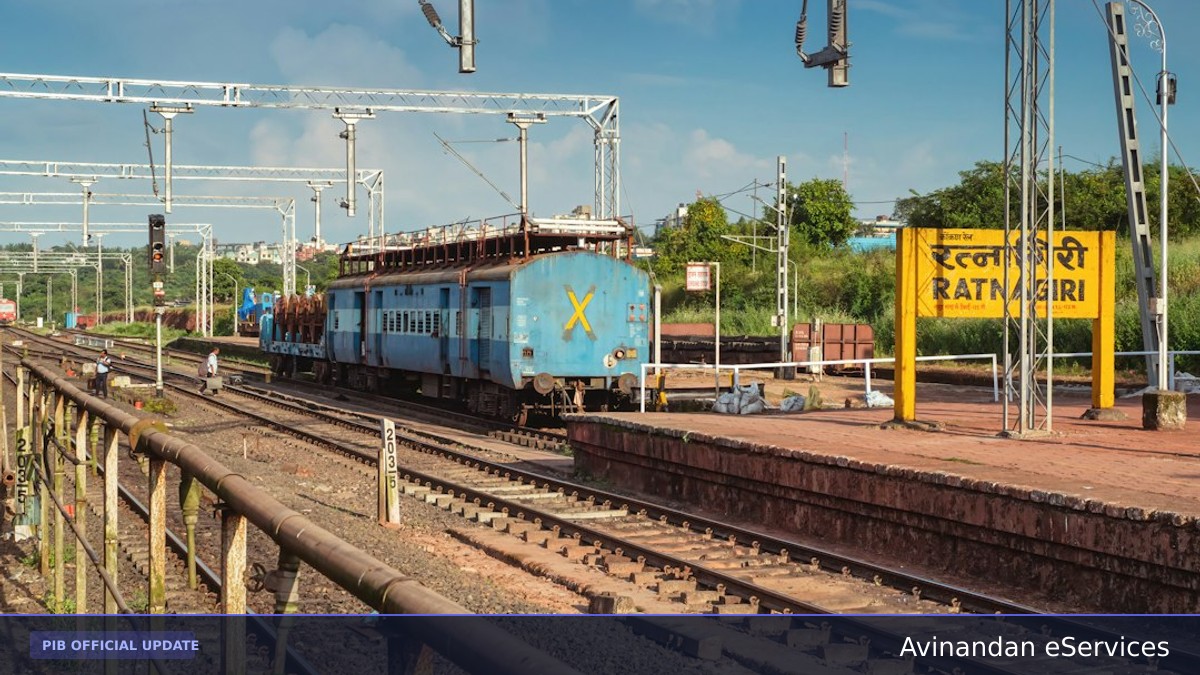
Indian Railways has achieved a monumental milestone in the infrastructure development of South Chhattisgarh with the successful completion of the final section of the Dallirajhara-Rowghat New Rail Line Project under the Raipur Division of South East Central Railway. The newly developed 17.5 km Taroki-Rowghat single-line electrified broad-gauge section recently underwent rigorous Commission of Railway Safety (CRS) inspection and high-speed trials, bringing remote tribal-dominated regions closer to mainstream economic corridors. Released officially via the Press Information Bureau (PIB) by the Ministry of Railways, this achievement heralds a transformative era for logistics, passenger convenience, and industrial growth in central India.
Key Highlights & Major Announcements
- Project Milestone: Completion of the final 17.5 km Taroki-Rowghat section of the 95 km long Dallirajhara-Rowghat New Line Project.
- Technical Specifications: Built as a single-line electrified broad-gauge section under the Raipur Division of South East Central Railway.
- Safety Compliance: Thorough CRS inspection and speed trials successfully examined tracks, bridges, culverts, electrification, and signaling systems.
- Industrial Integration: Directly facilitates seamless iron ore transportation to the Bhilai Steel Plant, fueling national steel manufacturing.
- Socio-Economic Catalyst: Enhances connectivity to regional hubs like Raipur and the educational center Bhilai, driving trade, education, and healthcare access.
Technical Parameters and CRS Inspection Process
The successful execution of the CRS inspection and speed trial represents a vital regulatory and operational checkpoint prior to the commercial commissioning of any new railway asset in India. Governed by stringent safety protocols, the comprehensive evaluation of the Taroki-Rowghat section involved microscopic scrutiny of infrastructural integrity. Railway safety experts meticulously examined every facet of the 17.5 km terrain, ranging from structural stability across bridges and culverts to the precision engineering of overhead electrical wiring and advanced signaling architectures.
Furthermore, dynamic speed trials were conducted to evaluate the load-bearing capacities and operational smoothness of the broad-gauge tracks under simulated heavy traffic conditions. By verifying that the section meets the highest benchmarks of national railway safety, the successful trial clears the runway for the final administrative approvals needed to open passenger and freight operations on this stretch.
Bridging Isolation: Connecting South Chhattisgarh
Historically, the remote expanses of South Chhattisgarh have faced severe geographical isolation, which constrained local populations from accessing fast-paced economic growth, higher education, and specialized healthcare. While passenger train services were previously operational only up to Taroki from Dallirajhara, the \textension up to Rowghat dramatically alters this landscape.
By bringing modern rail services to the doorstep of remote settlements, the project integrates isolated rural communities into India’s sprawling national railway network. Citizens can now look forward to reliable, economical, and comfortable commuting options that drastically reduce travel time to major urban centers like Raipur and Bhilai.
"The Taroki-Rowghat section will strengthen rail connectivity in the surrounding areas and provide better and convenient transportation options to the citizens of the region, while giving a vital boost to the national steel industry and regional socio-economic development." — Ministry of Railways, Government of India
Significance & National Impact
Beyond passenger convenience, the completion of the Dallirajhara-Rowghat New Rail Line Project carries profound strategic and macroeconomic importance for India's industrial backbone. Rowghat is globally recognized for its rich mineral reserves. The operationalization of this rail link ensures a steady, uninterrupted, and cost-effective supply chain for transporting iron ore directly to the Bhilai Steel Plant. This uninterrupted mineral feedstock pipeline is expected to significantly enhance domestic steel production capabilities, aligning with India's broader vision of self-reliance (Atmanirbhar Bharat) in heavy manufacturing.
At the same time, the railway line serves as a multi-utility corridor. Local farmers, small-scale entrepreneurs, and traders can now dispatch agricultural produce and commercial goods swiftly to larger consumer markets across the country. Improved connectivity to Bhilai—renowned as a premier educational hub—and Raipur, the state capital, unlocks unprecedented avenues for youth employment, higher education, and advanced healthcare access for residents of South Chhattisgarh.
Moreover, the expansion of railway infrastructure invariably triggers secondary economic multipliers. Better connectivity acts as a magnet for private investments, opens up untapped pockets for eco-tourism and cultural exploration, and fosters local entrepreneurship, paving the way for sustainable and inclusive regional development.
Frequently Asked Questions (FAQs)
What is the total length of the Dallirajhara-Rowghat New Rail Line Project?
The total length of the Dallirajhara-Rowghat New Line Project is 95 km, with the newly inspected Taroki-Rowghat section spanning 17.5 km.
Why is the Taroki-Rowghat rail section important for Indian industries?
This section facilitates the efficient transportation of iron ore from the rich mineral-bearing region of Rowghat directly to the Bhilai Steel Plant, thereby boosting India's steel manufacturing sector.
Which railway division manages the Dallirajhara-Rowghat project?
The project is managed under the Raipur Division of the South East Central Railway zone of Indian Railways.
What was the purpose of the recent CRS inspection?
The Commission of Railway Safety (CRS) inspection and speed trials were conducted to thoroughly examine tracks, bridges, electrification, and signaling, ensuring the operational capacity and safety standards of the section before commissioning.
Official Source & Verification
This article is grounded on the official press release issued by the Press Information Bureau (PIB), Government of India (Release ID: 2314060, Ministry of Railways). Access the official document: https://pib.gov.in/PressReleasePage.aspx?PRID=2314060&lang=1.