In a major crackdown on illegal imports, the Directorate of Revenue Intelligence (DRI) has successfully intercepted a massive consignment of smuggled firecrackers at the Nhava Sheva Port. Operating on actionable intelligence, DRI officers uncovered a sophisticated concealment method where hazardous explosives were camouflaged behind ordinary household goods. The operation highlights the relentless vigilance of Indian customs enforcement agencies in safeguarding national security, public safety, and domestic trade channels from illicit syndicates.
Key Highlights & Major Announcements
-
Seizure Volume: Approximately 10,000 kilograms of firecrackers (19,800 pieces of '288 Gatling').
Estimated Market Value: Valued at roughly Rs. 3 crore in the domestic market.
Modus Operandi: Misdeclared as 'Bottle & Wallpaper', with the contraband hidden behind the first three rows of legitimate cargo.
Enforcement Action: Seizure executed under the provisions of the Customs Act, 1962; key syndicate mastermind arrested.
Regulatory Violations: Direct breach of the Foreign Trade Policy and PESO licensing requirements under the Explosives Rules, 2008.
Anatomy of the Smuggling Operation at Nhava Sheva Port
The operation, spearheaded by intelligence officers of the DRI, underscores the complex challenges faced by port authorities in managing high-volume commercial cargo. Smugglers frequently attempt to bypass strict import regulations by exploiting the sheer volume of shipping containers processed daily at major trade hubs like Nhava Sheva.
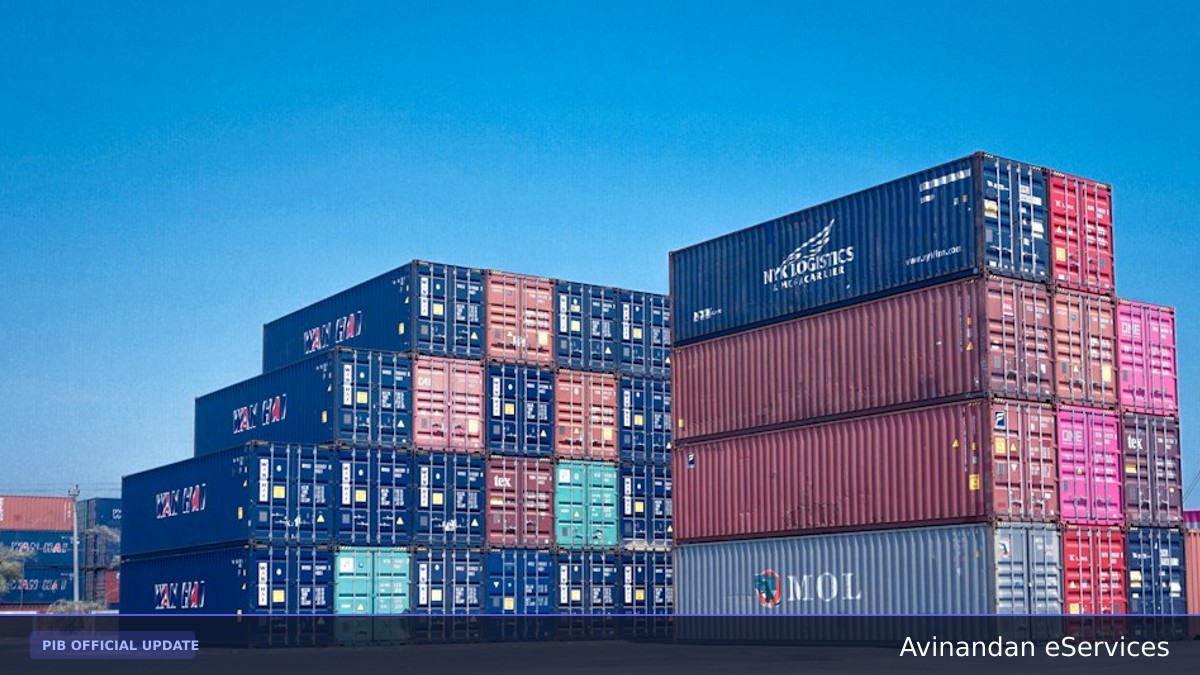
In this specific case, the importers attempted a classic 'cover cargo' fraud. When customs officials examined the container, the initial three rows appeared entirely legitimate, containing the declared items—bottles and wallpaper. However, a deeper, meticulous physical examination revealed that the remainder of the container was tightly packed with massive quantities of restricted firecrackers, specifically 19,800 pieces of the heavy-duty '288 Gatling' variety.
Regulatory Framework and Legal Violations
The import of firecrackers into India is not outrightly impossible, but it is strictly regulated to prevent environmental hazards, public safety risks, and unmonitored commercial distribution. Under India's Foreign Trade Policy, firecrackers fall strictly under the 'Restricted' category.
Bringing such goods into the country legally requires:
- Valid prior authorization and import licenses from the Directorate General of Foreign Trade (DGFT).
- Mandatory safety clearances and licenses from the Petroleum and Explosives Safety Organization (PESO) in accordance with the Explosives Rules, 2008.
- Compliance with environmental standards and explosive safety norms.
Because the intercepted consignment possessed none of these mandatory legal clearances, it constituted a clear violation of Indian trade and customs laws, prompting immediate seizure under the Customs Act, 1962.
"The operation underscores DRI’s continued focus on detecting misdeclaration and clandestine import of restricted goods through commercial cargo channels." — Directorate of Revenue Intelligence (DRI), Ministry of Finance
Significance & National Impact
The successful interception at Nhava Sheva is far more than a routine customs seizure; it represents a critical intervention for public safety and economic integrity. Unregulated and smuggled firecrackers pose severe safety hazards. Unlike legally manufactured domestic products that must adhere to stringent quality and chemical composition guidelines (such as green cracker norms mandated by the Supreme Court), smuggled explosives often contain highly unstable and toxic chemicals, including banned substances like chlorates and heavy metals.
Furthermore, illegal imports of this scale heavily undermine compliant domestic manufacturers and defraud the exchequer of vital customs duties and GST revenues. By arresting the key syndicate member orchestrating the clandestine clearance, the DRI has sent a strong deterrent message to smuggling networks utilizing commercial maritime routes.
Frequently Asked Questions (FAQs)
1. What was the total value and quantity of the seized firecrackers?
The DRI seized approximately 10,000 kg of firecrackers, consisting of 19,800 pieces of '288 Gatling' variety, with an estimated market value of Rs. 3 crore.
2. How were the illegal firecrackers hidden inside the container?
The smugglers employed a misdeclaration tactic, listing the cargo as 'Bottle & Wallpaper'. When inspected, only the first three rows of the container held the declared wallpaper, while the rest was packed with firecrackers.
3. Which agency conducted this operation?
The intelligence-led operation was executed by officers of the Directorate of Revenue Intelligence (DRI) at the Nhava Sheva Port.
4. Are firecrackers completely banned for import in India?
Firecrackers are not universally banned from import, but they are categorized as 'Restricted' items under the Foreign Trade Policy. Importing them legally requires special authorization from the DGFT and PESO licensing under the Explosives Rules, 2008.
Official Source & Verification
This article is grounded on the official press release issued by the Press Information Bureau (PIB), Government of India (Release ID: 2314148, Ministry of Finance). Access the official document: https://pib.gov.in/PressReleasePage.aspx?PRID=2314148&lang=1.