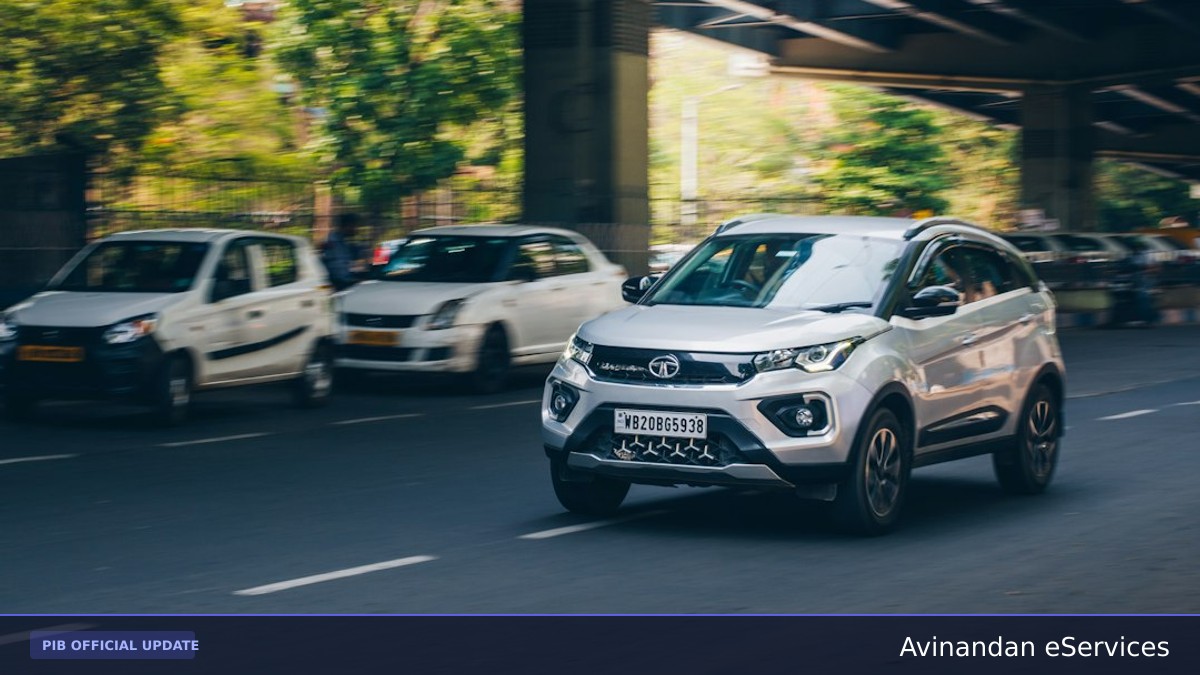
In a major push toward tech-enabled cooperative mobility, the 'Bharat Taxi' service has been officially launched in Uttar Pradesh. Union Minister of State for Cooperation, Shri Murlidhar Mohol, inaugurated the service in Lucknow during a high-profile event, marking its simultaneous rollout across major urban hubs including Gorakhpur, Varanasi, Kanpur, and Prayagraj. Guided by Prime Minister Shri Narendra Modi’s vision of ‘Sahkar Se Samriddhi’ and under the leadership of Union Home and Cooperation Minister Shri Amit Shah, the initiative aims to redefine urban transport by placing ownership directly into the hands of cab drivers.
The grand launch event witnessed the presence of Uttar Pradesh Chief Minister Shri Yogi Adityanath, Deputy Chief Minister Shri Brajesh Pathak, Agriculture Minister Shri Surya Pratap Shahi, Cooperation Minister Shri J.P.S. Rathore, Transport Minister Shri Dayashankar Singh, and other senior dignitaries. Additionally, more than 50,000 citizens and prospective 'Bharat Taxi Saarthis' from various districts joined the proceedings via online mode, demonstrating widespread public interest in this innovative cooperative model.
Key Highlights & Major Announcements
- Simultaneous Launch: Bharat Taxi rolled out in Lucknow, Gorakhpur, Varanasi, Kanpur, and Prayagraj on September 23, 2026.
- Core Principle: Built on the revolutionary ‘Driver is the Owner’ concept, making drivers stakeholders rather than mere service providers.
- Strategic Partnerships: Memoranda of Understanding (MoUs) were officially exchanged between Bharat Taxi and the Airport Authority, Lucknow Metro Rail, and Lucknow Police.
- Digital Governance Additions: Chief Minister Yogi Adityanath also launched the ‘Mukhyamantri Krishak Samriddhi Yojana’ Portal, Urvarak Setu Mobile App, and UPCDC Mobile App.
- Vast Cooperative Footprint: India currently boasts around 8.5 lakh cooperative societies with 32 crore members spanning nearly 30 sectors.
Transforming Urban Mobility Through Cooperation
Traditionally associated with agriculture, credit, and dairy, the cooperative sector in India is rapidly expanding into frontier domains such as storage, organic products, healthcare, and now urban mobility. Traditional ride-hailing aggregators often subject drivers to high commissions and rigid operational policies that reduce earnings. Bharat Taxi changes this equation entirely by empowering drivers to become co-owners of the cooperative enterprise.
By eliminating exploitative middlemen and ensuring transparent fare distributions, the service provides economic security to drivers while offering commuters a reliable, fair, and safe alternative. Strategic integrations with the Lucknow Metro, Airport Authority, and local police further ensure seamless multimodal connectivity and enhanced passenger safety across operational cities.
Expanding the Cooperative Ecosystem in Uttar Pradesh
The launch event was multi-faceted, featuring critical digital governance rollouts tailored to boost agriculture and rural infrastructure in Uttar Pradesh:
- Mukhyamantri Krishak Samriddhi Yojana Portal: Designed to streamline welfare delivery and financial support for the state's farmers.
- Urvarak Setu Mobile App: Developed by the UP Cooperation Department to optimize fertilizer distribution and supply chain transparency.
- UPCDC Mobile App: Created by the Uttar Pradesh Cooperative Database Centre to digitize and manage cooperative records efficiently.
“Under the leadership of Union Home and Cooperation Minister Shri Amit Shah, the Ministry of Cooperation has launched more than 160 new initiatives during the last five years, aimed at making cooperative institutions stronger, transparent, modern and economically capable.” — Shri Murlidhar Mohol, Union Minister of State for Cooperation
National Scale and Financial Backing of India's Cooperative Movement
Elaborating on the broader national framework, Shri Mohol highlighted the massive structural reforms underway across India. The computerization of approximately 80,000 Primary Agricultural Credit Societies (PACS) with an outlay of Rs 3,000 crore is radically changing grassroots economic activity. PACS are no longer restricted to credit; they now function as Common Service Centres, Pradhan Mantri Kisan Samriddhi Kendras, Jan Aushadhi Kendras, and petrol-diesel distribution points.
Furthermore, financial allocations to the cooperative sector have seen an exponential rise. While the National Cooperative Development Corporation (NCDC) \textended roughly Rs 45,000 crore in assistance over five decades from its establishment in 1963 until 2014, financial support has surged to nearly Rs 4.5 lakh crore over the last 12 years.
Frequently Asked Questions (FAQs)
1. What is the core principle behind Bharat Taxi?
Bharat Taxi operates on the core principle of ‘Driver is the Owner,’ meaning that the cab drivers are not just service providers but are actual stakeholders and owners within the cooperative ecosystem.
2. In which cities has Bharat Taxi been launched in Uttar Pradesh?
In its initial rollout phase, Bharat Taxi has been launched in Lucknow, Gorakhpur, Varanasi, Kanpur, and Prayagraj.
3. How does Bharat Taxi differ from conventional ride-hailing apps?
Unlike commercial aggregators that charge heavy commissions and offer limited driver welfare, Bharat Taxi is structured as a cooperative, ensuring fair earnings, direct ownership, and greater financial security for drivers.
4. Which ministry oversees the rollout of Bharat Taxi?
Bharat Taxi initiatives and broader cooperative expansions are steered at the national level by the Ministry of Cooperation, Government of India.
Official Source & Verification
This article is grounded on the official press release issued by the Press Information Bureau (PIB), Government of India (Release ID: 2314086, Ministry of Cooperation). Access the official document: https://pib.gov.in/PressReleasePage.aspx?PRID=2314086&lang=1.