In a powerful testament to grassroots socio-economic empowerment, the life of 25-year-old Shri Chevuri Anjaneyulu from Guntur, Andhra Pradesh, has undergone a transformative shift. Once navigating the immense hardships of traditional waste picking, Mr. Anjaneyulu has successfully stepped onto the path of financial security and entrepreneurial stability. This remarkable journey was made possible through crucial livelihood assistance under the Swachhta Udyami Yojana (SUY), a key component of the National Action for Mechanised Sanitation Ecosystem (NAMASTE) scheme, implemented via the Ministry of Social Justice & Empowerment, Government of India.
Released officially by PIB Delhi on 24 September 2026, this inspiring narrative underscores the profound impact targeted government interventions can have on vulnerable communities, particularly Scheduled Tribe individuals facing deep-seated generational barriers. By bridging the gap between informal labor and institutional support, schemes like SUY are rewriting the destiny of countless sanitation workers and waste pickers across the nation.
Key Highlights & Major Announcements
- Beneficiary Profile: Shri Chevuri Anjaneyulu, a 25-year-old waste picker belonging to the Scheduled Tribe community from Guntur, Andhra Pradesh.
- Financial Support Scheme: Swachhta Udyami Yojana (SUY), a component of the NAMASTE scheme.
- Executing Body: National Safai Karamcharis Finance and Development Corporation (NSKFDC).
- Project Financials: Total project cost of Rs 35 lakh for a group project involving four members, consisting of a Rs 17.5 lakh loan and a Rs 17.5 lakh upfront capital subsidy.
- Tangible Impact: An increase in monthly income by approximately Rs 10,000, enabling better household management and private English-medium education for his two children.
- Official Release Date: 24 September 2026, by the Ministry of Social Justice & Empowerment (PRID: 2314501).
Overcoming Generational Hardship: The Backstory
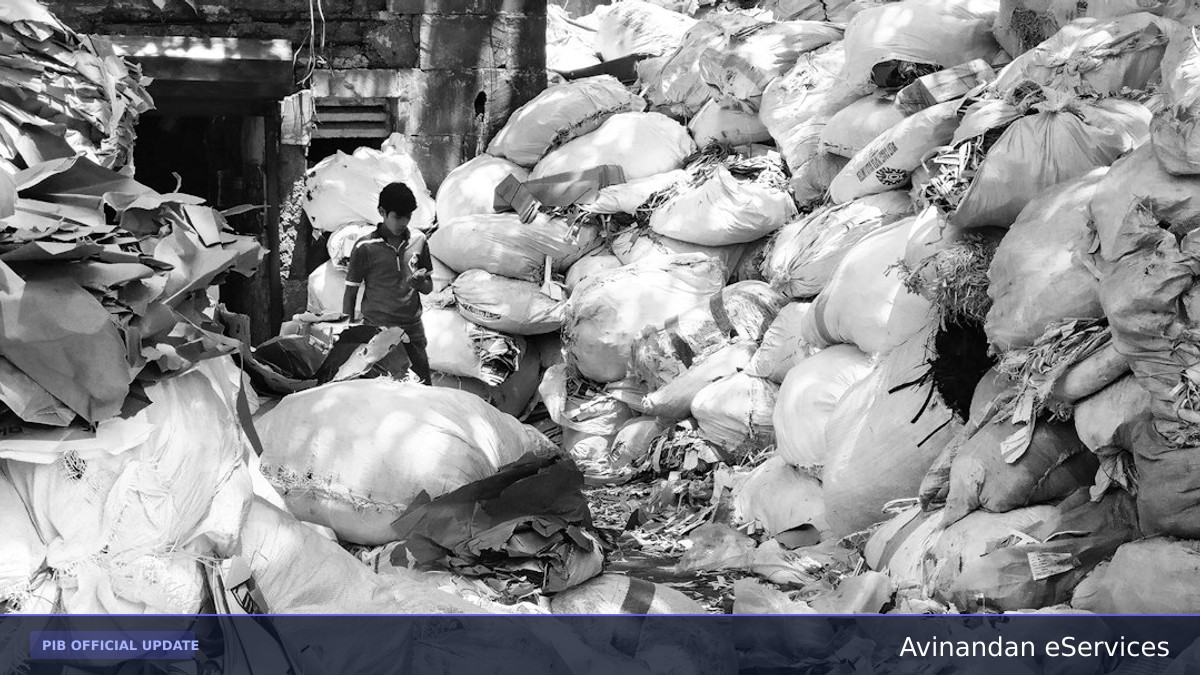
The early life of Shri Chevuri Anjaneyulu mirrors the grim reality faced by marginalized populations caught in the cycle of informal, hazardous labor. Belonging to the Scheduled Tribe community, Mr. Anjaneyulu began accompanying his parents into waste-picking work at a very young age. Persistent financial distress meant that formal education remained a distant dream, depriving him of foundational schooling opportunities.
Beyond economic vulnerability, waste pickers frequently navigate severe social discrimination and live with \textremely limited access to basic civic amenities and essential services. For seven years, Mr. Anjaneyulu worked tirelessly to support his wife and two children through manual waste collection. Despite his unrelenting efforts, his earnings were barely sufficient to cover daily household expenses, leaving zero room for savings, healthcare emergencies, or planning a secure future for his children. His overarching aspiration remained simple yet profound: to elevate his family's living standards and ensure his children received quality education.
The Turning Point: Swachhta Udyami Yojana (SUY) and NAMASTE Scheme
The turning point in Mr. Anjaneyulu's life arrived on 19 June 2023. Through targeted intervention by the National Safai Karamcharis Finance and Development Corporation (NSKFDC), he and three other members successfully secured financial backing for a group project under the Swachhta Udyami Yojana (SUY).
The financing structure of the project was meticulously designed to ease the debt burden on marginalized entrepreneurs. Out of a total project cost of Rs 35 lakh, the assistance comprised:
- A formal bank/institutional loan of Rs 17.5 lakh.
- An upfront capital subsidy of Rs 17.5 lakh, dramatically reducing the repayment liability and making the entrepreneurial venture economically viable from day one.
This financial synergy enabled Mr. Anjaneyulu to transition from traditional, low-yield waste picking to a structured, mechanized, or formalized group livelihood enterprise. The structured capital infusion served as the launchpad he needed to scale his operations and stabilize his income.
For Shri Anjaneyulu, this support has meant greater economic stability and a more secure future for his family. His experience shows how access to livelihood assistance can help waste pickers improve their income and pursue their aspirations.
Transforming Livelihoods: Tangible Outcomes and Family Impact
The impacts of the Swachhta Udyami Yojana intervention were immediate and life-changing. With his livelihood strengthened, Mr. Anjaneyulu now earns approximately Rs 10,000 more per month. This steady, augmented income has allowed his household to comfortably meet daily expenses without falling into debt traps.
Most importantly, the additional financial cushion has directly empowered his children's future. Both of his children are now enrolled in an English-medium private school—breaking the generational cycle of illiteracy and limited opportunities. What was once an unreachable aspiration is now a lived reality, as the family embraces a horizon filled with dignity, stability, and growth.
Significance & National Impact of the NAMASTE Scheme
The success story of Shri Anjaneyulu highlights the broader national vision of the Ministry of Social Justice & Empowerment. Initiatives like the NAMASTE scheme and the Swachhta Udyami Yojana are not merely financial programs; they are instruments of social justice, human dignity, and inclusive economic growth.
By targeting informal waste pickers and sanitation workers—often belonging to Scheduled Castes, Scheduled Tribes, and other marginalized groups—the government is systematically dismantling structural inequalities. Providing upfront capital subsidies alongside structured loans ensures that beneficiaries are not crushed by initial debt, thereby fostering sustainable micro-entrepreneurship at the grassroots level. As more beneficiaries gain economic autonomy, India moves closer to achieving its goals of equitable development and eradication of manual scavenging and hazardous informal labor.
Frequently Asked Questions (FAQs)
What is the Swachhta Udyami Yojana (SUY)?
The Swachhta Udyami Yojana is a specialized scheme component aimed at providing financial assistance to sanitation workers, waste pickers, and their dependents to help them start livelihood ventures and achieve financial independence.
Which ministry administers the NAMASTE scheme?
The NAMASTE scheme and its associated components are administered by the Ministry of Social Justice & Empowerment, Government of India.
How much financial assistance was provided to Shri Chevuri Anjaneyulu?
Mr. Anjaneyulu and three other members received support for a group project totaling Rs 35 lakh, which included a Rs 17.5 lakh loan and a matching Rs 17.5 lakh upfront capital subsidy through NSKFDC.
What are the primary benefits observed by beneficiaries under SUY?
Beneficiaries experience increased monthly earnings (such as an additional Rs 10,000/month in Mr. Anjaneyulu's case), improved household stability, access to better education for their children, and freedom from generational socio-economic vulnerabilities.
Official Source & Verification
This article is grounded on the official press release issued by the Press Information Bureau (PIB), Government of India (Release ID: 2314501, Ministry of Social Justice & Empowerment). Access the official document: https://pib.gov.in/PressReleasePage.aspx?PRID=2314501&lang=1.