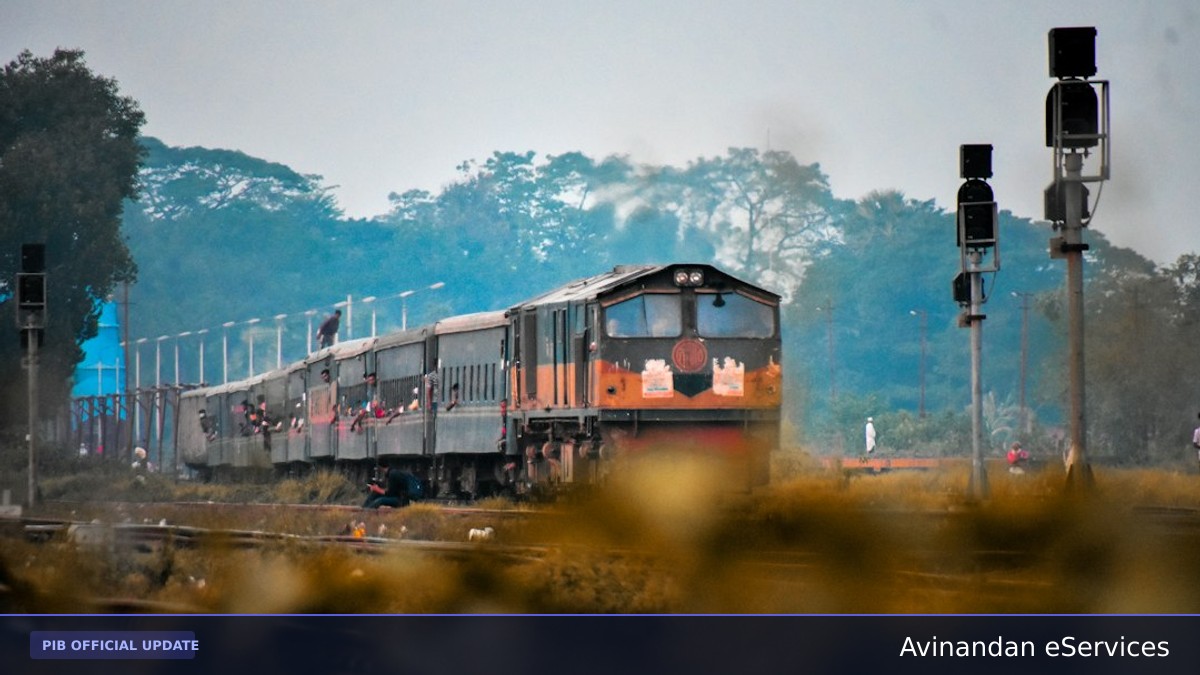
In a significant move to bolster regional connectivity and facilitate smoother travel for thousands of daily commuters and tourists, the Ministry of Railways has officially approved the \textension of Train No. 11901/11902 Virangana Lakshmibai Jhansi-Agra Cantt Express up to Mathura Junction. This strategic decision, announced by the Press Information Bureau (PIB) on September 25, 2026, marks a pivotal shift in the rail infrastructure of the North Central Railway (NCR) zone, effectively linking three of Uttar Pradesh's most culturally and economically vital cities: Jhansi, Agra, and Mathura.
The \textension is designed to address the growing demand for a direct, reliable rail link that caters to the specific needs of the Bundelkhand region while integrating it more deeply with the Braj region. By \textending the service beyond Agra Cantt, the Indian Railways aims to provide a seamless transit corridor that supports not only local commerce but also the burgeoning religious and heritage tourism circuit in Northern India.
Key Highlights & Major Announcements
- Train Extension: Train No. 11901/11902, formerly terminating at Agra Cantt, will now serve as the Virangana Lakshmibai Jhansi-Mathura Express.
- Increased Distance: The total journey length has been \textended from 217 km to 270 km, adding 53 km of critical rail coverage.
- New Commercial Stoppages: The \textended route includes four new strategic stops: Raja ki Mandi, Runkuta, Deen Dayal Dham, and Baad.
- Revised Schedule: Train 11901 will depart Jhansi at 16:00 hours, arriving in Mathura at 23:00 hours.
- Return Journey: Train 11902 will originate from Mathura at 05:05 hours, reaching Jhansi at 12:50 hours.
- Operational Authority: The service falls under the jurisdiction of the North Central Railway, aimed at optimizing track usage and passenger convenience.
Strategic Importance of the Jhansi-Agra-Mathura Corridor
The \textension of the Virangana Lakshmibai Jhansi-Agra Cantt Express is more than just a logistical adjustment; it is a strategic enhancement of the North-South rail artery. Jhansi, a historic gateway to the Bundelkhand region, serves as a major junction for trains moving toward Central and Southern India. Agra, globally renowned for the Taj Mahal, is a primary hub for international and domestic tourism. Mathura, the birthplace of Lord Krishna, attracts millions of pilgrims annually.
Bridging the Gap for Daily Commuters
A significant portion of the workforce and student population travels between these three cities. Previously, passengers from Jhansi heading to Mathura often had to change trains at Agra Cantt or rely on road transport, which is subject to traffic congestion and higher costs. The direct \textension eliminates these bottlenecks, providing a cost-effective and time-efficient alternative. The 16:00 departure from Jhansi is particularly beneficial for business travelers and students finishing their day's work, allowing them to reach Mathura by late evening.
Boosting Religious and Heritage Tourism
The inclusion of Deen Dayal Dham as a commercial stoppage is a masterstroke for religious tourism. As a site of significant cultural and spiritual importance, providing direct rail access will likely see a surge in footfall. Similarly, the stop at Raja ki Mandi serves the heart of Agra's commercial district, while Runkuta and Baad provide essential access to the suburban fringes of the Agra-Mathura industrial belt.
"The \textension will provide an additional train service between Virangana Lakshmibai Jhansi and Mathura, offering greater convenience to passengers travelling between Jhansi, Agra and Mathura... strengthening passenger connectivity and improving access to intermediate stations."
Technical Specifications and Operational Efficiency
From an operational standpoint, the \textension from 217 km to 270 km allows the North Central Railway to utilize its rolling stock more effectively. The turnaround time at Mathura has been calculated to ensure that the train can begin its return journey (11902) early the next morning at 05:05 hours. This early morning departure from Mathura is ideal for traders and office-goers who need to reach Agra or Jhansi before the afternoon.
Detailed Timetable Analysis
The 11901 service takes approximately 7 hours to cover the 270 km stretch, maintaining a steady average speed that accounts for the new intermediate stops. The return journey, 11902, is slightly faster, covering the distance in 7 hours and 45 minutes, arriving in Jhansi at 12:50. This scheduling ensures that the train does not conflict with high-speed premium services like the Gatimaan or Shatabdi Express, which also frequent this route, thereby maintaining overall sectional punctuality.
Significance & National Impact
This development aligns with the broader vision of the Ministry of Railways to enhance 'Ease of Travel' across the Indian subcontinent. By focusing on intermediate stations like Runkuta and Baad, the government is ensuring that the benefits of railway modernization reach beyond Tier-1 cities into Tier-2 and Tier-3 towns.
Economic Multiplier Effect
Improved rail connectivity is a known catalyst for economic growth. Small-scale industries in the Agra-Mathura region, particularly those involved in handicrafts, leather, and dairy, will benefit from the easier movement of personnel. Furthermore, the increased accessibility to Mathura and Jhansi is expected to stimulate the local hospitality and service sectors, creating jobs in hotels, transport, and tour guiding.
Environmental and Social Benefits
By encouraging a shift from road to rail, this \textension contributes to a reduction in the carbon footprint of the regional transport sector. Rail travel remains one of the most eco-friendly modes of mass transit. Socially, the train serves as a lifeline for families split between these cities, fostering better social integration and providing a safe, reliable mode of transport for women and elderly passengers.
Frequently Asked Questions (FAQs)
1. What are the new train numbers and the \textended route?
The train numbers are 11901 and 11902. The route has been \textended from its previous terminus at Agra Cantt to Mathura Junction. It now runs from Virangana Lakshmibai Jhansi to Mathura and back.
2. What are the timings for the \textended Jhansi-Mathura Express?
Train No. 11901 departs from Jhansi at 16:00 and reaches Mathura at 23:00. The return train, No. 11902, departs from Mathura at 05:05 and arrives in Jhansi at 12:50.
3. Which new stations will the train stop at after the \textension?
The train will now have commercial stoppages at Raja ki Mandi, Runkuta, Deen Dayal Dham, and Baad in the \textended portion of its journey.
4. How does this \textension benefit tourists?
The \textension provides a direct link between the historic city of Jhansi, the tourist hub of Agra, and the pilgrimage center of Mathura. It specifically benefits those visiting Deen Dayal Dham and the various temples in the Braj region.
Official Source & Verification
This article is grounded on the official press release issued by the Press Information Bureau (PIB), Government of India (Release ID: 2314723, Ministry of Railways). Access the official document: https://pib.gov.in/PressReleasePage.aspx?PRID=2314723&lang=1.