Union Home Minister and Minister of Cooperation, Shri Amit Shah, inaugurated a series of transformative initiatives aimed at bolstering women empowerment and the rural cooperative economy at the Pavithram Convention Centre in Kollam, Keralam. Guided by Prime Minister Shri Narendra Modi's overarching vision of “Sahkar se Samriddhi” (Prosperity through Cooperation), the mega-launch event marks a significant milestone in integrating grassroots female entrepreneurship directly into formal commercial value chains, thereby giving fresh momentum to India's rural economy during the Amrit Kaal of Independence.
The high-profile event was graced by the Union Minister of State for Petroleum and Natural Gas and Tourism, Shri Suresh Gopi, alongside esteemed dignitaries, cooperative sector leaders, and thousands of rural entrepreneurs and women farmers from across the state.
Key Highlights & Major Announcements
- Launch of 'She-Mart': Unveiled as a budget-backed flagship initiative to directly link women Self-Help Groups (SHGs) and rural entrepreneurs with urban and regional consumer markets.
- Expansion Target: Plans to establish over 300 She-Mart retail stores across Kerala, Tamil Nadu, and Karnataka to market local and 'Bharat Brand' commodities.
- Affordable Essentials via NAFED: Introduction of mobile vans across Keralam supplying subsidized onions, Bharat Atta, and Bharat Rice directly to farmers and the general public.
- Aatmanirbharta in Pulses: Distribution of high-yielding urad and gram seeds specifically to women farmers under national agricultural missions.
- Educational Welfare: Rollout of the NAFED-Kalyan Scholarship Scheme providing direct educational financial support to girl children from nearly 2,000 deserving families.
- Robust Cooperative Ecosystem: Recognition of Keralam's deeply rooted cooperative infrastructure featuring over 23,000 active institutions spanning Travancore, Kochi, and Malabar.
Contextual Analysis: Powering Women Through 'Sahkar se Samriddhi'
The creation of a dedicated Ministry of Cooperation at the Union level has fundamentally restructured India's approach to rural development. By shifting the focus toward cooperative federalism and grassroots economic democracy, the government has enabled traditional sectors to modernize. During his address in Kollam, Shri Amit Shah underscored that Keralam possesses an exemplary legacy of cooperative organization that predates India's independence, making it an ideal testing ground for high-impact cooperative models.
The Strategic Blueprint of 'She-Mart'
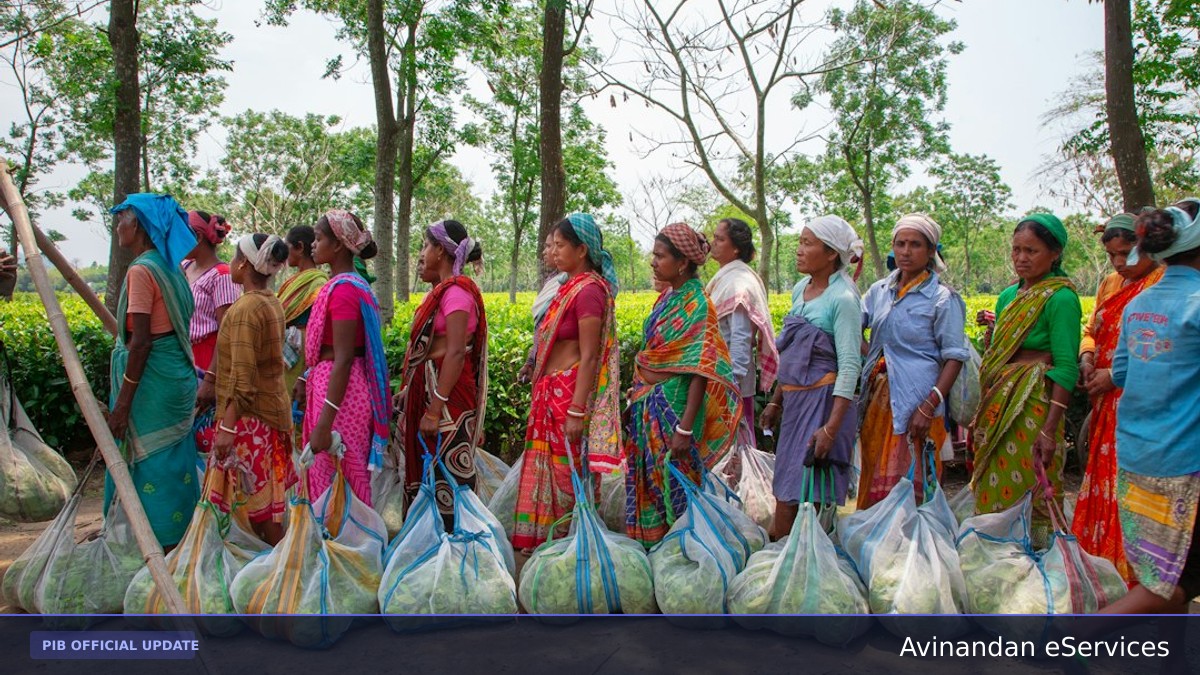
At the heart of the newly launched interventions is the 'She-Mart' framework. Traditionally, rural women entrepreneurs and Self-Help Groups face critical structural bottlenecks, including limited access to working capital, low bargaining power, inadequate cold-chain and packaging facilities, and heavy reliance on middlemen. The She-Mart model completely reimagines this retail pipeline.
By integrating apex institutions such as NAFED, Kendriya Bhandar, and Amul, She-Marts will provide comprehensive handholding across the entire commercial value chain. Women entrepreneurs will receive institutional support spanning procurement, scientific processing, standardized branding, professional packaging, and direct retail placement. With a strategic rollout targeting 300+ stores across Kerala, Tamil Nadu, and Karnataka, this initiative guarantees assured market linkage and sustainable income generation for rural households.
"Prime Minister Shri Narendra Modi has consistently guided that when the woman of a household prospers, the entire family prospers. When a woman in the household is empowered, its impact is reflected in the empowerment of the entire family. Therefore, the Government’s objective is to ensure that the greatest benefits of ‘Sahkar se Samriddhi’ reach the rural and poor women of the country." — Shri Amit Shah, Union Home Minister and Minister of Cooperation
Socio-Economic Impact and National Integration
The initiatives launched in Kollam transcend regional governance, aligning directly with broader national economic indicators. Recent empirical data highlights a phenomenal surge in female labor force participation across India, rising from roughly 23 percent in 2017-18 to approximately 40 percent today. This structural shift is propelled by targeted economic interventions, financial inclusion schemes, and grassroots entrepreneurship drives.
Furthermore, national cooperative bodies like NAFED and the National Cooperative Consumers' Federation of India (NCCF) are rapidly scaling their operational footprints. Currently, over 8 lakh farmers are actively associated with NAFED, while nearly 6 lakh women farmers are integrated with the NCCF network. By \textending nutritional security initiatives—such as subsidized distribution of Bharat Atta, Bharat Rice, and pulses—alongside educational scholarships for girl children, the Ministry of Cooperation is successfully weaving social security into economic policy.
Frequently Asked Questions (FAQs)
What is the primary objective of the 'She-Mart' initiative launched in Keralam?
The 'She-Mart' initiative aims to directly connect women Self-Help Groups (SHGs) and rural women entrepreneurs with larger consumer markets, offering end-to-end support from procurement and packaging to direct retail placement through more than 300 planned stores across southern states.
How does the Ministry of Cooperation support rural welfare under 'Sahkar se Samriddhi'?
The Ministry leverages India's robust cooperative network—such as NAFED and NCCF—to distribute subsidized food essentials (Bharat Atta, Bharat Rice, onions), provide high-yield agricultural seeds to women farmers, and \textend educational scholarships to girl children.
What role do institutions like NAFED and NCCF play in these programs?
NAFED and NCCF act as national federating bodies that provide institutional muscle, supply chain logistics, marketing infrastructure, and financial linkages to grassroots cooperatives, women farmers, and rural entrepreneurs.
How many cooperative institutions currently operate in Keralam?
Keralam features a deeply entrenched cooperative movement with more than 23,000 active cooperative institutions operating effectively across the state's historical regions of Travancore, Kochi, and Malabar.
Official Source & Verification
This article is grounded on the official press release issued by the Press Information Bureau (PIB), Government of India (Release ID: 2315341, Ministry of Cooperation). Access the official document: https://pib.gov.in/PressReleasePage.aspx?PRID=2315341&lang=1.