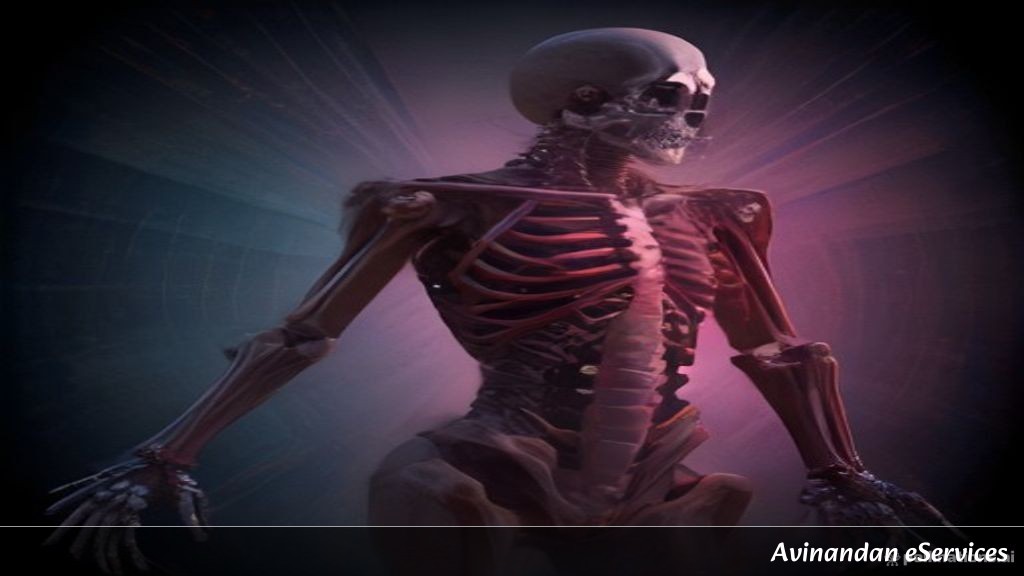
Introduction to Human Skeletal and Muscular System for RRB Exams
Biology forms a crucial segment of the General Science section in Indian Railway Recruitment Board (RRB) exams like RRB NTPC, Group D, and Technician posts. Within biology, human physiology holds significant weightage. The Human Skeletal and Muscular System is foundational to understanding human locomotion, support, and internal protection. Railway aspirants frequently encounter direct questions regarding bone counts, joints, muscle types, and skeletal disorders. This comprehensive guide breaks down the structural and functional aspects of bones, cartilage, joints, and muscles to help you ace your upcoming railway exams.
Topic Weightage and Importance
In RRB NTPC and Group D examinations, General Science contributes around 20 to 25 questions, out of which Biology accounts for 8 to 10 questions. Within biology, physiology questions are prominent, with at least 1 to 2 questions regularly asked from the skeletal and muscular systems. Questions are typically direct, factual, or application-based, testing your knowledge of scientific names, bone counts, and physiological mechanics. Mastering this chapter ensures you capture easy marks in your competitive examination.
Key Concepts and Formulas
Understanding the anatomical framework requires familiarity with specific terminologies and numerical facts. Let us review the core concepts:
1. The Human Skeletal System
The human skeletal system consists of a framework of 206 bones (in an adult human) and cartilages. It is divided into two principal divisions:
- Axial Skeleton (80 bones): Forms the main vertical axis of the body. It includes the Skull (22 bones), Vertebral Column (26 bones in adults), Sternum (1 bone), and Ribs (24 bones or 12 pairs).
- Appendicular Skeleton (126 bones): Comprises the bones of the limbs and their girdles. It includes Pectoral Girdle (4 bones), Pelvic Girdle (2 bones), and Limbs (120 bones: 60 in upper limbs and 60 in lower limbs).
2. Types of Joints
Joints are points of contact between bones or between bones and cartilage. They are classified based on mobility:
- Fibrous Joints: Immovable joints (e.g., sutures in the skull).
- Cartilaginous Joints: Slightly movable joints (e.g., vertebrae in the vertebral column).
- Synovial Joints: Freely movable joints characterized by a fluid-filled synovial cavity. Examples include:
- Ball and Socket Joint: Shoulder and hip joints (allows maximum movement).
- Hinge Joint: Knee, elbow, and interphalangeal joints (allows movement in one plane).
- Pivot Joint: Between atlas and axis (neck region).
- Saddle Joint: Between carpal and metacarpal of thumb.
3. The Human Muscular System
Muscles account for about 40-50% of the total body weight. They are specialized tissues exhibiting excitability, contractility, \textensibility, and elasticity. Based on structure and function, muscles are classified into:
- Skeletal Muscles: Voluntary, striated, and attached to bones (e.g., biceps, triceps).
- Visceral (Smooth) Muscles: Involuntary, non-striated, located in walls of internal organs like the alimentary canal and blood vessels.
- Cardiac Muscles: Involuntary, striated, branched muscles found exclusively in the heart wall.
4. Key Physiological Terminology and Chemical Basis
Muscle contraction is explained by the Sliding Filament Theory proposed by A.F. Huxley and R.H. Niedergerke. The process requires calcium ions ($ \text{Ca}^{2+}$) and adenosine triphosphate ($ \text{ATP}$). Accumulation of lactic acid due to anaerobic glycolysis during strenuous exercise causes muscle fatigue.
Solved Examples (Step-by-Step)
Let us review some standard previous-year style questions to understand how concepts are tested in RRB exams.
Example 1: Bone Count in Axial Skeleton
Question: How many bones constitute the axial skeleton in an adult human being?
Step-by-Step Explanation:
1. Recall the total number of bones in an adult human: 206.
2. Recall the division of the skeletal system: Axial Skeleton and Appendicular Skeleton.
3. Count the axial skeleton components: Skull has 22 bones, vertebral column has 26 bones, sternum has 1 bone, and ribs have 24 bones.
4. Sum them up: $22 + 26 + 1 + 24 = 80$ bones.
Answer: 80 bones.
Example 2: Longest Bone Identification
Question: Which is the longest and heaviest bone in the human body?
Step-by-Step Explanation:
1. Analyze the options typically given in RRB exams: Humerus, Femur, Tibia, Stapes.
2. Recall that the thigh bone supports the upper body weight and spans from the hip to the knee.
3. Identify this bone as the Femur (thigh bone).
4. Note that the shortest/smallest bone is the Stapes (in the middle ear).
Answer: Femur.
Example 3: Muscle Fatigue Cause
Question: Which chemical substance accumulates in the muscles during rigorous exercise, leading to fatigue?
Step-by-Step Explanation:
1. During heavy exercise, oxygen supply to muscles may become inadequate.
2. Muscles shift temporarily from aerobic respiration to anaerobic glycolysis to generate energy.
3. Pyruvic acid formed during glycolysis is converted into lactic acid in the absence of sufficient oxygen.
4. The deposition of lactic acid causes muscle cramps and fatigue.
Answer: Lactic acid.
Common Mistakes to Avoid
Aspirants often lose marks due to minor confusions in anatomical facts. Keep these points in mind:
- Confusing the total number of bones in infants (around 300) with adults (206).
- Mixing up the smallest bone (Stapes) with the smallest muscle (Stapedius).
- Believing cardiac muscles are under conscious control because they are striated. Remember: cardiac muscles are striated but involuntary.
- Forgetting that ribs are 12 pairs (total 24), where the last two pairs (11th and 12th) are floating ribs.
Practice Questions with Solutions
Test your preparation with these high-yield practice questions:
Q1. What is the total number of bones present in the appendicular skeleton of an adult human?
Q2. Which joint type is present between the atlas and axis vertebrae?
Q3. The protein responsible for thick filaments in skeletal muscle is called what?
Q4. Which bone is commonly known as the collarbone?
Q5. What type of muscle tissue is found in the walls of blood vessels and the stomach?
Solutions to Practice Questions
Sol 1: 126 bones (60 in upper limbs, 60 in lower limbs, 4 in pectoral girdle, 2 in pelvic girdle).
Sol 2: Pivot joint (allows rotational movement of the head).
Sol 3: Myosin (while thin filaments are made of actin).
Sol 4: Clavicle (Pectoral girdle component).
Sol 5: Smooth muscles (Visceral, involuntary, and non-striated).
Frequently Asked Questions (FAQs)
Q1: How many questions from biology appear in RRB NTPC?
A: Biology generally constitutes about 8 to 10 questions in the General Science section of the RRB NTPC CBT-1 exam, making it a high-scoring area.
Q2: Are questions asked directly from NCERT textbooks?
A: Yes, RRB frequently derives factual questions directly from Class 9 and 10 NCERT Science textbooks. Thorough reading of these texts is strongly recommended.
Q3: Is human physiology important for RRB Group D as well?
A: Absolutely. The syllabus for RRB Group D and NTPC overlaps significantly in General Science, with human organ systems being a recurring topic.
Conclusion and Final Tips
Mastering the Human Skeletal and Muscular System is vital for scoring high in the General Science section of RRB exams. Focus on anatomical numbers, joint classifications, and chemical processes like muscle contraction. Revise these concepts regularly, practice past years' questions, and stay consistent with your preparation. Good luck with your railway exam journey!