Indian Navy Strengthens Indo-Pacific Ties: INS Sahyadri and INS Kulish Conclude ADMM-Plus Maritime Exercise
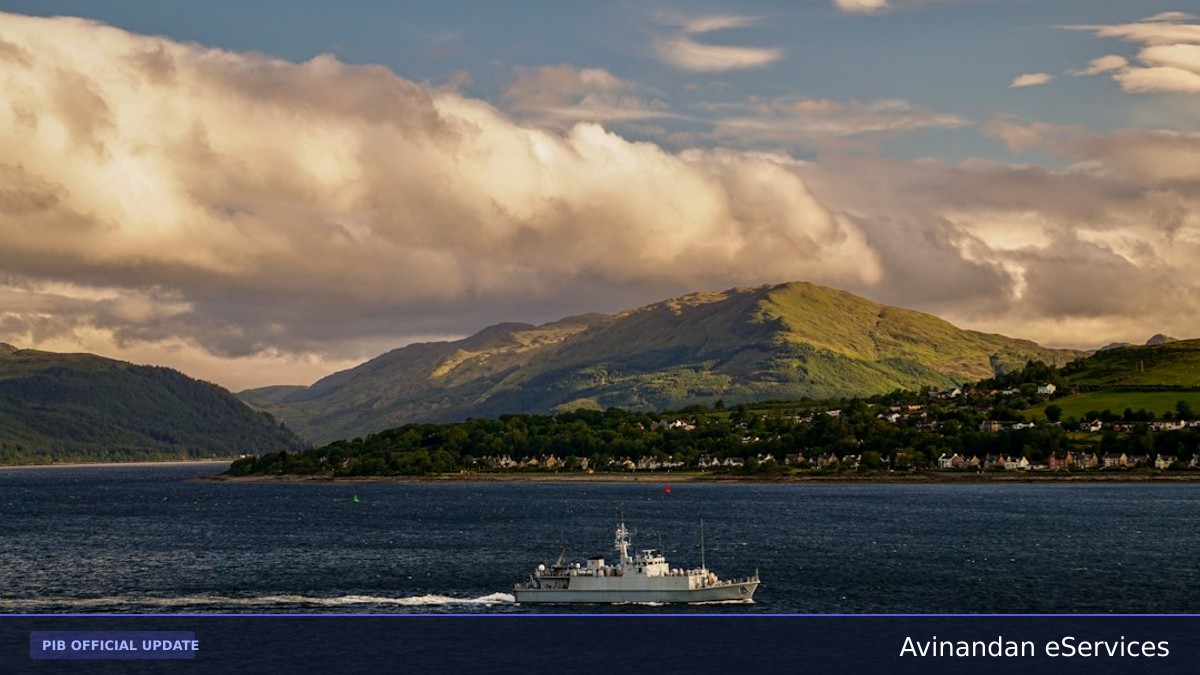
In a significant demonstration of India's commitment to regional maritime security and multilateral cooperation, the Indian Navy successfully concluded its participation in the 23rd ADMM-Plus Experts’ Working Group on Maritime Security Joint Cooperation Activity (EWG-MS JCA). The exercise, held at Subic Bay, Philippines, saw the frontline stealth frigate INS Sahyadri and the missile corvette INS Kulish represent India on the international stage, marking a pivotal moment in the nation's strategic engagement within the Indo-Pacific region.
Key Highlights & Major Announcements
- Participating Vessels: The Indian Navy deployed the frontline stealth frigate INS Sahyadri and the missile corvette INS Kulish.
- Event Duration: The exercise spanned from September 21 to September 25, 2026.
- Host and Co-chair: The event was hosted by the Philippine Navy and co-chaired by Japan, emphasizing the collaborative nature of the ADMM-Plus framework.
- Operational Scope: The activity included a comprehensive Harbour Phase featuring subject matter expert exchanges and a rigorous Sea Phase involving search and rescue, hydrographic surveys, and casualty evacuation drills.
- Strategic Alignment: The mission directly supports India’s 'Act East Policy' and the vision of MAHASAGAR (Mutual and Holistic Advancement for Security and Growth Across Regions).
Contextual Analysis: The ADMM-Plus Framework
The ASEAN Defence Ministers’ Meeting-Plus (ADMM-Plus) serves as a premier security architecture in the Asia-Pacific region. By bringing together ASEAN member states and eight 'Plus' countries—including India, Japan, the United States, and Australia—the forum facilitates practical cooperation to address common maritime challenges. The 23rd EWG-MS JCA was designed to enhance interoperability between navies, ensuring that diverse fleets can operate seamlessly during humanitarian crises or security threats.
The Harbour Phase: Building Professional Synergy
The initial phase of the exercise focused on intellectual and cultural exchange. Naval personnel engaged in Subject Matter Expert Exchanges (SMEEs) covering critical topics such as the ASEAN Navy Chiefs’ Meeting and Guidelines for Maritime Interaction (ANCM-GMI). These discussions are vital for establishing a common language and set of protocols for maritime encounters, reducing the risk of miscalculation in busy shipping lanes. Furthermore, the inclusion of community engagement programs, such as the visit to the Shepherds of the Hill Center in Zambales, highlighted the 'soft power' aspect of naval diplomacy, fostering goodwill with local populations.
The Sea Phase: Testing Operational Readiness
The Sea Phase transitioned from theory to practice. Coordinated serials were executed to test the responsiveness of the participating navies. Key drills included:
- Search and Rescue (SAR): Simulating responses to maritime distress calls.
- Hydrographic Survey: Essential for safe navigation and mapping of critical sea lanes.
- Casualty and Medical Evacuation: Ensuring the ability to provide life-saving support in remote maritime environments.
- Deck Landing Qualifications: Testing the ability of helicopters to land on foreign naval vessels, a core requirement for joint operations.
"The successful conduct of the EWG-MS JCA highlighted the value of professional interaction and practical multilateral engagement in strengthening maritime cooperation. India’s participation reaffirmed its commitment to regional partnerships in consonance with the Act East Policy and the vision of MAHASAGAR."
Significance & National Impact
India’s active participation in the ADMM-Plus exercise is not merely a military drill; it is a strategic signal of India's role as a 'net security provider' in the Indian Ocean and beyond. As the Indo-Pacific becomes the center of global geopolitical gravity, India’s ability to project power and build partnerships is paramount. The MAHASAGAR vision, which prioritizes the security and growth of all regional stakeholders, is bolstered by these exercises. By participating in these drills, the Indian Navy gains invaluable experience in operating alongside diverse international fleets, ensuring that its personnel remain at the cutting edge of modern maritime warfare and humanitarian assistance protocols.
Frequently Asked Questions (FAQs)
What is the ADMM-Plus Experts’ Working Group?
The ADMM-Plus Experts’ Working Group is a platform for ASEAN and its dialogue partners to discuss and conduct practical exercises related to defense and security, specifically focusing on maritime security, counter-terrorism, and humanitarian assistance.
Why is the 'Act East Policy' relevant to this exercise?
The Act East Policy is India's strategic effort to cultivate \textensive economic and strategic relations with the nations of Southeast Asia. Participating in maritime exercises in the Philippines directly strengthens these bilateral and multilateral defense ties.
What does the MAHASAGAR vision entail?
MAHASAGAR stands for 'Mutual and Holistic Advancement for Security and Growth Across Regions.' It is India's overarching maritime vision that promotes a secure, stable, and prosperous maritime domain through collaborative efforts and shared responsibility among regional nations.
Official Source & Verification
This article is grounded on the official press release issued by the Press Information Bureau (PIB), Government of India (Release ID: 2315585, Ministry of Defence). Access the official document: https://pib.gov.in/PressReleasePage.aspx?PRID=2315585&lang=1.