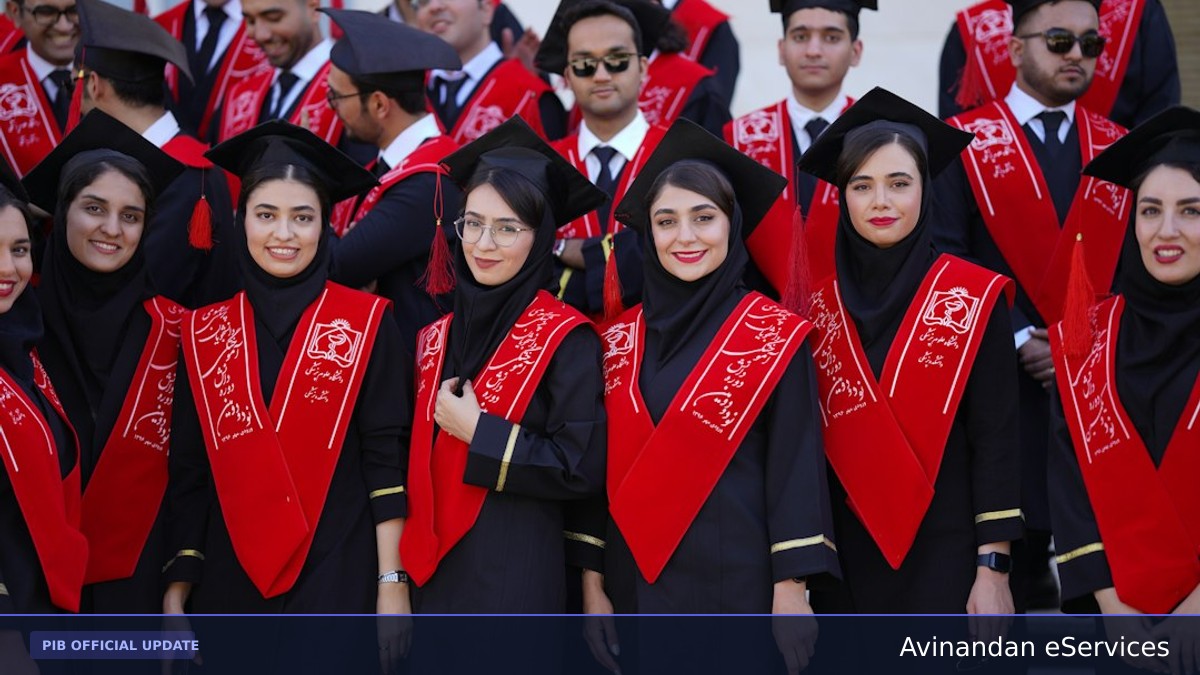
In an era where artificial intelligence, robotics, and precision medicine are rapidly reshaping the boundaries of healthcare, the fundamental human element of medicine remains irreplaceable. This profound sentiment was underscored by the Vice-President of India, Shri C. P. Radhakrishnan, as he served as the Chief Guest at the 15th Graduation Day Ceremony of the Sree Uthradom Thirunal (SUT) Academy of Medical Sciences in Thiruvananthapuram, Kerala. The landmark event brought together senior government functionaries, academic leaders, proud families, and the nation's newest cohort of medical professionals to celebrate academic excellence and the future of Indian healthcare.
The ceremony, which marked a critical milestone for graduating undergraduate and postgraduate medical students, also witnessed the inauguration of cutting-edge Robotic Surgery and Computer-Aided Diagnosis facilities at the institute. This development directly mirrors the broader national push toward modernizing medical infrastructure while ensuring that the evolving healthcare landscape remains deeply rooted in compassion, ethical responsibility, and patient trust.
Key Highlights & Major Announcements
- Chief Guest: Shri C. P. Radhakrishnan, Vice-President of India, presided over the ceremony.
- Dignitaries in Attendance: Shri Rajendra Viswanath Arlekar, Governor of Tamil Nadu and Keralam; Smt. Bindhu Krishna, Minister for Labour, Animal Husbandry and Women and Child Development, Government of Keralam; Dr. A. C. Shanmugam, Chairman of SUT Academy of Medical Sciences; and Dr. Mohanan Kunnummal, Vice Chancellor of Kerala University of Health Sciences.
- New Infrastructure: Inauguration of state-of-the-art Robotic Surgery and Computer-Aided Diagnosis facilities at the institute.
- Graduating Cohort Statistics: A strong representation of women graduates, with 60 women and 32 men receiving undergraduate degrees, alongside 5 women and 2 men doctors receiving postgraduate degrees.
- Core Guiding Principles: The Vice-President urged graduates to carry knowledge in their minds, compassion in their hearts, and integrity in their conduct, while explicitly advising them to “always say No to drugs.”
The Intersection of Advanced Technology and Clinical Practice
Addressing the newly minted medical professionals, the Vice-President noted that they are entering the professional sphere at an \textraordinary juncture in human history. Technologies such as Artificial Intelligence (AI), advanced imaging, digital health platforms, and precision medicine are fundamentally rewriting clinical workflows and diagnostic precision. The integration of advanced technological infrastructure—such as the newly inaugurated Robotic Surgery and Computer-Aided Diagnosis facilities at SUT Academy—illustrates how forward-thinking institutions in Kerala are bridging the gap between conventional education and next-gen medical tech.
However, Shri Radhakrishnan was quick to issue a timely cautionary note regarding the limitations of machines in the healing arts. While algorithms can detect patterns, machines can analyze \textensive datasets, and surgical robots can assist in complex maneuvers, they cannot replicate the empathetic connection required between a healer and a sufferer. A patient ultimately seeks out a professional who can listen actively, offer psychological reassurance, understand nuanced pain, and bear the ultimate moral responsibility of medical decisions.
“Technology can assist a doctor, but it cannot replace the human aspects of a doctor. A machine can analyse. A robot can assist. An algorithm can identify patterns. But a patient still needs a doctor who can listen, understand, reassure and take responsibility.” — Shri C. P. Radhakrishnan, Vice-President of India
Viksit Bharat @ 2047 and the Expansion of Medical Education
Placing the convocation in a wider national context, the Vice-President connected local institutional growth with the overarching national vision of Viksit Bharat @ 2047, championed by Prime Minister Shri Narendra Modi. Achieving a developed nation status requires holistic, decentralized growth across every Indian state, district, and village, with accessible and high-quality higher education serving as the bedrock of this transformation.
Over the past dozen years, India has witnessed a monumental expansion in medical education infrastructure. From a landscape where the All India Institute of Medical Sciences (AIIMS) was largely restricted to New Delhi, the nation has seen the establishment of 12 new AIIMS institutions, fundamentally democratizing access to super-specialty healthcare and medical training across underserved regions.
Rising Women Leadership in Indian Healthcare
A particularly encouraging trend highlighted by the Vice-President during his address across various national convocations is the phenomenal rise of women in professional education. At the 15th Graduation Day of SUT Academy, this trend was prominently visible. Out of the total undergraduate cohorts, 60 women successfully earned their degrees alongside 32 men, while postgraduate degrees were awarded to 5 women and 2 men doctors. This demographic shift underlines the profound socio-economic empowerment of women in India, positioning them at the very vanguard of public health delivery and medical research.
Frequently Asked Questions (FAQs)
1. Which institution hosted the 15th Graduation Day Ceremony attended by the Vice-President?
The ceremony was hosted by the Sree Uthradom Thirunal (SUT) Academy of Medical Sciences located in Thiruvananthapuram, Keralam.
2. What major technological facilities were inaugurated during the event?
Advanced Robotic Surgery and Computer-Aided Diagnosis facilities were officially inaugurated at the institute to align medical training with cutting-edge global healthcare standards.
3. What are the three core guiding principles given by Vice-President C. P. Radhakrishnan to the graduates?
The Vice-President urged young doctors to carry knowledge in their minds, compassion in their hearts, and integrity in their conduct throughout their professional careers.
4. How many AIIMS institutions have been established to boost medical education in India over recent years?
Highlighting the rapid expansion of medical education infrastructure over the past twelve years, the Vice-President noted that 12 new AIIMS have been established across the country.
Official Source & Verification
This article is grounded on the official press release issued by the Press Information Bureau (PIB), Government of India (Release ID: 2315603, Vice President's Secretariat). Access the official document: https://pib.gov.in/PressReleasePage.aspx?PRID=2315603&lang=1.