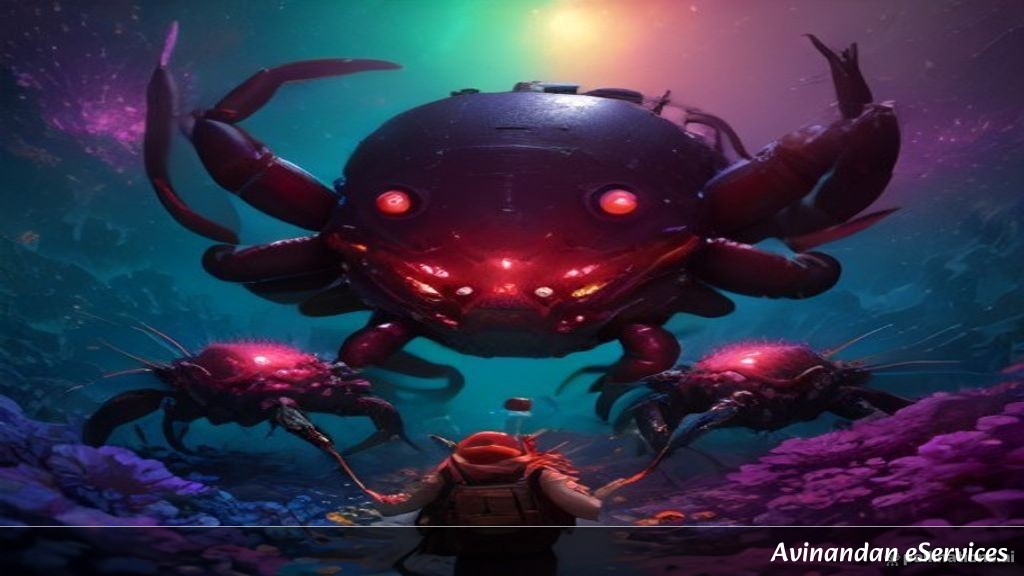
Samir: Zara, check out this super weird picture on my tablet! Look at this grumpy crab covered in a messy, puffy green sponge. Does it have mold or something?
Zara: Oh, that is not mold, Samir! That is a decorator crab, and that sponge is actually part of its custom-made fashion statement. But more importantly, it is an exploding chemical backpack!
Samir: Wait, an exploding backpack? Does the crab carry dynamite underwater? That sounds completely wild and totally dangerous!
Zara: Not dynamite, chemistry! The crab purposefully plucks live marine sponges, cuts them to fit its shell, and glues them on using a special sticky liquid that its own body makes. It looks like a walking garden, but it is actually a mobile chemical defense lab.
Wow, how does that work?
Zara: Sponges cannot run away from hungry fish or octopuses, so they protect themselves by making terrible-tasting chemicals that taste gross and can even be toxic. When a hungry fish tries to take a bite out of the crab's sponge coat, the sponge gets squeezed and releases these foul-tasting chemicals directly into the water, shocking the attacker!
Samir: That is so clever! The crab gets a free shield, and the sponge gets to hitch a ride to new places to find food. It is like an underwater roommate agreement!
Zara: Exactly, Samir! Scientists call this mutualism. The decorator crab uses sticky hairs called setae on its shell to hook the sponge in place. Some crabs even use stinging sea anemones or toxic sea squirts as their backpack gear. Let us look at the chemical reaction formula they use to hold it all together: $C_6H_{12}O_6$ is just basic energy for them, but their natural adhesive proteins form super strong cross-linked bonds, much like a natural epoxy!
Samir: Wow, nature is literally full of secret ninja gadgets. If I had a backpack like that, I would definitely pick tiny laser-shooting jellyfish!
Zara: Haha, I think jellyfish would be way too slippery! But decorator crabs show us how animals survive by using the special traits of other creatures around them.
So, What Did We Learn Today?
- Decorator crabs wear live sponges and other marine animals on their shells as living camouflage and chemical weapons.
- These sponges release foul-tasting, toxic chemicals when a predator tries to bite them, acting like an exploding defensive shield.
- The crab uses special sticky hairs and natural biological glue to secure its living backpack.
- This relationship is a great example of mutualism, where both the crab and the sponge help each other survive in the wild ocean.
Samir: I am definitely never looking at crabs the same way again. They are basically underwater engineers!