In a significant move to revolutionize the rural economy through data-driven governance, the Ministry of Rural Development (MoRD), Government of India, successfully concluded a high-level two-day National Workshop on “Strengthening Digital Data Systems and Evidence-Based Learning”. Held on the 12th and 13th of October 2026 in Gurugram, Haryana, the workshop marks a pivotal moment for the Deendayal Antyodaya Yojana-National Rural Livelihood Mission (DAY-NRLM) as it transitions into a more technologically advanced and outcome-oriented phase.
The workshop brought together a powerhouse of stakeholders, including representatives from State Rural Livelihoods Missions (SRLMs), NITI Aayog, and global development giants such as the World Bank, GIZ, and the Bill & Melinda Gates Foundation. The primary objective was to refine the digital architecture that supports nearly 10 crore women across India, ensuring that the journey from financial inclusion to sustainable prosperity is backed by robust, verifiable data.
Key Highlights & Major Announcements
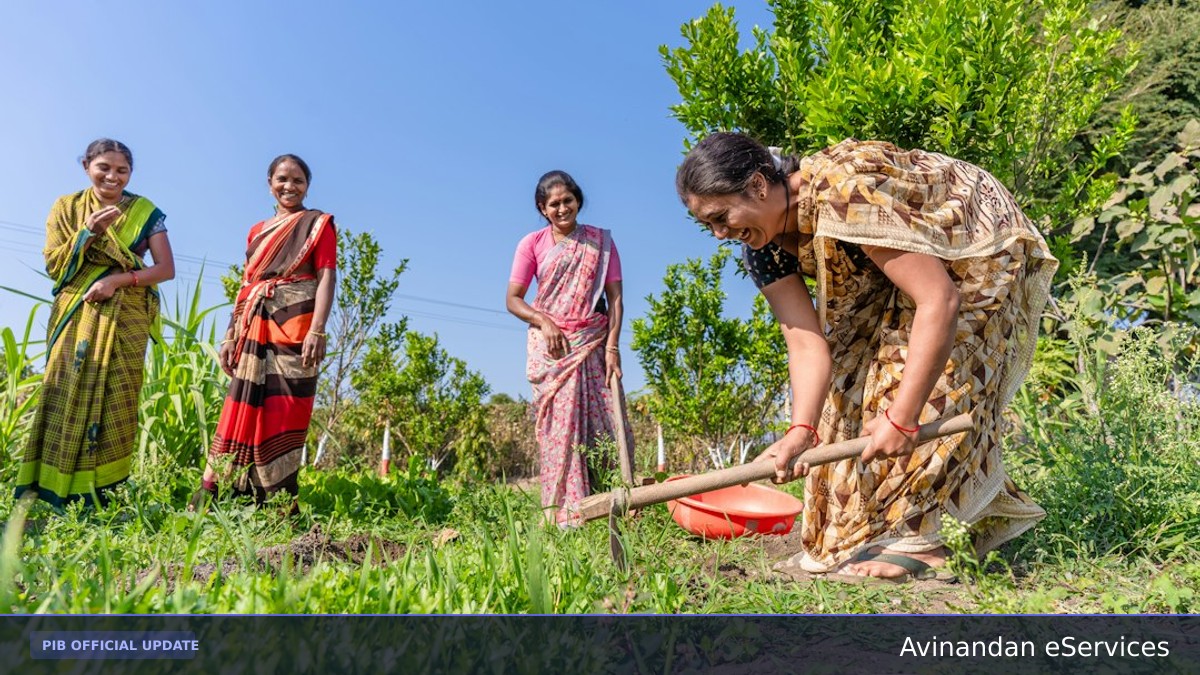
- Massive Financial Footprint: Approximately 10 crore women organized into 92 lakh Self-Help Groups (SHGs) have successfully leveraged formal credit amounting to a staggering ₹14 lakh crore.
- The 6 Crore Target: The Ministry has set an ambitious goal to track and support the progress of 6 crore 'Lakhpati Didis' (women earning over ₹1 lakh annually).
- Enterprise Strengthening: A focused effort to bolster around 87 lakh rural enterprises in the upcoming phase of the mission.
- LokOS Integration: The LokOS platform is set to become a seamless operational interface integrated with banking portals to facilitate a digital credit journey.
- Strategic Pivot: A shift from mere monitoring dashboards to advanced decision-support systems based on the '5 Cs' of data: Complete, Consistent, Current, Correct, and Verifiable.
The Strategic Shift: From Inclusion to Prosperity
During the workshop, Shri Vipin Kumar, Additional Secretary, Department of Rural Development, outlined three fundamental strategic shifts that will define the future of DAY-NRLM. These shifts are designed to move beyond the initial stages of the mission and focus on long-term economic sustainability for rural households.
1. From Inclusion to Prosperity
While the initial years of DAY-NRLM focused on bringing rural women into the formal institutional fold, the focus has now shifted toward wealth creation. The goal is no longer just to form groups but to ensure these groups become engines of economic growth that lift families out of poverty permanently.
2. From Credit Access to Quality Credit
Access to credit was the first hurdle; the next is ensuring 'quality credit.' This involves timely availability, appropriate loan sizes for enterprise scaling, and lower transaction costs. By using digital footprints, the Ministry aims to make credit more accessible and tailored to the specific needs of rural entrepreneurs.
3. From Supported to Self-Reliant Institutions
The vision is to transform SHGs, Village Organizations (VOs), and Cluster Level Federations (CLFs) into self-governing, self-reliant institutions. By digitizing their financial transactions and profiles on the LokOS platform, these institutions can build a 'digital record of credibility,' reducing their dependence on \texternal handholding over time.
“What gets measured gets done; what gets measured gets improved. We must move from monitoring dashboards to decision-support systems where data is complete, consistent, current, correct, and verifiable.”
— Shri Rohit Kansal, Secretary, Department of Rural Development, GoI
LokOS: The Digital Backbone of Rural Empowerment
A central theme of the Gurugram workshop was the optimization of LokOS, the comprehensive ERP solution for SHGs. The Ministry is working to ensure that LokOS is not just a data entry tool but a functional platform that bridges the gap between rural women and formal financial institutions. By integrating LokOS with banking portals, the government aims to create a 'seamless digital credit journey,' where a woman's saving and repayment behavior serves as her collateral-free credit score.
The workshop reviewed the progress of digitizing profiles for SHGs, VOs, and CLFs. The validation of this data is considered the foundation for building accurate credit histories and performing deep-dive program analysis. This digital evidence base will allow the government to connect administrative datasets across various schemes, ensuring a holistic approach to rural development.
Significance & National Impact
The implications of strengthening digital data systems under DAY-NRLM are profound for India's socio-economic landscape. By investing in state capacity to generate and use evidence, the Ministry is ensuring that every rupee spent is an investment in a verifiable outcome. The shift toward tracking household, institutional, and enterprise-level outcomes means that policy interventions can be hyper-localized and highly effective.
Furthermore, the focus on 'Lakhpati Didis' is not just a slogan but a targeted economic intervention. Empowering 6 crore women to reach this income milestone could potentially add billions to the national GDP while significantly improving indicators in health, education, and nutrition within rural communities. The collaboration with technical partners like J-PAL, 3ie, and BRAC ensures that the mission adopts global best practices in evidence-based learning, making India a global leader in rural poverty alleviation strategies.
Frequently Asked Questions (FAQs)
What is the primary goal of the DAY-NRLM National Workshop held in Gurugram?
The workshop aimed to strengthen digital data systems and promote evidence-based learning to improve the efficiency of the Deendayal Antyodaya Yojana-National Rural Livelihood Mission. It focused on using the LokOS platform to track the progress of SHGs and Lakhpati Didis.
What is LokOS and how does it help rural women?
LokOS is a digital platform designed to record the profiles and financial transactions of Self-Help Groups (SHGs) and their federations. It helps build a digital credit history for rural women, making it easier for them to access formal bank credit based on their repayment behavior.
What does the term 'Lakhpati Didi' signify?
'Lakhpati Didi' refers to a woman member of a Self-Help Group who has achieved an annual household income of ₹1 lakh or more through sustainable livelihood practices and entrepreneurship supported by the DAY-NRLM mission.
Which organizations participated in this National Workshop?
The workshop saw participation from the Ministry of Rural Development, NITI Aayog, State Rural Livelihoods Missions, and international partners including the World Bank, GIZ, J-PAL, the Bill & Melinda Gates Foundation, 3ie, BRAC, NABARD, and NPCI.
Official Source & Verification
This article is grounded on the official press release issued by the Press Information Bureau (PIB), Government of India (Release ID: 2324135, Ministry of Rural Development). Access the official document: https://pib.gov.in/PressReleasePage.aspx?PRID=2324135&lang=1.