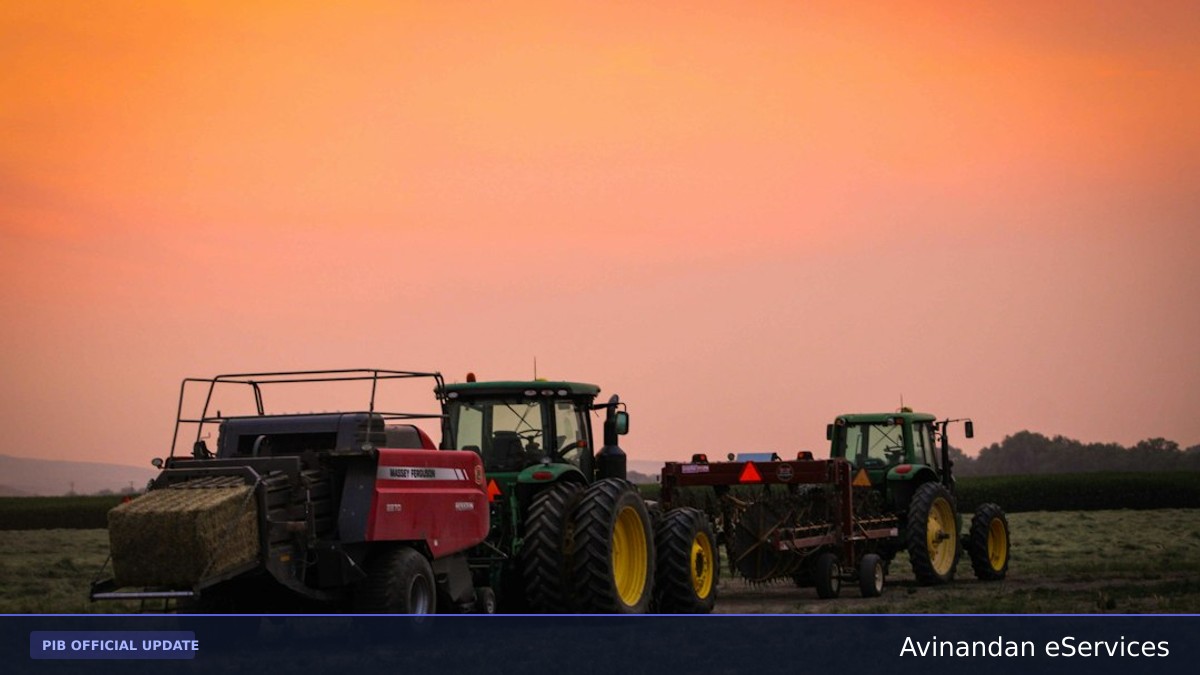
In a decisive move to curb agricultural residue burning and protect air quality across the National Capital Region (NCR) and adjoining northern plains, a high-level delegation from the Commission for Air Quality Management (CAQM) conducted an \textensive on-ground inspection in Punjab’s Moga district. Led by Dr. T.S. Panwar, Member (Technical) of the statutory commission, the official team reviewed the real-time execution of pollution-control protocols, the operational deployment of crop residue machinery, and inter-departmental enforcement readiness during the ongoing peak paddy harvesting season of 2026.
The field-level intervention comes at a critical juncture when post-monsoon meteorological conditions routinely exacerbate the concentration of transboundary particulate matter (PM2.5 and PM10). Moga, traditionally identified among the intensive agricultural belts of Malwa Punjab, serves as a focal point for assessing whether administrative mechanisms, farm mechanization subsidies, and satellite monitoring systems are operating cohesively to achieve zero-fire targets.
Key Highlights & Major Announcements
- High-Level Ground Review: A statutory delegation led by Dr. T.S. Panwar, Member (Technical), CAQM, directly reviewed ground-level operations and hotspot mitigation strategies in Moga, Punjab.
- Focus on High-Risk Hotspots: The commission conducted \textensive field visits to designated vulnerable villages and clusters historically prone to active fire events during the harvest window.
- Evaluation of In-Situ and Ex-Situ Infrastructure: Ground assessments focused on the actual utilization, logistical availability, and functional status of Crop Residue Management (CRM) machinery across individual farms and Custom Hiring Centres (CHCs).
- Inter-Agency Operational Convergence: Direct evaluations were held between central delegates, district collectors, agricultural engineers, nodal revenue officers, and rural policing machinery to maintain seamless vigilance.
- Zero-Tolerance on Stubble Burning: The CAQM emphasized zero delay between the identification of farm fire incidents via satellite telemetry and administrative action on the ground.
Ground Assessment in Moga: Strategic Focus on Hotspot Villages
During the district tour, the CAQM technical delegation moved beyond administrative headquarters to conduct village-level audits across prominent agricultural clusters in Moga. The delegation examined whether the dual strategies of in-situ residue management (incorporating straw into the soil via specialized implements) and ex-situ utilization (collecting, baling, and transporting straw for industrial power or biomass pellets) are providing practical, affordable avenues for local cultivators.
The visiting officials held targeted interactions with local administrative machinery, agriculture department field officers, and village-level nodal officers appointed under the statutory directives of CAQM. The discussions focused on overcoming local operational bottlenecks, such as machinery rental delays, diesel operational costs, and the timely availability of super seeders, smart seeders, zero-till drills, and straw balers during the brief two-to-three-week gap between paddy harvest and wheat sowing.
"Continuous field-level surveillance, proactive administrative coordination, and the unhindered availability of crop residue machinery remain the bedrock of our strategy to eliminate stubble burning incidents during the paddy harvesting season."
— Dr. T.S. Panwar, Member (Technical), Commission for Air Quality Management (CAQM)
Mechanisms of Action: In-Situ vs. Ex-Situ Management Frameworks
The battle against agricultural emissions hinges on providing farmers with workable, economically viable alternatives to open-field burning. During the Moga inspection, the commission reviewed the functional performance of both primary pathways:
1. In-Situ Management Infrastructure
In-situ management entails managing the crop residue directly within the agricultural field without \textracting it. Under central sector schemes and state-level implementation plans, thousands of subsidized machines have been distributed across Punjab. The delegation assessed the readiness and uptime of:
- Happy Seeders & Smart Seeders: Implements that sow wheat directly into standing stubble while laying cut straw as protective mulch across the field bed.
- Super SMS (Straw Management Systems): Mandatory attachments for combine harvesters that slice and disperse residue evenly across the field, facilitating immediate sowing operations.
- Rotavators and Reversible MB Ploughs: Heavy-duty tillage tools utilized to shred straw and incorporate it deeply into the soil profile to enhance microbial biomass and organic carbon.
2. Ex-Situ Supply Chain Aggregation
For fields where in-situ mulching is constrained by moisture or soil typology, ex-situ clearance is the required route. The commission inspected how baling units gather chopped straw, compress it into high-density bales, and route it to commercial aggregators. These residues are increasingly earmarked for:
- Thermal Power Plant Co-firing: Mandatory co-firing quotas where coal-fired power stations blend biomass pellets with coal up to prescribed regulatory limits.
- 2G Bio-Ethanol Refineries: Dedicated cellulosic ethanol plants that utilize lignocellulosic biomass for renewable fuel production.
- Compressed Bio-Gas (CBG) Facilities: Commercial plants under the SATAT framework transforming farm waste into pipeline-grade renewable methane.
Enforcement Architecture and Statutory Authority of CAQM
Established under the Commission for Air Quality Management in National Capital Region and Adjoining Areas Act, 2021, the CAQM possesses statutory mandates that supersede local jurisdictional boundaries across Punjab, Haryana, Rajasthan, Uttar Pradesh, and the NCT of Delhi. The Commission holds binding powers to inspect, issue remedial directions, penalize non-compliance, and direct criminal proceedings against defaulting agencies or repeat violators.
In Moga, the delegation reiterated the absolute necessity of rigorous field monitoring through remote sensing integration. The Indian Agricultural Research Institute (IARI) and the Indian Space Research Organisation (ISRO) provide real-time satellite telemetry, detecting thermal anomalies down to sub-hectare resolutions. Once a thermal anomaly is captured by standard satellite passes, CAQM mandates that the village-level nodal officer physically verify the site within hours, submit photographic proof of containment, and initiate statutory action if unauthorized burning has occurred.
Significance & National Impact
The annual onset of stubble burning in northwestern India is not merely a regional governance challenge; it represents a multi-sectoral public health, environmental, and economic crisis. Fine particulate matter (PM2.5) generated by open-air biomass combustion carries polycyclic aromatic hydrocarbons, black carbon, and carbon monoxide, which drift across the Indo-Gangetic Basin, causing severe air quality index (AQI) deterioration in Delhi, Chandigarh, and surrounding metropolitan hubs.
By enforcing preventative measures directly in source districts like Moga, CAQM aims to address the pollution crisis before the onset of winter inversion layers, where cold, stagnant atmospheric conditions trap airborne pollutants close to ground level. Preventing farm fires delivers substantial dividends:
- Public Health Protection: Mitigates seasonal spikes in acute respiratory infections, chronic pulmonary illnesses, cardiovascular distress, and pediatric health risks across North India.
- Soil Micro-Ecology Preservation: Eliminating open fires preserves essential topsoil biodiversity, prevents the loss of crucial soil nutrients (such as nitrogen, phosphorus, and potassium), and curbs soil moisture depletion.
- Rural Economic Value Creation: Developing commercial value chains for ex-situ paddy straw converts an agricultural liability into an additional revenue stream for rural youth, custom hiring entrepreneurs, and transport operators.
Frequently Asked Questions (FAQs)
What is the role of CAQM in controlling stubble burning?
The Commission for Air Quality Management (CAQM) is a statutory central body mandated to coordinate, monitor, and enforce measures to mitigate air pollution across Delhi-NCR and adjoining areas, including Punjab and Haryana. It oversees the deployment of crop residue machinery, monitors real-time satellite fire data, and issues binding directives to state administrations.
Why did the CAQM delegation specifically inspect Moga District?
Moga is historically recognized as one of the critical agricultural zones with intensive paddy production in Punjab. Because the district contains several identified fire-prone hotspot villages, on-ground inspections by senior technical officials ensure that administrative enforcement, machinery availability, and village-level monitoring operate at peak readiness during the harvest season.
What is the difference between in-situ and ex-situ crop residue management?
In-situ management involves managing crop residue directly within the farmland using specialized machinery such as Happy Seeders, Super Seeders, and mulchers, which incorporate straw back into the soil. Ex-situ management involves removing, baling, and transporting the straw from the farm for industrial use, such as biomass power generation, bio-CNG production, or packaging.
What technologies are used to detect farm fires in real time?
The government utilizes advanced satellite-based remote sensing, primarily coordinated via ISRO satellites and NASA MODIS/VIIRS data processed by the Indian Agricultural Research Institute (IARI). These satellite sweeps detect thermal anomalies in agricultural fields and transmit geo-tagged coordinates directly to district administrations for immediate field verification.
Official Source & Verification
This article is grounded on the official press release issued by the Press Information Bureau (PIB), Government of India (Release ID: 2324555, Ministry of Environment, Forest and Climate Change). Access the official document: https://pib.gov.in/PressReleasePage.aspx?PRID=2324555&lang=1.