PM Narendra Modi Invokes Maa Kalaratri on Day 7 of Navratri: A Call for National Energy, Confidence, and Prosperity
In a profound gesture of spiritual devotion and national leadership, Prime Minister Shri Narendra Modi today offered his prayers to Maa Kalaratri on the auspicious seventh day of the Navratri festival. As the nation observes the sacred period of Shardiya Navratri, the Prime Minister took to social media to share a message of hope, resilience, and divine grace, emphasizing the role of spiritual energy in the collective progress of the country. The announcement, released via the Prime Minister's Office (PMO) and the Press Information Bureau (PIB), highlights the Prime Minister's consistent engagement with India's cultural and spiritual heritage as a cornerstone of his leadership philosophy.
Key Highlights & Major Announcements
- Divine Invocation: Prime Minister Narendra Modi performed special prayers dedicated to Maa Kalaratri, the seventh avatar of Goddess Durga.
- Vision for the Nation: The PM prayed for the illumination of every citizen's life with "new energy" and "renewed confidence."
- Universal Prosperity: A central theme of the Prime Minister's message was the wish for holistic prosperity for all through divine grace.
- Cultural Continuity: The message reinforces the government's commitment to celebrating India's traditional festivals as symbols of national unity and spiritual strength.
- Digital Outreach: The Prime Minister utilized his official X (formerly Twitter) handle to connect with millions of devotees across the globe.
The Significance of Maa Kalaratri in Indian Spirituality
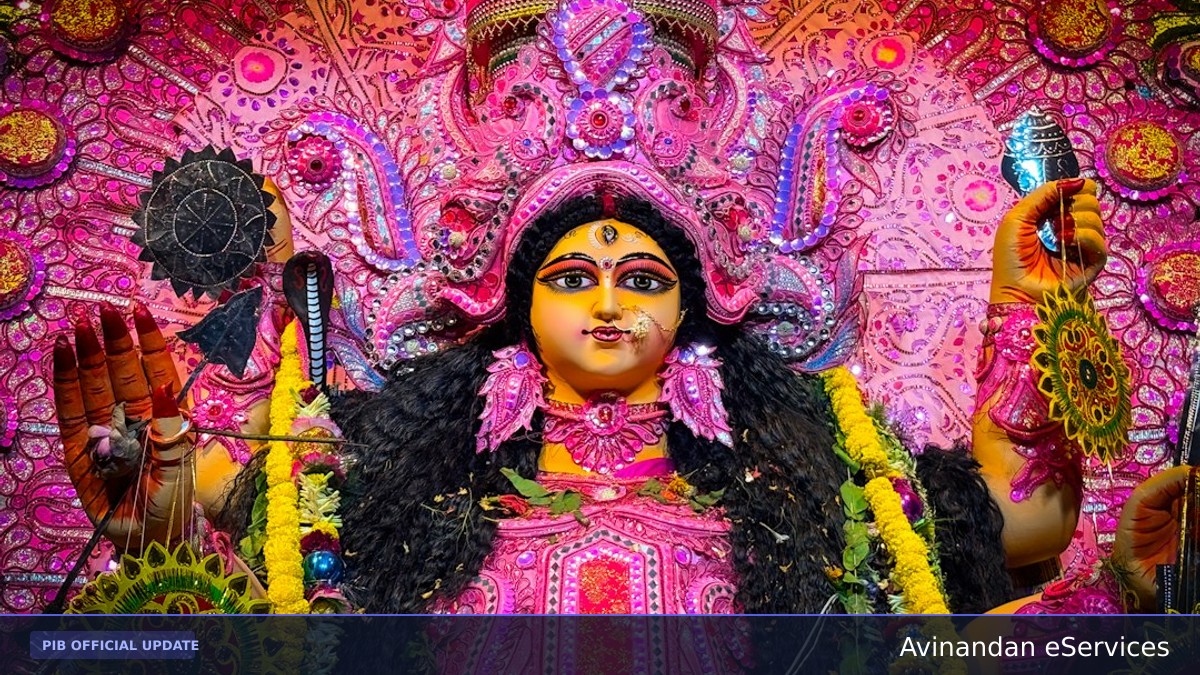
Maa Kalaratri is revered as the most fierce and powerful form of Goddess Durga. Known as the destroyer of darkness and ignorance, her name is derived from 'Kala' (time/death) and 'Ratri' (night). In Vedic iconography, she is depicted with a dark complexion, disheveled hair, and four hands, riding a donkey. While her appearance is formidable, she is also known as 'Shubhankari,' meaning the one who does good, assuring her devotees that they need not fear her fierce form as she is a protector of the righteous.
Symbolism of the Seventh Day
The seventh day of Navratri, known as Saptami, marks a critical transition in the festival. It is the day when the 'Maha Saptami' rituals begin in many parts of India, particularly in the eastern regions. By invoking Maa Kalaratri, the Prime Minister taps into the symbolism of overcoming obstacles. In the context of governance and nation-building, this represents the removal of systemic hurdles and the triumph of light over the shadows of stagnation and doubt.
PM Modi’s Message: Energy and Confidence
The Prime Minister’s specific mention of "new energy" (नई ऊर्जा) and "renewed confidence" (नया आत्मविश्वास) is particularly significant. These are not merely spiritual terms but are reflective of the 'Viksit Bharat' (Developed India) agenda. For a nation on the path to becoming a global superpower, the psychological and spiritual well-being of its citizenry is as vital as its economic metrics. By seeking these blessings, the Prime Minister aligns the spiritual aspirations of the people with the national goal of self-reliance and progress.
“नवरात्रि में आज मां कालरात्रि की विशेष उपासना का दिन है। उनके आशीर्वाद से सभी का जीवन नई ऊर्जा और नए आत्मविश्वास से आलोकित हो। देवी मां की दिव्य कृपा से सबकी समृद्धि हो, यही प्रार्थना है।”
(Today is the day of special worship of Maa Kalaratri in Navratri. May everyone's life be illuminated with new energy and new confidence by her blessings. It is my prayer that there be prosperity for all by the divine grace of the Mother Goddess.)
Significance & National Impact
The Prime Minister's public observance of Navratri rituals carries weight beyond the religious sphere. It serves as a powerful tool for social cohesion and cultural diplomacy. In a diverse nation like India, the celebration of Shakti (the feminine divine power) acts as a unifying thread that connects different regions and communities.
1. Strengthening Cultural Identity
Under the current administration, there has been a concerted effort to bring India's civilizational heritage to the forefront of the national narrative. The PM's regular updates on Navratri rituals serve to validate and elevate traditional practices, fostering a sense of pride among the youth and the global Indian diaspora. This cultural rootedness is seen as a prerequisite for a confident, modern India.
2. The Philosophy of 'Shakti' in Governance
The concept of 'Shakti' is central to the Prime Minister's rhetoric. Whether it is the 'Nari Shakti Vandan Adhiniyam' (Women's Reservation Bill) or the naming of the Chandrayaan-3 landing site as 'Shiv-Shakti Point,' the invocation of the Goddess is often linked to empowerment and technological prowess. By praying to Maa Kalaratri—the slayer of demons Shumbha and Nishumbha—the PM symbolically reinforces the government's stance against internal and \texternal threats to the nation's peace.
3. Socio-Economic Momentum
The Navratri season is also a period of immense economic activity in India. From retail and tourism to the arts and crafts sector, the festival drives billions of dollars in consumer spending. The Prime Minister's message of "prosperity for all" resonates with the small business owners, artisans, and workers for whom this season is the most productive time of the year. His prayers for prosperity reflect an inclusive vision where the benefits of growth reach the last mile.
Frequently Asked Questions (FAQs)
Who is Maa Kalaratri and why is she worshipped?
Maa Kalaratri is the seventh form of Goddess Durga worshipped during Navratri. She is the destroyer of all demonic entities, ghosts, and negative energies. Devotees worship her to seek protection from enemies and to gain courage and auspiciousness.
What was the core message of PM Modi's Navratri Day 7 post?
The Prime Minister's message focused on three key pillars: the infusion of new energy into the lives of citizens, the building of renewed self-confidence, and the attainment of collective prosperity through divine grace.
How does the Prime Minister observe Navratri?
Prime Minister Narendra Modi is known to observe a strict fast during the nine days of Navratri, a practice he has followed for decades. His public messages during this time are a reflection of his personal spiritual discipline and his role as a cultural representative of the nation.
What is the significance of the 7th day of Navratri in 2026?
In 2026, the 7th day (Saptami) falls on October 17th. It marks the beginning of the most intense phase of the festival, where the focus shifts to the more powerful and protective aspects of the Goddess, leading up to Maha Ashtami and Maha Navami.