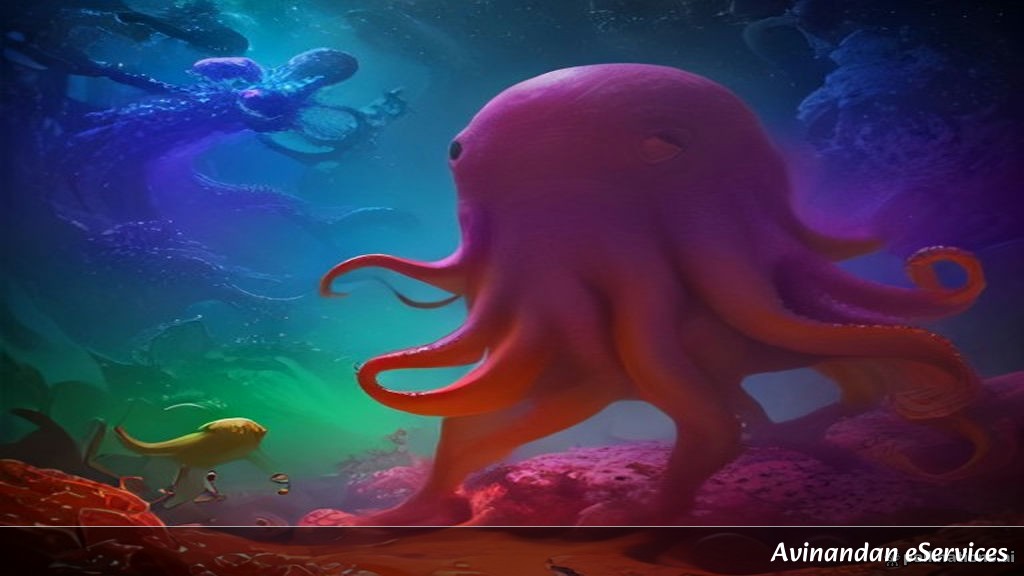
Aarav: Zara, I just saw the craziest video online! An octopus crawled right out of a tide pool and started walking across the rocks on the beach! Do ocean animals actually do that?
Zara: Believe it or not, Aarav, you saw a real webfoot octopus! While most sea creatures stay underwater, some clever species of octopuses can actually haul themselves onto dry land to hunt for tasty crabs trapped in rock pools.
Wow, how does that work?
Aarav: Wow, how does that work? Won't they suffocate or dry up instantly out of the water?
Zara: Great question, Aarav! Octopuses don't have lungs like us, but their gills can stay damp for a while if they keep them wet. Also, they can absorb dissolved oxygen through their skin as long as it remains moist. It is kind of like wearing a temporary wet scuba suit made of water!
Aarav: That is so wild! But moving on land must be super hard without bones. How do they even push themselves forward?
Zara: They use their eight flexible arms like a bundle of wiggly springs! They push off the ground using muscular hydrostats—which is a fancy science word for muscles that don't need bones to move. Their skin also secretes a slimy mucus that helps them slide smoothly over sharp rocks without scraping themselves.
Aarav: Nature has the best superpowers. Why would an octopus risk going on land anyway? Aren't there enough snacks in the sea?
Zara: Sometimes the best meals are just out of reach! During low tide, delicious crabs and snails get trapped in shallow rock pools where bigger fish cannot swim. An octopus will sneak across dry land like an alien ninja to grab an easy meal before creeping back into the ocean.
Aarav: That is brilliant! I guess you do not need a map when you have eight arms and a brain in every single one of them.
So, What Did We Learn Today?
Zara: To wrap things up, let's look at why these walking octopuses are so amazing:
- Some octopus species can temporarily leave the ocean to hunt for food in dry tidal pools.
- They can breathe out of water for a short time by keeping their skin and gills moist to absorb oxygen.
- Their boneless arms use special muscles called hydrostats to push and slide across rocky terrain.
- A slimy mucus layer protects their skin from sharp rocks while they travel on land.
Aarav: Science never ceases to amaze me! Next time I go to the beach, I am definitely keeping an eye out for any eight-legged hikers!