Introduction: A Moment in Time
History is often forged through grand declarations, violent clashes, or sudden breakthroughs. Yet, sometimes, history is hammered into reality one heavy strike at a time. Picture a misty, rugged mountain pass in British Columbia on a brisk morning: November 7, 1885. A small gathering of laborers, engineers, and company executives stand in the damp mud of the Eagle Pass. In their midst, a financier raises a heavy iron maul. With a single, definitive blow driving a simple iron spike into a tie of cedar, a fractured wilderness is stitched together into a single, continuous nation stretching from the Atlantic to the Pacific. This is the story of the completion of the Canadian Pacific Railway—an engineering marvel that defied geography, politics, and bankruptcy to build a continent-spanning dream.
The Build-Up: What Led to This Day?
To understand the magnitude of November 7, 1885, one must look back to the birth of the Canadian Confederation in 1867. Canada was a fragile, scattered collection of eastern provinces, separated from the vast western plains and the distant, sea-facing colony of British Columbia by thousands of miles of hostile terrain, dense boreal forests, and the towering, jagged wall of the Rocky Mountains. When British Columbia agreed to join the Dominion of Canada in 1871, it laid down a non-negotiable condition: the federal government had to build a transcontinental railway linking the Pacific coast to the eastern provinces within ten years.
It was an absurdly ambitious mandate. Critics called it an impossibility—an economic suicide mission across a frozen expanse where the population was sparse and the engineering obstacles were virtually unprecedented. Governments rose and fell on the issue. Corruption scandals threatened to sink the enterprise before a single rail was laid, and by the late 1870s, progress crawled at a glacial pace under government oversight.
Everything changed in 1881 when a syndicate of visionary capitalists, spearheaded by tycoon George Stephen and masterminded by the brilliant, ruthless general manager William Cornelius Van Horne, took over the project. Van Horne possessed an unrelenting work ethic and a fierce determination. Under his guidance, the Canadian Pacific Railway (CPR) transformed into a high-speed logistical juggernaut. Thousands of workers—including thousands of Chinese laborers who faced immense danger and discrimination—blasted through granite, bridged roaring chasms, and laid tracks across the unforgiving shield of the wilderness. By 1885, the project was severely low on funds, saved only at the eleventh hour by federal loans during the North-West Rebellion, which proved the vital military necessity of a rapid troop-transport system across the country.
The Event Itself
By November 1885, the eastern and western construction crews, racing toward one another from opposite sides of the continent, had finally closed the gap. The final meeting place was designated at Craigellachie, a tiny dot on the map in the Eagle Pass of the Monashee Mountains in British Columbia.
There was no grand, ostentatious ceremony with royalty or prime ministers. Instead, it was an intimate, gritty gathering of the men who had bled and sweat to conquer the terrain. Donald Smith, the primary financier and director of the CPR—a man whose financial backing had frequently kept the company afloat—stepped forward. Dressed in a formal coat that contrasted sharply with the muddy surroundings, Smith took hold of the heavy maul.
The spike to be driven was ordinary iron, not gold as popular myth sometimes suggests—Van Horne had famously remarked, "The last spike will be just as good as any other iron spike, and the last man will drive it." Smith swung the hammer, but true to the grueling nature of the entire enterprise, the first blow bent the spike. Undeterred, a second spike was substituted. Smith struck it firmly, driving it flush into the tie. A modest cheer went up from the huddled crowd of workers, engineers, and onlookers. The gap was closed. The continent was bridged.
The Aftermath and Legacy
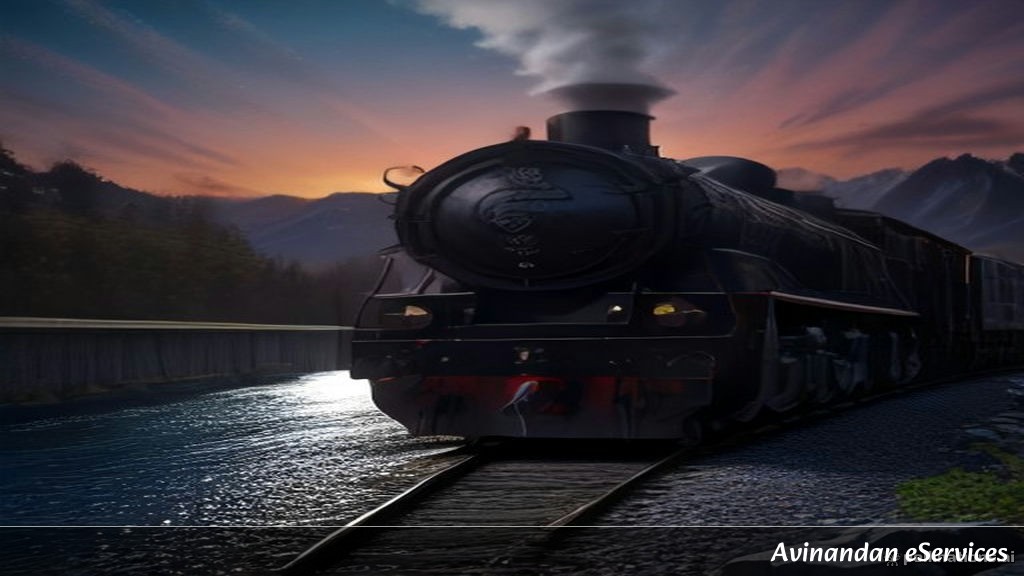
The driving of the Last Spike instantly altered the geopolitical and economic destiny of North America. Within months of November 7, 1885, regular transcontinental passenger and freight service commenced, reducing a grueling, months-long maritime journey around South America or a perilous overland trek down to a matter of days. The railway acted as the central artery for Canada’s demographic expansion, fueling the settlement of the Canadian Prairies and transforming cities like Winnipeg, Calgary, and Vancouver into booming urban centers.
However, this monumental progress came with profound human and social costs. The rapid expansion deeply disrupted Indigenous populations across the plains and west, dispossessing them of traditional lands and triggering cultural shifts that echo to this day. Furthermore, the reliance on cheap immigrant labor, particularly the Chinese railway workers who endured backbreaking exploitation and hazardous conditions, remains a solemn chapter in the nation's history.
Today, the Canadian Pacific Railway stands as a monument to 19th-century industrial ambition. What began as a desperate political promise fulfilled on a chilly November morning in British Columbia ultimately created the backbone of a modern nation, proving that human ingenuity could carve a path through even the most formidable barriers on Earth.
References
- Berton, Pierre. The National Dream: The Great Railway, 1871–1881. McClelland & Stewart.
- Berton, Pierre. The Last Spike: The Great Railway, 1881–1885. McClelland & Stewart.
- Encyclopædia Britannica. "Canadian Pacific Railway (CPR) | History & Facts."
- Library and Archives Canada. "The Last Spike: Canadian Pacific Railway."
- The Canadian Encyclopedia. "Driving of the Last Spike."