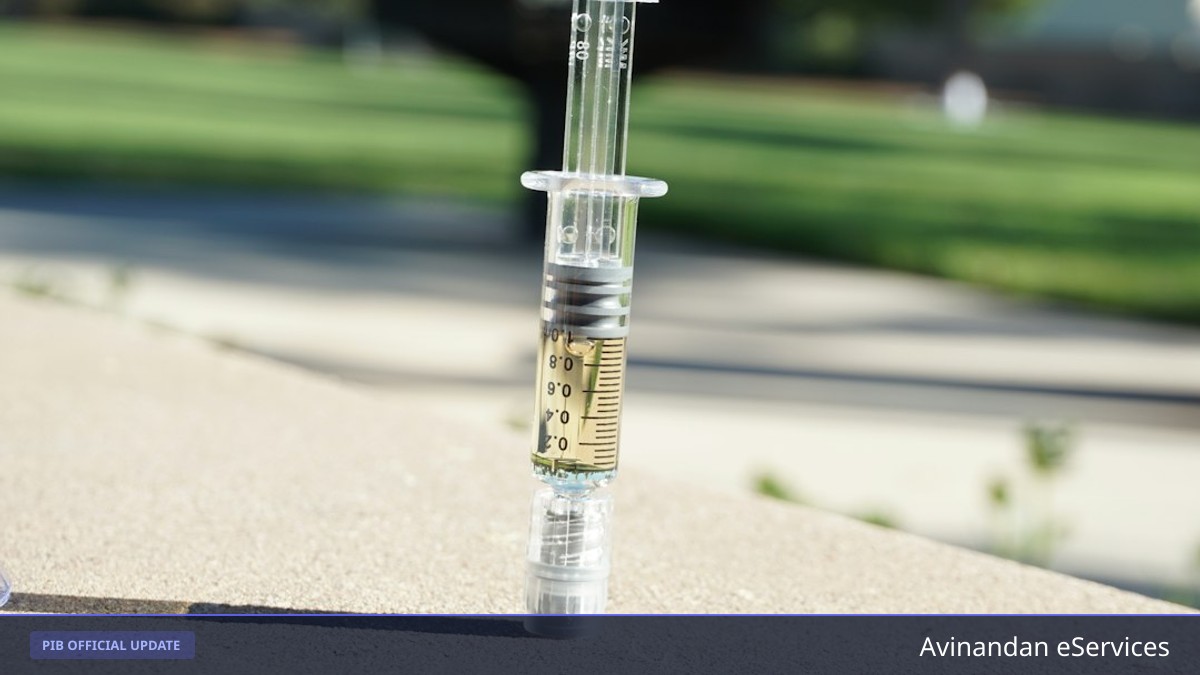
DRI Seizes 6.642 kg Amphetamine in Bhopal: Major Crackdown on Inter-State Drug Trafficking Syndicate
In a significant blow to the illicit narcotics trade in Central India, the Directorate of Revenue Intelligence (DRI) has successfully intercepted a major shipment of psychotropic substances. Acting on precise, intelligence-led data, DRI officers apprehended a drug trafficker in Bhopal, recovering 6.642 kg of high-grade amphetamine. This operation, conducted under the aegis of the Ministry of Finance, underscores the Indian government's unwavering commitment to a 'Drug-Free India' and highlights the sophisticated methods employed by enforcement agencies to dismantle inter-state trafficking networks.
Key Highlights & Major Announcements
- Total Seizure: 6.642 kg of crystalline white substance, confirmed to be amphetamine.
- Location of Operation: Bhopal, Madhya Pradesh, following an interception of a passenger bus traveling from Delhi.
- Date of Operation: The interception and subsequent arrest took place on 5th November 2026.
- Legal Framework: The seizure and arrest were executed under the stringent provisions of the Narcotic Drugs and Psychotropic Substances (NDPS) Act, 1985.
- Suspect Profile: The apprehended individual is a repeat offender, currently out on bail for a prior NDPS case registered by the Bengaluru Police.
- Packaging: The contraband was meticulously concealed in three bright silver-coloured plastic packets hidden within the passenger's luggage.
The Anatomy of the Operation: Intelligence-Led Enforcement
The success of this operation is a testament to the DRI's robust intelligence-gathering mechanism. Unlike routine checks, this was a targeted strike based on specific actionable intelligence. DRI officers tracked the movement of the suspect who was utilizing public transport—a common tactic used by traffickers to blend in with the general population—to transport high-value synthetic drugs from the national capital to the heart of Madhya Pradesh.
The Interception and Discovery
On the afternoon of November 5, 2026, DRI teams positioned themselves strategically to intercept a bus arriving in Bhopal from Delhi. Upon identifying the suspect, a thorough examination of his belongings was conducted. The search led to the discovery of three silver-coloured plastic packets. Inside these packets lay a crystalline white substance that immediately raised suspicions of being a high-potency psychotropic drug. To ensure accuracy at the scene, officers utilized an NDPS Field Test Kit, which provided a preliminary positive result for amphetamine.
The Profile of a Repeat Offender
One of the most concerning revelations of the subsequent investigation was the suspect's criminal history. The individual was already under the scanner of law enforcement, having been previously arrested by the Bengaluru Police in a separate narcotics case. Being out on bail and immediately returning to the illicit trade highlights the challenges faced by the judiciary and police in preventing recidivism among drug traffickers. This arrest is expected to lead to further leads regarding the larger syndicate operating across the Delhi-Bhopal-Bengaluru corridor.
Understanding Amphetamine: The Growing Threat of Synthetic Drugs
Amphetamine is a potent central nervous system (CNS) stimulant that is classified as a psychotropic substance under the NDPS Act. Unlike traditional plant-based drugs like opium or marijuana, amphetamines are synthesized in clandestine laboratories, making them harder to track and regulate.
Health and Social Risks
The trafficking of amphetamines poses a severe threat to public health. Known for its highly addictive nature, the drug can cause long-term neurological damage, cardiovascular collapse, and severe psychological disorders. By seizing over 6 kg of this substance, the DRI has effectively prevented thousands of potential doses from reaching the vulnerable youth population, thereby averting a localized public health crisis.
"DRI remains committed to dismantling drug trafficking networks through intelligence-led enforcement and sustained action against those involved in the illicit narcotics trade." — Official Statement, Ministry of Finance.
The Strategic Role of the DRI in National Security
The Directorate of Revenue Intelligence serves as India's premier anti-smuggling agency. While its primary mandate involves protecting the country's economic frontiers, its role in narcotics control is pivotal. Drug trafficking is often linked to 'narco-terrorism,' where the proceeds from drug sales are used to fund anti-national activities. By choking the financial and logistical lifelines of these traffickers, the DRI plays a direct role in maintaining national security.
The Delhi-Bhopal Transit Route
The choice of the Delhi-Bhopal route by the trafficker suggests a shift in logistics. Major metropolitan hubs like Delhi often serve as consolidation points for synthetic drugs manufactured in peripheral areas or smuggled across borders. Using inter-state buses for transit is a calculated risk taken by syndicates to bypass the more stringent security checks found at airports and major railway stations. This seizure signals to trafficking modules that public transport corridors are under constant surveillance.
Significance & National Impact
This seizure is significant for several reasons. Firstly, the volume of the seizure—6.642 kg—represents a substantial street value, hitting the syndicate's financial bottom line. Secondly, the arrest of a repeat offender provides the DRI with an opportunity to map out the 'backward and forward linkages' of the operation. Who supplied the drug in Delhi? Who was the intended recipient in Bhopal? Answering these questions is crucial for dismantling the entire supply chain rather than just arresting the 'mules.'
Furthermore, this operation aligns with the Government of India's multi-pronged strategy to combat drug trafficking, which includes strengthening the legal framework, enhancing inter-agency coordination, and increasing international cooperation to track the global flow of precursors used in synthetic drug manufacturing.
Frequently Asked Questions (FAQs)
What is the Directorate of Revenue Intelligence (DRI)?
The DRI is the apex anti-smuggling intelligence and investigation agency of India, functioning under the Central Board of Indirect Taxes and Customs (CBIC), Ministry of Finance. It is tasked with preventing the smuggling of contraband, including drugs, gold, and wildlife.
What are the penalties for trafficking Amphetamine under the NDPS Act?
Under the NDPS Act, 1985, trafficking in 'commercial quantities' of psychotropic substances like amphetamine carries severe penalties, including rigorous imprisonment for a term not less than 10 years, which may \textend to 20 years, along with heavy fines.
Why is Amphetamine classified as a psychotropic substance?
It is classified as such because it acts on the central nervous system and can alter brain function, resulting in temporary changes in perception, mood, consciousness, and behavior. Due to its high potential for abuse and addiction, it is strictly regulated.
How does the DRI use intelligence-led enforcement?
Intelligence-led enforcement involves the use of data analytics, human intelligence (HUMINT), and surveillance to identify and target specific criminal activities rather than relying on random inspections. This method increases the success rate of seizures and arrests.
Official Source & Verification
This article is grounded on the official press release issued by the Press Information Bureau (PIB), Government of India (Release ID: 2334614, Ministry of Finance). Access the official document: https://pib.gov.in/PressReleasePage.aspx?PRID=2334614&lang=1.