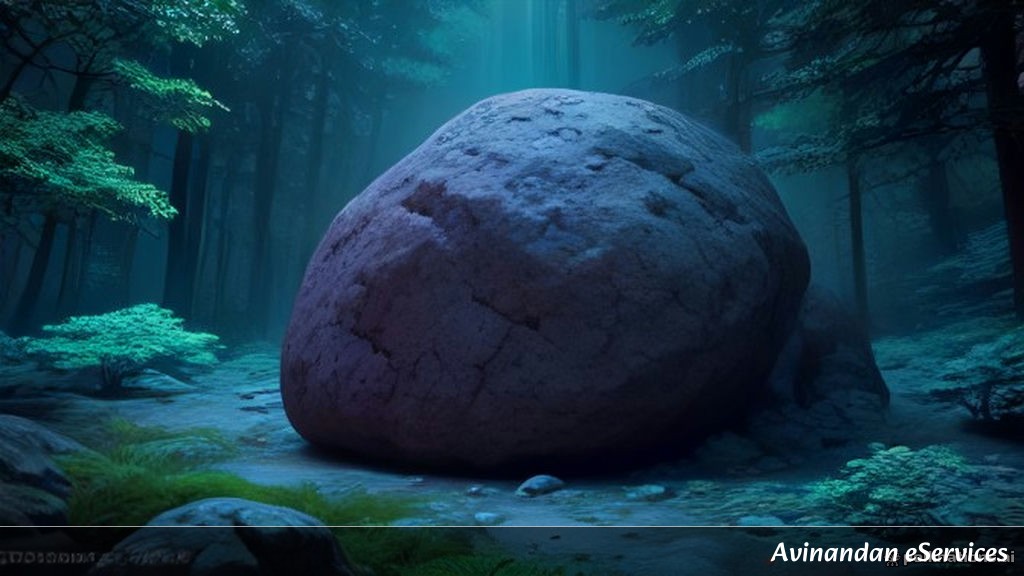
Samir: Zara, look at this picture I took on our trip to the mountains! There is a huge banyan tree growing right out of the side of a massive, hard granite boulder with no dirt anywhere in sight. How on earth is that possible?
Zara: Ah, that is one of nature's coolest tricks, Samir! You are looking at a lithophyte. That is just a fancy science word for a plant that grows on rocks instead of in regular soil.
Samir: Wow, a rock-growing plant? But how does it get any food or water if there is no soil to hold nutrients?
Zara: Great question! Regular plants use soil like a sponge to catch water and food. But lithophytes, like certain fig trees and orchids, have superpowers. Their roots can squeeze into tiny cracks in the hard rock.
Samir: But cracks are dry and empty, right? What do the roots find in there?
Zara: Not quite! Over time, tiny bits of dust, dead leaves blown by the wind, and bird droppings collect inside those small cracks. This forms a tiny, microscopic pocket of organic matter and moisture. The tree's roots crawl deep inside like tiny explorers to slurp it up.
Samir: That is so clever! But how do they survive when it doesn't rain for months in the hot Indian summer?
Zara: That is where their root skin comes in handy. Many lithophytic plants have roots covered in a special spongy layer called a velamen. When it rains or even when there is thick morning fog, that sponge instantly sucks up water and stores it so the tree doesn't dry out.
Samir: Amazing! It is basically wearing a built-in water backpack. Do the rocks themselves help the tree at all?
Zara: They actually do! The roots release mild organic acids that slowly dissolve the surface of the rock. This helps the plant break down minerals like calcium and magnesium right out of the stone to use as food.
Samir: Whoa, the tree is eating the rock with acid? That sounds like a mad scientist experiment happening right in nature!
Zara: Exactly! It is called biological weathering. Over hundreds of years, these plants actually help turn solid rocks into brand new soil for other plants to use later.
Samir: Nature is truly the best engineer. I am never looking at a mountain rock the same way again!
So, What Did We Learn Today?
- Lithophytes: Plants that have evolved to grow directly on bare rocks instead of traditional soil.
- Root Specialization: Their roots squeeze into tiny rock fractures to catch trapped dust and organic matter.
- Moisture Capture: Specialized root structures help them absorb water from rain, dew, and thick fog.
- Rock Weathering: Roots secrete mild acids to slowly dissolve stone and \textract essential mineral nutrients.
Samir: I think my new goal in life is to be as tough and resourceful as a rock-dwelling tree!