Kabir: Mira, stop cutting that paneer for a second! Look at this wildlife trivia card I found in my cereal box. It says there is an animal in Australia that poops out actual cubes. Like, tiny brown dice! Please tell me this is a joke.
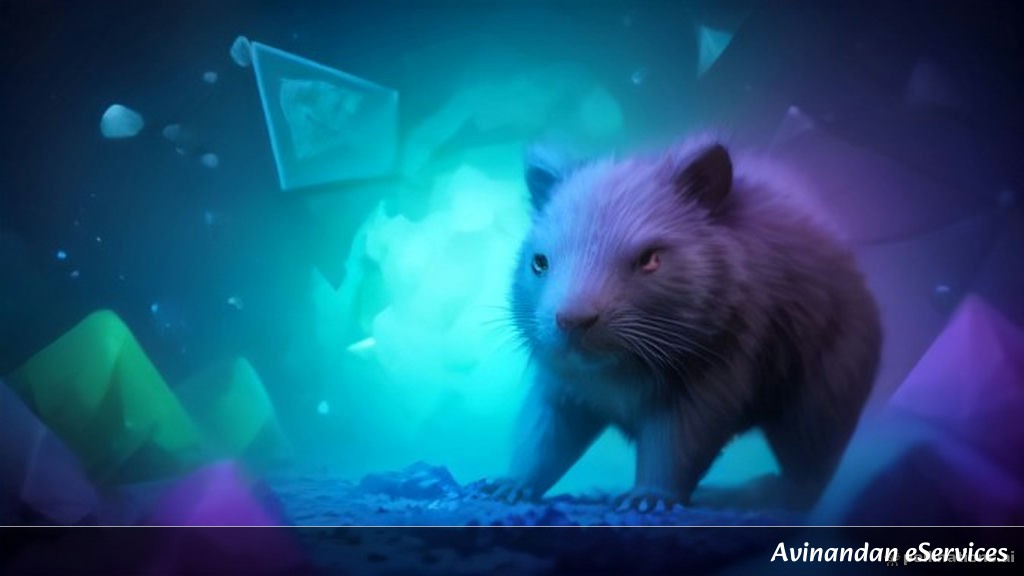
Mira: Haha, I promise it is not a joke, Kabir! Put the paneer down and listen closely, because you just stumbled onto one of the weirdest mysteries in the animal kingdom. The bare-nosed wombat, a chubby, furry marsupial from Australia, is the only known animal on Earth that produces cube-shaped poop.
Kabir: Wait a minute. Cubes?! Like a miniature Rubik's cube with flat sides and sharp corners? How on Earth does a living animal make a square block inside its body? Do wombats have square bottoms?
Mira: That is the very first thing scientists wondered too! For a long time, people guessed that maybe wombats had a square-shaped opening at the end of their digestive tract, like a cookie cutter or a play-dough press. But when biologists checked, they found that a wombat's exit is completely round, just like yours, mine, or a dog's.
Kabir: Okay, now my brain is totally confused. If the exit is round, then how does it come out as a cube with $6$ flat faces and $12$ straight edges?
Mira: Great geometry check, Kabir! The secret happens much deeper inside the wombat's body, inside its intestines. A wombat is only about one meter long—roughly the size of a medium dog—but its intestines stretch out to nearly $10$ meters! That is almost as long as a school bus.
Kabir:Whoa, ten meters of tubing packed inside one furry little body! What happens inside that giant tube?
Mira: First, wombats eat super dry, tough grasses and roots. It takes them a really long time to digest a meal—anywhere from $14$ to $18$ days! During that slow journey, the wombat's body squeezes out almost every single drop of water so it can survive in dry Australian habitats. By the time the leftover waste reaches the final $17$ percent of the intestine, it is no longer mushy liquid. It has turned into firm, dry clay.
Kabir: Okay, so it is firm like clay. Still, if you push clay through a round garden hose, you get a long round snake, not neat little cubes of volume $V = s^3$!
Mira: You are totally right, and that puzzled scientists until 2018! That was when a mechanical engineer named Dr. Patricia Yang teamed up with wildlife biologists to study wombat intestines in detail. Normally, human and animal intestines are equally stretchy all the way around, like a smooth rubber balloon. When Dr. Yang inflated a wombat's intestine to test how it stretches, she discovered something amazing.
Kabir: Don't leave me hanging! What did she find?
Mira: She found that a wombat's intestine does not stretch evenly! Instead, the tube has two very stiff, thick regions and two super stretchy, flexible regions arranged around the circle. Imagine holding a squishy ball of clay inside a ring made of two stiff wooden rulers and two stretchy rubber bands.
Kabir: Oh! When the muscles squeeze the tube, the stiff parts stay flat and push hard, while the stretchy parts bend outward into corners?
Mira: Bingo! You nailed the physics! As rhythmic muscle waves squeeze the dry waste over and over—thousands of tiny squeezes—those two stiff walls press flat sides onto the material, while the stretchy sections let sharp corners form in between. Slowly, the round mass transforms into a neat row of flat-sided cubes, usually around $2$ centimeters wide, before they ever reach the round exit!
Kabir: That is unbelievable! Wait, why did nature even bother inventing an internal cube-making factory for wombats? Do they play board games when humans aren't looking?
Mira: Haha, not quite! Wombats actually have pretty terrible eyesight, so they rely heavily on their sense of smell to talk to each other. They mark their territory by climbing onto high rocks, fallen logs, and dirt mounds and leaving droppings behind as smelly signposts that tell other wombats, 'Hey, this neighborhood is mine!'
Kabir: Aha! If their poop were round like a deer's or a rabbit's pellets, it would just roll right off the rocks and logs!
Mira: Exactly! Gravity would pull round pellets straight down into the bushes where nobody would notice them. Because wombats make cubes, their signposts stack up neatly and stay right where they put them, even on sloped rocks. Plus, scientists think the \textra squeezing inside those dry intestines helps wombats absorb the very last drops of precious water.
Kabir: That is so clever. Still, why was a mechanical engineer like Dr. Yang studying wombat poop? Does this actually help humans?
Mira: Believe it or not, yes! Until this discovery, humans mostly knew only two ways to manufacture cubes: pouring liquid into a hard square mold, or slicing big blocks with sharp blades. Now engineers are studying how a soft, flexible tube can shape firm materials using differences in stiffness. That could help invent brand-new ways to package food or manufacture tiny parts without needing rigid molds! Doctors are excited too, because learning how stiff and stretchy tissues interact helps them spot early signs of human digestive diseases.
Kabir: Who knew something as silly as wombat poop could teach us about physics, geometry, and future inventions? I am definitely sharing this at school tomorrow!
So, What Did We Learn Today?
Mira: Here is a quick recap of how wombats pull off nature's coolest geometry trick:
- Only One in the World: The Australian bare-nosed wombat is the only known animal on Earth that produces cube-shaped droppings, even though its exit is completely round.
- Slow, Dry Digestion: Wombats take up to $18$ days to digest tough grass inside a $10$-meter-long intestine, turning waste into firm, dry clay.
- Stretchy Meets Stiff: The secret lies in the final stretch of the intestine, which has two stiff sections and two stretchy sections that squeeze the dry material into $6$ flat faces and $12$ edges.
- No Rolling Away: Because wombats have poor eyesight, they leave droppings on rocks and logs as smelly territory markers, and cubes do not roll off!
- Inspiration for Humans: Studying how wombats shape cubes inside soft tubes is inspiring new manufacturing methods and helping doctors understand tissue stiffness.
Kabir: Nature really is the ultimate engineer! From now on, whenever I see a neat little cube—even a cube of paneer—I am going to remember the amazing physics inside a wombat's tummy!