Introduction: What is the Lakhpati Didi Yojana?
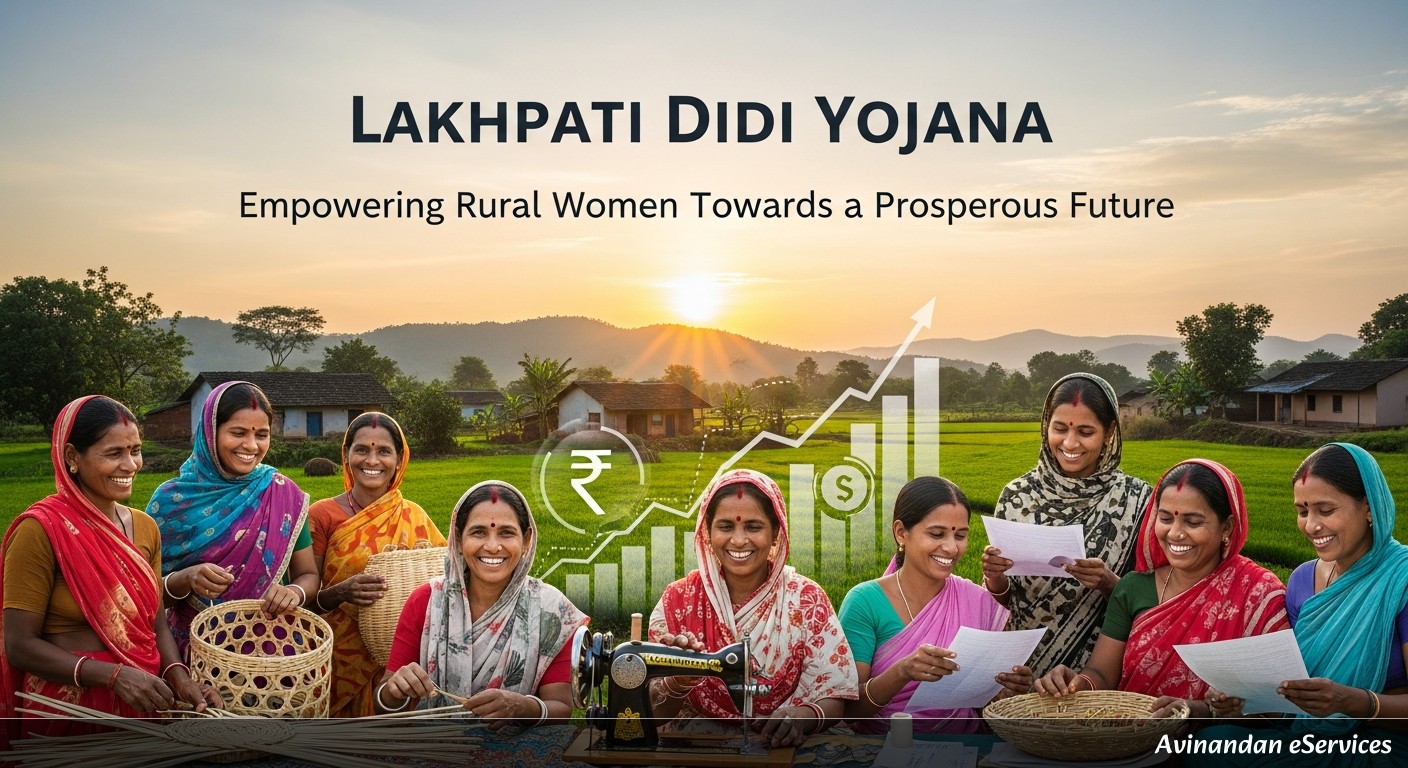
The Lakhpati Didi Yojana is a transformative initiative by the Government of India, operating under the Deendayal Antyodaya Yojana-National Rural Livelihoods Mission (DAY-NRLM), spearheaded by the Ministry of Rural Development. Announced by the Prime Minister on August 15, 2023, the scheme aims to catalyze economic empowerment and foster financial independence among women in rural areas. The core objective is to provide skill development training to women in Self-Help Groups (SHGs), enabling them to establish and scale their own micro-enterprises.
The title "Lakhpati Didi" refers to an SHG member who successfully earns a sustainable income of at least ₹1,00,000 per year. This income is benchmarked to be sustainable, meaning it's calculated over at least four agricultural seasons or business cycles, ensuring an average monthly income of over ₹10,000. Initially targeting two crore women, the scheme's remarkable success led to an enhanced target of creating three crore 'Lakhpati Didis', a testament to its impact on the rural socio-economic landscape. As of August 2024, the initiative has already empowered over one crore women to achieve this milestone.
Key Features and Objectives
The Lakhpati Didi initiative is more than just a financial assistance program; it is a holistic strategy for women-led development. It is built on a foundation of collectivization, skill enhancement, and creating a supportive ecosystem for rural entrepreneurship.
Primary Objectives:
- Economic Empowerment: To enable each SHG household to earn a sustainable annual income of ₹1 lakh or more by encouraging them to engage in multiple livelihood activities.
- Skill Development: To train women in a diverse range of skills, including plumbing, LED bulb making, operating and repairing drones (under the 'Drone Didi' subset of the scheme), and other technical fields.
- Entrepreneurship Promotion: To encourage and support women in starting and scaling their own micro-enterprises, shifting the focus from mere financial inclusion to entrepreneurial success.
- Financial Literacy and Inclusion: To enhance financial awareness among rural women and ensure their access to formal banking services, including savings, credit, and insurance facilities.
- Building Role Models: To create a cadre of successful women entrepreneurs who serve as an inspiration and guide for others in their communities.
Key Features and Support Mechanisms:
- Whole-of-Government Approach: The scheme functions through a convergence of various government departments, ministries, and private sector players to provide comprehensive support. This includes collaborations with ministries of Agriculture, Animal Husbandry, Food Processing, and MSMEs.
- Financial Assistance: The initiative facilitates access to significant financial resources. This includes collateral-free bank loans of up to ₹20 lakh for SHGs, interest subvention on loans up to ₹3 lakh, and an overdraft facility of ₹5,000 for every SHG member with a Jan-Dhan account. A dedicated "Women Enterprise Acceleration Fund" has also been established to support enterprises.
- Structured Training Model: A 'Cascade Training Strategy' is employed to build capacity. Experts train state-level Resource Persons, who then train Master Trainers. These Master Trainers, in turn, train Community Resource Persons (CRPs), who provide direct training and handholding support to the potential Lakhpati Didis.
- Livelihood Planning: CRPs assist potential beneficiaries in creating detailed livelihood business plans. These plans help in identifying viable micro-enterprises and diversifying income sources, which are then tracked through a digital register.
- Market Linkages: A crucial component is providing support for branding, packaging, and accessing larger markets through e-commerce platforms and other institutional partnerships.
- Drone Didi Initiative: A significant subset of the scheme aims to train and equip 15,000 women SHGs with agricultural drones. These 'Drone Didis' provide crucial services like crop monitoring and pesticide spraying, revolutionizing local agricultural practices.
Who is Eligible? (Eligibility Criteria)
The eligibility for the Lakhpati Didi Yojana is designed to be inclusive and focuses on empowering women who are part of the vast Self-Help Group network under DAY-NRLM. The primary criteria are as follows:
- SHG Membership: The applicant must be a woman and an active member of a Self-Help Group. This is the foundational requirement, as the entire support system is channeled through the SHG structure.
- Rural Residency: The scheme is specifically for women residing in rural areas of India.
- Age Group: The applicant's age should typically be between 18 and 50 years.
- Aspiration for Entrepreneurship: While not a formal document, the initiative targets women who have a viable business idea or an existing micro-enterprise they wish to scale. The process involves identifying 'Potential Lakhpati Didis' who show the willingness and potential to diversify and enhance their income.
- Income Threshold (for identification): While there is no minimum income to apply, the scheme often identifies potential beneficiaries whose family income is below a certain level, such as ₹3 lakh per annum in some states, to prioritize economically weaker sections.
- Exclusion Criteria: In some state-level implementations, families with a member in a government job may be excluded to ensure the benefits reach the most deserving candidates.
How to Apply / Avail the Benefits
The application process for the Lakhpati Didi Yojana is not a direct online application to a central portal. Instead, it is a community-driven process managed through the SHG ecosystem. Here’s a step-by-step guide on how rural women can become part of this initiative:
- Join a Self-Help Group (SHG): The first and most crucial step is to be a member of an SHG in your village. If a woman is not already a member, she should join a local group. SHGs are the primary channels for information and implementation of the scheme.
- Express Interest and Participate in Planning: Members should actively participate in SHG and Village Organization (VO) meetings. During these meetings, Community Resource Persons (CRPs) and other facilitators identify potential candidates for the Lakhpati Didi initiative.
- Livelihood Planning: Identified women are assisted in creating a comprehensive livelihood plan. This involves assessing their current sources of income and identifying new, viable activities to reach the ₹1 lakh per annum target. This plan is a critical part of the process.
- Contact Local Anganwadi or Block Office: For information and application forms, women can visit their nearest Anganwadi centre or the Block Development Office. These local bodies often serve as information hubs for government schemes.
- Prepare Necessary Documents: While the process is SHG-based, having standard documents ready is essential for availing financial assistance and other benefits. These typically include:
- Aadhaar Card
- PAN Card
- Domicile/Residence Certificate
- Income Certificate
- Bank Account Passbook
- Passport-sized photograph
- Registered Mobile Number
- Undergo Skill Training: Once enrolled, the beneficiary will be required to attend skill development and financial literacy workshops organized under the scheme. This training is fundamental to building the capacity required to run a successful enterprise.
- Access Financial Support: Based on the livelihood plan, the SHG helps the member apply for necessary funds, either from the group's own corpus (Community Investment Fund) or through bank loans facilitated by the mission.
- Implementation and Monitoring: With training and funds, the woman starts or expands her enterprise. The SHG, V.O., and CRPs provide continuous handholding support and monitor progress to ensure the enterprise becomes sustainable.
Official Sources
Press Information Bureau (PIB) - Target Enhancement in Union Budget: https://pib.gov.in/PressReleasePage.aspx?PRID=2001109
Press Information Bureau (PIB) - Lakhpati Didi Sammelan in Maharashtra: https://pib.gov.in/PressReleasePage.aspx?PRID=2048599
Press Information Bureau (PIB) - General Scheme Details: https://pib.gov.in/PressReleasePage.aspx?PRID=2047385
Press Information Bureau (PIB) - Scheme Implementation Details: https://pib.gov.in/PressReleasePage.aspx?PRID=2040878
Official Lakhpati Didi Portal: https://lakhpatididi.gov.in/