The Myth
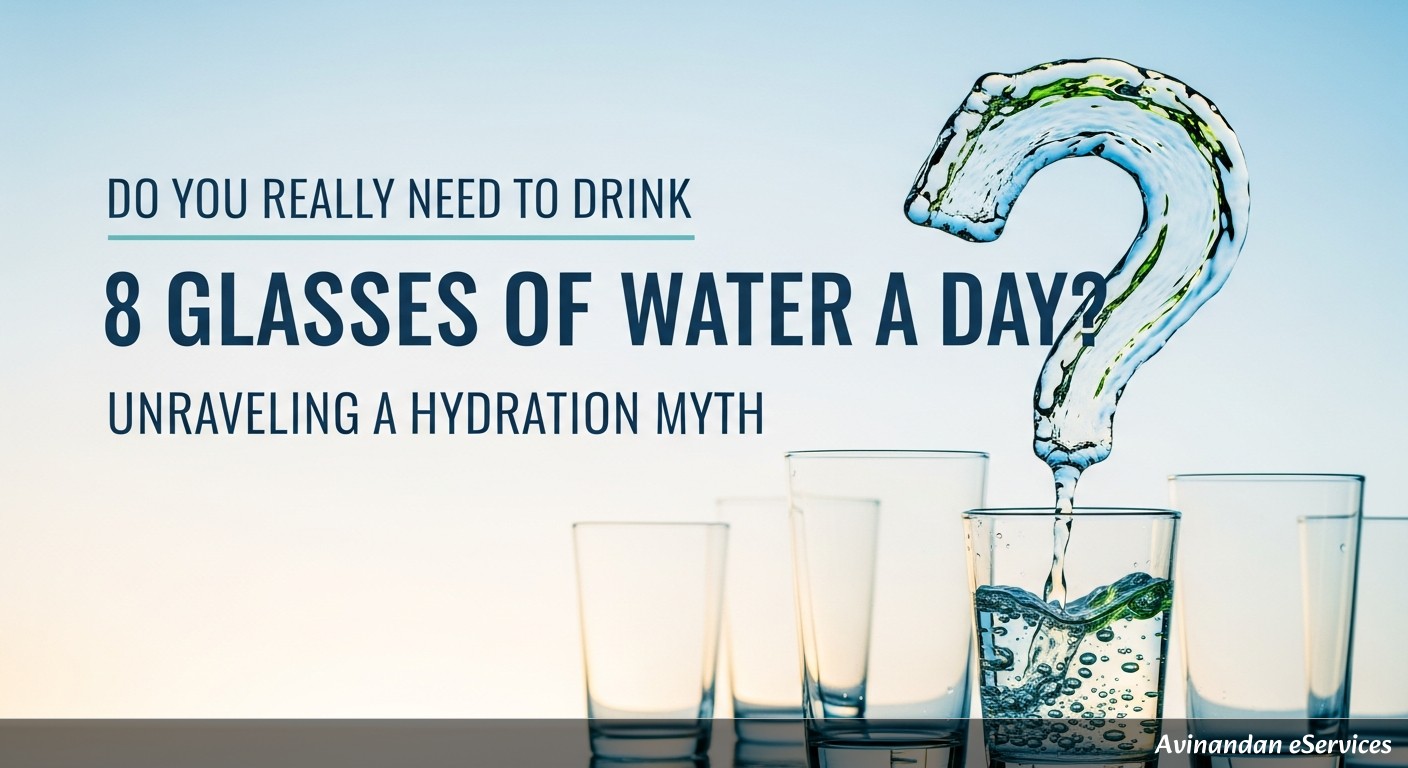
For decades, we've been inundated with the advice to drink at least eight 8-ounce glasses of water per day, often referred to as the "8x8 rule." This seemingly simple guideline has become a cornerstone of health and wellness advice, promising clearer skin, improved energy levels, and overall better health. The mantra is so pervasive that many of us diligently track our water intake, feeling a sense of accomplishment with every glass consumed. But is this widely accepted "truth" actually based on solid scientific evidence, or is it just a well-intentioned myth that has been repeated so often it's mistaken for fact?
The Investigation: Where Did It Come From?
Tracing the origins of the 8x8 rule is like following a breadcrumb trail through decades of health recommendations. The most commonly cited source is a 1945 report from the U.S. Food and Nutrition Board of the National Research Council. The report stated that a "suitable allowance of water for adults is 2.5 liters daily in most instances." This is equivalent to about 84.5 ounces, which is close to the 64 ounces in eight 8-ounce glasses. However, a crucial part of the recommendation has been largely ignored over time: the report also mentioned that "most of this quantity is contained in prepared foods." This vital context, that our food contributes significantly to our total water intake, was lost in the simplified message that followed.
Another influential figure in the popularization of this advice was nutritionist Dr. Frederick J. Stare, who co-authored a book in 1974 recommending the consumption of six to eight glasses of water a day. However, this recommendation, like the 1945 report, also acknowledged that this intake could come from various sources, including fruits, vegetables, and even caffeinated beverages in moderation. Over the years, the nuance of these recommendations was stripped away, leaving behind the rigid and easily digestible "8x8 rule." The rise of the bottled water industry also played a role in cementing this idea in the public consciousness, with marketing campaigns often emphasizing the importance of constant hydration.
The Evidence: What Does Science Say?
When we turn to modern scientific research, the foundation for the 8x8 rule appears to be shaky at best. Numerous studies and reviews have found no concrete scientific evidence to support this specific recommendation for the general, healthy population. In fact, our bodies are remarkably efficient at regulating our hydration levels through a finely tuned mechanism: thirst. For most healthy individuals, simply drinking when you feel thirsty is an adequate way to stay hydrated.
Individual Needs Vary Greatly
The reality is that a one-size-fits-all approach to water intake doesn't account for the vast differences in individual needs. Several factors influence how much water a person requires, including:
- Activity Level: If you engage in strenuous exercise or have a physically demanding job, you will naturally need to drink more water to replace the fluids lost through sweat.
- Climate and Environment: Living in a hot or humid climate, or at a high altitude, will increase your fluid needs.
- Overall Health: Certain health conditions, such as fever, vomiting, or diarrhea, can lead to increased fluid loss and necessitate a higher water intake. Conversely, some conditions like kidney or heart failure may require fluid restriction.
- Diet: A diet rich in fruits and vegetables, which have a high water content, will contribute to your overall hydration. Foods like watermelon, cucumber, and oranges can be excellent sources of fluids.
- Age: The thirst mechanism can become less acute with age, meaning older adults may need to be more mindful of their fluid intake to avoid dehydration.
The Role of Other Beverages and Foods
A significant flaw in the simplified 8x8 rule is its failure to account for other sources of hydration. Many beverages, including milk, juice, tea, and even coffee in moderation, contribute to your daily fluid intake. While it was once believed that caffeinated beverages were dehydrating, research has shown that their diuretic effect is minimal in regular consumers. Furthermore, a substantial portion of our daily water intake comes from the food we eat. Fruits, vegetables, soups, and other water-rich foods all play a role in keeping us hydrated.
The Dangers of Overhydration
While staying hydrated is crucial, it's also possible to drink too much water, a condition known as hyponatremia or water intoxication. This occurs when excessive water consumption dilutes the sodium levels in the blood, leading to a dangerous swelling of cells, including those in the brain. Symptoms can range from nausea and headaches to confusion, seizures, and in rare cases, death. While this is uncommon in healthy individuals, it can be a risk for endurance athletes who drink large amounts of water without adequately replacing electrolytes.
Benefits of Proper Hydration
Debunking the 8x8 myth doesn't diminish the importance of staying adequately hydrated. Proper hydration is essential for numerous bodily functions, including:
- Regulating Body Temperature: Water helps dissipate heat through sweat.
- Lubricating Joints: It's a key component of synovial fluid, which cushions our joints.
- Supporting Cognitive Function: Even mild dehydration can impair mood, concentration, and memory.
- Aiding Digestion and Preventing Constipation: Water helps break down food and keeps things moving through the digestive tract.
- Maximizing Physical Performance: Dehydration can lead to fatigue and reduced endurance.
Some studies also suggest a link between adequate hydration and a reduced risk of kidney stones, as well as potential benefits for weight management.
The Verdict
The notion that everyone needs to drink eight 8-ounce glasses of water a day is a persistent myth that lacks scientific backing. While well-intentioned, this rigid rule fails to consider the wide range of individual factors that influence our hydration needs. A more accurate and evidence-based approach is to listen to your body and drink when you feel thirsty. Your total fluid intake, which includes water from all beverages and foods, is what truly matters for maintaining proper hydration. Instead of adhering to an arbitrary number, focus on being mindful of your body's signals and adjusting your fluid intake based on your personal needs. For most people, a healthy diet and drinking when thirsty are sufficient to stay well-hydrated.
References
- Tufts Medicine. "Medical Myths: Drink 8 Glasses of Water Each Day."
- Mayo Clinic. "Water: How much should you drink every day?"
- McGill University, Office for Science and Society. "The Water Myth."
- News-Medical. "Do You Really Need to Drink 8 Glasses of Water a Day?"
- Valtin, H. (2002). "'Drink at least eight glasses of water a day.' Really? Is there scientific evidence for '8 x 8'?" American Journal of Physiology-Regulatory, Integrative and Comparative Physiology, 283(5), R993-R1004.
- National Institutes of Health. "Water Researchers Do Not Have a Strategic Plan for Gathering Evidence to Inform Water Intake Recommendations to Prevent Chronic Disease."
- WebMD. "What Happens When You Drink Too Much Water?"
- MedicalNewsToday. "Water intoxication: What happens when you drink too much water?"
- University Hospitals. "Can You Drink Too Much Water?"
- Healthline. "How Much Water Do I Need to Drink?"
- The Times of India. "What happens when you drink too much water: Know the health risks."
- University Hospitals. "How Much Water Should You Drink a Day."
- The '8-a-Day' Myth: How Much Water Do You Really Need?
- Econlife. "How Inventing Hydration Led To Drinking Eight Glasses of Water a Day."
- The Week. "Where did the 8-glasses-of-water-a-day myth come from?"
- Healthline. "Do You Really Need to Drink 8 Glasses of Water a Day?"
- Four Directions Wellness. "The Myth of Drinking Eight Glasses of Water Per Day."
- Mount Farm Surgery. "Do you really need to drink eight glasses of water a day?"
- IDEA Health & Fitness Association. "Two Studies Underscore the Link Between Hydration and Health."
- Centers for Disease Control and Prevention. "About Water and Healthier Drinks."
- Tufts Health & Nutrition Letter. "Eight Cups of Water a Day: Fact, or Fiction?"
- Better Health Channel. "Water – a vital nutrient."
- Popkin, B. M., D'Anci, K. E., & Rosenberg, I. H. (2010). "Water, hydration, and health." Nutrition reviews, 68(8), 439–458.
- Armstrong, L. E. (2018). "Water Intake, Water Balance, and the Elusive Daily Water Requirement." Nutrients, 10(12), 1928.
- Healthline. "7 Science-Based Health Benefits of Drinking Enough Water."
- Lafontan, M., et al. (2021). "Narrative Review of Hydration and Selected Health Outcomes in the General Population." Nutrients, 13(1), 70.