Introduction to the Topic
Imagine a world, cloaked for centuries in a long, quiet slumber, suddenly stirring and awakening to a vibrant dawn of new ideas, breathtaking art, and revolutionary discoveries. This is the essence of the Renaissance, a transformative period in European history that serves as a bridge between the Middle Ages and the modern era. The term 'Renaissance' itself is French for 'rebirth,' and it perfectly captures the spirit of the age—a profound revival of interest in the classical art, literature, and learning of ancient Greece and Rome. Spanning roughly from the 14th to the 17th century, this movement didn't just change art and architecture; it fundamentally reshaped how people saw themselves, their world, and their place in the universe.
This chapter from your Class XI NCERT History textbook, 'Changing Cultural Traditions,' invites us to journey back to the bustling city-states of Italy, the birthplace of this cultural explosion. We will explore the rise of a new way of thinking called Humanism, which placed human beings and their potential at the center of the stage. We will stand in awe of the masterpieces of artists like Leonardo da Vinci and Michelangelo, who learned to depict the world with stunning realism. We'll also witness the seismic shifts in science, religion, and society, largely propelled by a revolutionary invention: the printing press. Understanding the Renaissance is crucial because its legacy is all around us—in our art, our scientific methods, our political thought, and our belief in the power of the individual. So, let's step into this dazzling era and uncover the forces that forged the modern world.
Key Concepts Explained
The Italian Spark: Why Did the Renaissance Begin in Italy?
The Renaissance was not a random event; it was the product of a unique combination of historical, economic, and cultural factors that converged on the Italian peninsula. While the rest of Europe was largely organized under a rigid feudal system, Italy had a different story to tell. Several key elements made it the perfect crucible for this cultural rebirth.
1. The Power of Trade and Prosperous City-States: Long before the Renaissance, Italy's strategic location in the Mediterranean had made it a hub for trade between Europe and the East. Cities like Venice, Genoa, and Florence became incredibly wealthy by controlling these trade routes. This wealth created a powerful new class of merchants and bankers who were not bound by the old feudal ties of land and loyalty. Families like the Medici in Florence accumulated vast fortunes and became influential patrons of the arts. Instead of spending their money solely on warfare or grand fortresses, they commissioned paintings, sculptures, and magnificent buildings, competing with one another for prestige. This patronage provided artists and thinkers with the financial security to innovate and create.
2. The Classical Heritage of Rome: Italy was, quite literally, standing on the ruins of its glorious past. The remnants of the Roman Empire—the Colosseum, the Pantheon, aqueducts, sculptures, and roads—were a constant, tangible reminder of a great civilization. As scholars and artists sought to break away from the medieval mindset, they found inspiration in their own backyard. They began to study Latin texts, admire Roman engineering, and imitate the realistic forms of classical sculpture. This direct connection to antiquity gave Italian thinkers a unique advantage in reviving its spirit.
3. The Fall of Constantinople (1453): For over a thousand years, the Byzantine Empire (the Eastern Roman Empire), with its capital at Constantinople, had preserved a vast treasury of ancient Greek texts and knowledge. When the city was conquered by the Ottoman Turks in 1453, many Byzantine scholars fled westward, seeking refuge in Italy. They brought with them precious Greek manuscripts, including the works of philosophers like Plato and Aristotle, which had been largely lost to Western Europe during the Middle Ages. This influx of scholars and texts ignited a frenzy of intellectual activity in cities like Florence, fueling the new academic movement of Humanism.
4. Weakening of Feudalism and the Church: While kings and the Catholic Church held immense power across Europe, their grip was weaker in Italy. The peninsula was a patchwork of independent and competitive city-states, each with its own government and identity. This political fragmentation allowed for greater freedom of thought and expression than was possible under a single, overarching authority. Citizens of these republics, like Florence, took great pride in their civic life and believed they were the rightful heirs to the legacy of the Roman Republic, further encouraging a focus on human-centered governance and culture.
Humanism: Placing Humanity at the Center
At the very heart of the Renaissance was a powerful intellectual movement known as Humanism. If the medieval worldview was predominantly theocentric (God-centered), the humanist perspective was anthropocentric (human-centered). It wasn't about rejecting religion; rather, it was a profound shift in focus. Humanists celebrated human potential, intellect, and creativity, arguing that human beings were capable of \textraordinary things. They believed in the pursuit of knowledge for its own sake and advocated for a well-rounded education that would cultivate a complete individual.
The term 'humanist' originated from the Italian word 'umanista,' which referred to a scholar of the 'studia humanitatis,' or the humanities. This curriculum was a departure from the medieval focus on theology and scholastic logic. It included subjects that were believed to perfect the human mind and spirit:
- Grammar
- Rhetoric (the art of effective speaking and writing)
- Poetry
- History
- Moral Philosophy
Francesco Petrarch (1304-1374) is often called the 'Father of Humanism.' He was a Florentine scholar and poet who had a passionate devotion to the classical world. He painstakingly searched for and restored ancient Latin manuscripts, believing that the 'Dark Ages' (a term he helped popularize) had obscured the wisdom of authors like Cicero and Virgil. Petrarch argued that this classical wisdom could be a guide to living a moral and effective life in the present. He championed the idea that one could be both a devout Christian and a student of classical antiquity, harmonizing faith with reason and human dignity.
Humanism promoted the concept of 'virtù'—not to be confused with 'virtue' in the purely moral sense. For Renaissance humanists, 'virtù' was a combination of ambition, skill, excellence, and the drive to make one's mark on the world. It was about shaping one's own destiny through talent and action. This idea is powerfully expressed in Giovanni Pico della Mirandola's famous work, Oration on the Dignity of Man, where he imagines God telling Adam that he has the freedom to 'fashion thyself in whatever shape thou shalt prefer.' This was a revolutionary departure from the medieval idea that one's place in the world was fixed by God from birth.
A Revolution in Art and Architecture
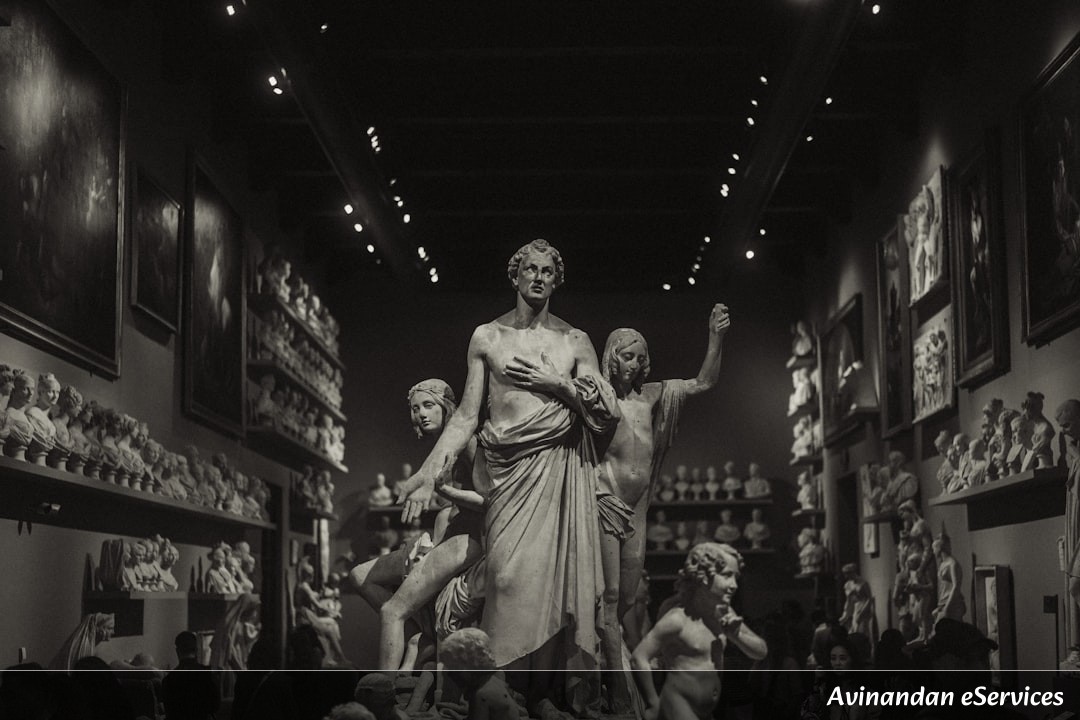
Nowhere is the spirit of the Renaissance more vividly captured than in its art. The shift towards humanism and realism triggered an artistic revolution that left behind the rigid, two-dimensional, and heavily symbolic art of the medieval period. Renaissance artists sought to portray the world as it truly appeared, celebrating the beauty of the human body and the natural world.
Key artistic innovations included:
- Linear Perspective: This was a mathematical system for creating a realistic illusion of three-dimensional space on a two-dimensional surface. Architect Filippo Brunelleschi is credited with its formalization, and painter Masaccio was one of the first to masterfully apply it in his frescoes, giving his paintings a revolutionary sense of depth and realism.
- Anatomy and Realism: Artists became obsessed with understanding the human body. They studied anatomy, sometimes through dissection, to learn how muscles and bones worked. This allowed them to create figures that were not just lifelike but also full of energy and emotion. Michelangelo's statue of David is a perfect example—a celebration of the idealized, powerful human form.
- Chiaroscuro: Italian for 'light-dark,' this technique involves the dramatic use of contrasts between light and shadow to model three-dimensional forms. Leonardo da Vinci was a master of this, using subtle gradations of light and dark (a technique called sfumato) to give his figures, like the Mona Lisa, an enigmatic, lifelike quality.
The era produced a trio of artists often called the High Renaissance masters, whose work represents the pinnacle of this artistic achievement:
- Leonardo da Vinci (1452-1519): The quintessential 'Renaissance Man,' Leonardo was a genius in painting, sculpture, architecture, science, and invention. His works, such as The Last Supper and the Mona Lisa, are celebrated for their psychological depth and technical mastery.
- Michelangelo Buonarroti (1475-1564): A sculptor, painter, and architect of immense talent and passion. His powerful sculptures, like David and the Pietà, and the breathtaking frescoes on the ceiling of the Sistine Chapel in Rome, showcase his unparalleled skill in depicting the human form.
- Raphael Sanzio (1483-120): Known for his serene and harmonious compositions, Raphael perfected the portrayal of grace and beauty. His painting, The School of Athens, is a masterpiece of perspective and a tribute to humanism, depicting an imaginary gathering of the greatest philosophers and scientists of the ancient world.
In architecture, the complex, soaring, and ornate style of the Gothic cathedrals was replaced by a return to classical principles of symmetry, proportion, and geometry. Architects like Brunelleschi studied Roman structures to relearn ancient techniques. His magnificent dome for the Florence Cathedral was an engineering marvel of its time and remains a symbol of Renaissance innovation.
The Power of the Printed Word: Spreading New Ideas
While the ideas of the Renaissance began with a small circle of scholars and artists, their spread across Europe was made possible by one of the most significant inventions in human history: the movable-type printing press. Developed by Johannes Gutenberg in Germany around 1440, this technology revolutionized the production of books.
Before Gutenberg, every book was a manuscript, painstakingly copied by hand, usually by monks in monasteries. This made books incredibly rare, expensive, and accessible only to the clergy and the very wealthy. The printing press changed everything. A single press could produce hundreds of copies of a book in the time it took a scribe to produce one. This led to a dramatic fall in the price of books and a surge in their availability.
The impact was profound:
- Democratization of Knowledge: For the first time, knowledge was not the exclusive property of the elite. Middle-class individuals could afford books, leading to a rise in literacy and the spread of new ideas beyond universities and monasteries.
- Spread of Humanism: The classical texts rediscovered by humanists, along with their own writings, were printed and distributed throughout Europe, allowing scholars in Germany, France, and England to engage with the Italian Renaissance.
- Fueling the Reformation: The printing press played a crucial role in the Protestant Reformation. In 1517, Martin Luther's Ninety-five Theses, his critique of the Catholic Church, was printed and distributed widely, quickly turning a local theological dispute into a continent-wide movement.
- Standardization: Printing helped standardize texts, maps, and scientific diagrams, reducing the errors that inevitably crept in during manual copying and facilitating a more collaborative scientific community.
Science and the New View of the Universe
The Renaissance spirit of questioning authority and observing the natural world directly laid the groundwork for the Scientific Revolution. For centuries, the European view of the cosmos was based on the teachings of the ancient Greek astronomer Ptolemy, whose ideas were endorsed by the Catholic Church. This was the geocentric model, which placed a stationary Earth at the center of the universe, with the sun, moon, and planets revolving around it in perfect circles.
This long-held view was shattered by a series of revolutionary thinkers:
- Nicolaus Copernicus (1473-1543): A Polish astronomer, Copernicus proposed a radical new theory in his book On the Revolutions of the Heavenly Spheres. He argued for a heliocentric model, placing the Sun, not the Earth, at the center of the universe. Fearing ridicule and condemnation from the Church, he delayed publishing his work until he was near death.
- Johannes Kepler (1571-1630): A German mathematician, Kepler analyzed astronomical data and discovered that planets do not move in perfect circles, as both Ptolemy and Copernicus had believed, but in elliptical orbits. His laws of planetary motion provided the mathematical foundation for the Copernican system.
- Galileo Galilei (1564-1642): An Italian astronomer who used the newly invented telescope to observe the heavens. His discoveries—including the craters on the Moon, the moons orbiting Jupiter, and the phases of Venus—provided powerful visual evidence that the Ptolemaic model was wrong. Galileo's outspoken support for Copernicanism brought him into direct conflict with the Inquisition. He was forced to recant his views and spent the rest of his life under house arrest. Despite this, his work paved the way for modern observational astronomy.
This shift from a geocentric to a heliocentric universe was more than just a scientific adjustment; it was a profound psychological blow. Humanity was no longer at the center of God's creation but on a small planet orbiting a star in a vast, unknown cosmos. This displacement was a key step in the development of the modern scientific worldview.
Was There a Renaissance for Women?
While the Renaissance celebrated the 'dignity of man,' the question of whether women shared in this cultural rebirth is complex. For the most part, the Renaissance was a movement led by and for a small group of elite, educated men. The humanist ideal of a public, active life was generally not open to women, whose domain was expected to be the home and family. Access to the kind of classical education that defined a humanist was denied to most girls.
However, there were remarkable exceptions. A number of aristocratic women broke through these barriers:
- Isabella d'Este (1474-1539): Ruler of the Italian city-state of Mantua, she was a brilliant diplomat and a major patron of the arts, commissioning works from the greatest artists of her time. Her court was a celebrated cultural center.
- Cassandra Fedele (1465-1558): A Venetian scholar who was one of the most famous female writers of her time. She wrote and delivered public orations in Latin, corresponded with prominent humanists, and was praised for her intellect across Italy.
- Sofonisba Anguissola (c. 1532-1625): An internationally renowned portrait painter from Cremona who served as a court painter to the Spanish king, Philip II. Her success opened doors for other women to pursue careers as professional artists.
Despite the achievements of these and other \textraordinary individuals, they remained exceptions. For the vast majority of women, social roles and opportunities did not dramatically change. The debate among historians continues, but it is clear that while the Renaissance did not usher in a new era of equality, it did produce pioneering women who challenged the conventions of their time.
Summary & Key Takeaways
The Renaissance was a pivotal period that fundamentally altered the course of Western civilization. It was an age of brilliant creativity, bold inquiry, and profound change. As you revise this chapter, keep these key takeaways in mind:
- A Rebirth of Ideas: The Renaissance, meaning 'rebirth,' was a cultural movement from the 14th-17th centuries characterized by a renewed interest in the classical learning and art of ancient Greece and Rome.
- Italian Origins: It began in the wealthy, independent city-states of Italy, fueled by trade, a rich classical heritage, and the influx of Greek scholars after the fall of Constantinople.
- The Power of Humanism: This intellectual movement shifted the focus from a God-centered to a human-centered worldview, celebrating human potential, reason, and achievement.
- Artistic Revolution: Artists like Leonardo, Michelangelo, and Raphael mastered techniques like perspective, anatomy, and chiaroscuro to create works of unprecedented realism and beauty.
- The Printing Press: Gutenberg's invention democratized knowledge, allowing humanist and scientific ideas to spread rapidly across Europe and fueling the Protestant Reformation.
- Scientific Breakthroughs: Thinkers like Copernicus and Galileo challenged the Church-approved geocentric model of the universe, paving the way for the Scientific Revolution and a modern understanding of the cosmos.
- Enduring Legacy: The Renaissance laid the foundations for the modern world by championing individualism, critical inquiry, and scientific investigation, and its artistic and intellectual achievements continue to inspire us today.