Introduction to The Fundamental Unit of Life
Welcome, students! Today, we embark on a fascinating journey into the microscopic world that forms the very basis of all living beings. Chapter 5 of your Class 9 Science textbook, 'The Fundamental Unit of Life', introduces you to the concept of the 'cell'. Just as a house is built from individual bricks, every living organism, from the smallest bacterium to the largest blue whale, is made up of cells. The cell is not just a structural unit; it is also the functional unit of life, meaning it performs all the essential functions necessary for an organism to live, grow, and reproduce. Understanding the cell is fundamental to understanding biology itself. In this comprehensive guide, we will explore the discovery of the cell, its intricate structure, the various components or 'organelles' that work together like a tiny factory, and how cells divide to create new life. Let's dive in and unravel the secrets of this incredible building block of life.
What are Living Organisms Made Up of?
The question of what makes living things 'alive' has puzzled scientists for centuries. The answer lies in a common, fundamental unit shared by all life forms: the cell. This section explores the historical discovery of the cell and the foundational theory that governs our understanding of it.
The Discovery of the Cell
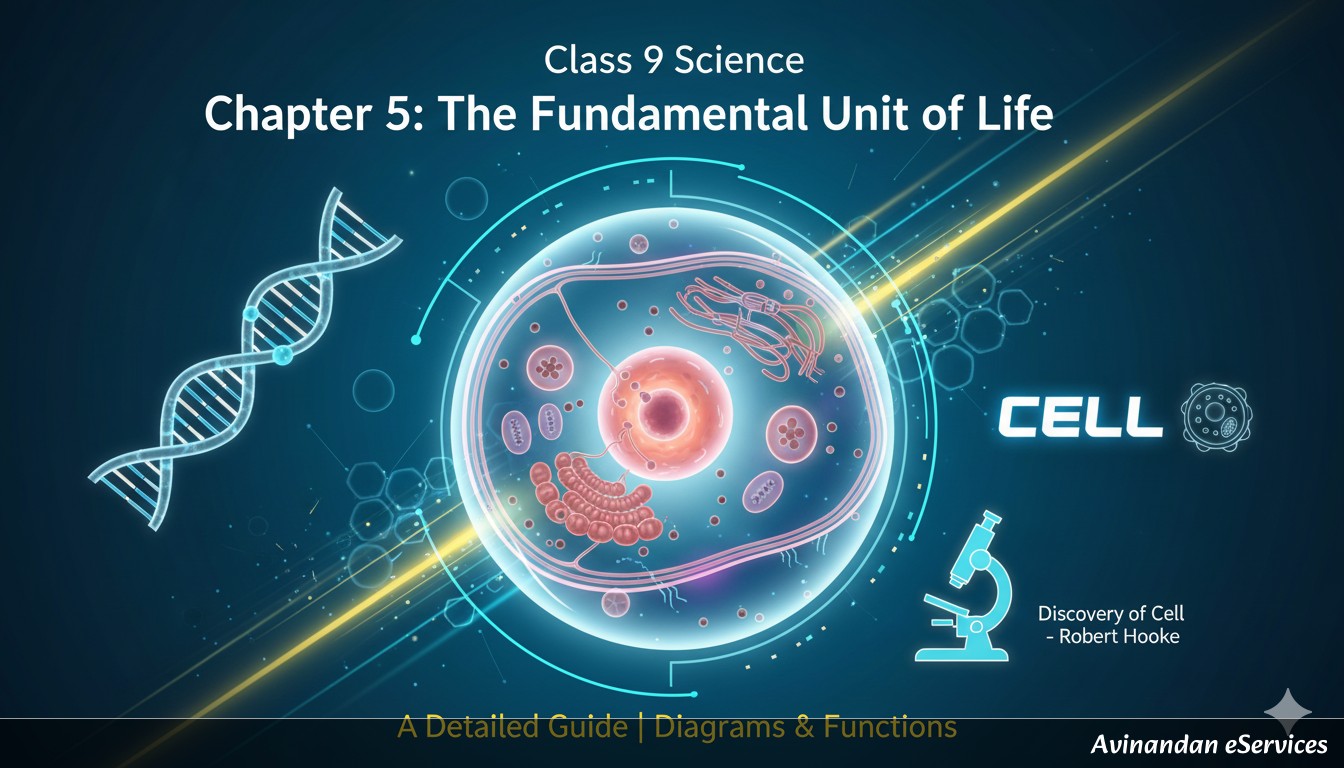
Our knowledge of the cell began with the invention of the microscope. In 1665, an English scientist named Robert Hooke made a groundbreaking observation. He was examining a thin slice of cork (which comes from the bark of a tree) under a self-designed crude microscope. He noticed that the cork was made up of many tiny, box-like compartments, which he described as resembling a honeycomb. Hooke coined the term 'cell' for these boxes, from the Latin word 'cellula' meaning 'a little room'. It's important to note that what Hooke actually saw were the dead cell walls of the cork tissue.
The first person to observe living cells was Antonie van Leeuwenhoek in 1674. Using an improved microscope, he discovered free-living cells in pond water, which we now know as bacteria and protozoa. His work opened up a whole new world of microscopic life. Further advancements in microscopy, particularly the development of high-magnification lenses, allowed later scientists like Robert Brown (who discovered the nucleus in 1831) and Jan Evangelista Purkinje (who coined the term 'protoplasm' for the fluid substance of the cell in 1839) to delve deeper into the cell's internal structure.
The Cell Theory
Based on the cumulative observations of many scientists, a fundamental theory in biology was formulated. The credit for the Cell Theory is generally given to two German scientists: botanist Matthias Schleiden (1838) and zoologist Theodor Schwann (1839).
- Schleiden proposed that all plants are composed of cells.
- Schwann proposed that all animals are composed of cells.
They combined their findings to formulate the initial Cell Theory, which stated that all living things (plants and animals) are composed of one or more cells, and the cell is the basic unit of life. This theory was later expanded by Rudolf Virchow in 1855, who made the crucial addition, 'Omnis cellula-e-cellula', which means that all cells arise from pre-existing cells. This statement refuted the earlier idea of spontaneous generation.
The modern Cell Theory includes the following key postulates:
- All known living things are made up of one or more cells.
- All living cells arise from pre-existing cells by division.
- The cell is the fundamental unit of structure and function in all living organisms.
- The activity of an organism depends on the total activity of its independent cells.
- Energy flow (metabolism and biochemistry) occurs within cells.
- Cells contain hereditary information (DNA) which is passed from cell to cell during cell division.
Types of Organisms based on Cell Number
Living organisms can be classified into two major groups based on the number of cells they are made of:
- Unicellular Organisms: These are single-celled organisms. A single cell performs all the essential life functions like nutrition, respiration, excretion, growth, and reproduction. Examples include Amoeba, Paramecium, Chlamydomonas, and bacteria.
- Multicellular Organisms: These organisms are made up of many cells. In these organisms, there is a 'division of labour', where different groups of cells specialize to perform specific functions. For instance, muscle cells contract to cause movement, nerve cells transmit messages, and blood cells transport oxygen. This specialization leads to the formation of tissues, organs, and organ systems. Examples include humans, trees, insects, and fungi.
What is a Cell Made Up of? The Structural Organisation of a Cell
While cells can vary greatly in shape and size (e.g., a nerve cell is long and branched, while a red blood cell is biconcave), they share a common basic structure. Every typical cell has three main functional regions that work together to carry out the processes of life. These are:
- The Plasma Membrane (or Cell Membrane)
- The Nucleus
- The Cytoplasm
Let's explore each of these components in detail.
Plasma Membrane or Cell Membrane
The plasma membrane is the outermost covering of the cell that separates the contents of the cell from its \texternal environment. In animal cells, it is the absolute outer boundary, while in plant cells, it lies just inside the cell wall.
Structure: The plasma membrane is \textremely thin, flexible, and living. It is primarily composed of a bilayer of lipids (specifically, phospholipids) and proteins. This structure allows it to be fluid and dynamic.
Function: Its most crucial function is to regulate the movement of substances into and out of the cell. It is a selectively permeable membrane (or semi-permeable membrane), meaning it allows the entry and exit of some selected materials while preventing the movement of others. This selective nature is vital for maintaining the cell's internal environment.
The movement of substances across the membrane occurs through two main processes:
- Diffusion: This is the spontaneous movement of a substance from a region of its high concentration to a region of its low concentration, until it is spread out evenly. It is a passive process, meaning it does not require energy. Gases like oxygen (O2) and carbon dioxide (CO2) move across the cell membrane by diffusion. For example, O2 moves from the lungs (high concentration) into the blood cells (low concentration), and CO2 moves from the cells (high concentration) out into the environment (low concentration).
- Osmosis: Osmosis is a special case of diffusion. It is the movement of water molecules through a selectively permeable membrane from a region of high water concentration to a region of low water concentration. The effect of osmosis depends on the concentration of the solution surrounding the cell.
Let's understand this with different types of solutions:
- Hypotonic Solution: The surrounding solution has a higher water concentration (and lower solute concentration) than the cell. As a result, water will move into the cell by osmosis. The cell will swell up. In an animal cell, this can cause it to burst (lysis). In a plant cell, the cell swells but does not burst due to the rigid cell wall, creating turgor pressure.
- Isotonic Solution: The surrounding solution has the same water concentration as the cell. There will be no net movement of water across the membrane (water moves in and out at the same rate). The cell will remain the same size.
- Hypertonic Solution: The surrounding solution has a lower water concentration (and higher solute concentration) than the cell. As a result, water will move out of the cell by osmosis. The cell will shrink.
The plasma membrane's flexibility also enables the cell to engulf food and other material from its \texternal environment through a process called endocytosis. A classic example is the single-celled organism Amoeba, which acquires its food through this process.
Cell Wall
The cell wall is a rigid, non-living outer layer found in plant cells, fungi, and bacteria, lying outside the plasma membrane. It is absent in animal cells.
Composition: In plants, the cell wall is mainly composed of cellulose, a complex carbohydrate that provides structural strength.
Functions:
- Structural Support and Shape: It provides a definite shape to the plant cell.
- Protection: It protects the cell from mechanical stress and from pathogens.
- Prevents Bursting: It prevents the cell from bursting when it takes in too much water in a hypotonic solution, allowing plant cells to withstand greater changes in the surrounding medium than animal cells.
When a living plant cell loses water through osmosis in a hypertonic solution, the cell contents shrink and pull away from the cell wall. This phenomenon is known as plasmolysis.
Nucleus
The nucleus is often called the 'control center' or 'brain' of the cell. It is a large, centrally located spherical organelle that contains the cell's genetic material and controls its growth, metabolism, and reproduction.
Structure:
- Nuclear Membrane: The nucleus is separated from the cytoplasm by a double-layered membrane called the nuclear envelope, which has pores. These nuclear pores allow the transfer of specific materials between the nucleus and the cytoplasm.
- Chromatin Material: Inside the nucleus is a tangled, thread-like mass of material called chromatin. When the cell is about to divide, this chromatin condenses and organizes into distinct rod-shaped structures called chromosomes.
- Chromosomes: Chromosomes are composed of DNA (Deoxyribonucleic Acid) and proteins. DNA is the molecule that carries the genetic information for the inheritance of characteristics from parents to offspring. Functional segments of DNA are called genes.
- Nucleolus: It is a dense, spherical body within the nucleus that is rich in RNA and protein. It is the site of ribosome synthesis.
Based on the presence or absence of a well-defined nucleus, cells are classified into two types:
- Prokaryotic Cells: These are primitive cells that lack a membrane-bound nucleus. Their genetic material lies in the cytoplasm in a region called the nucleoid. They also lack most other membrane-bound organelles. Bacteria are prokaryotes.
- Eukaryotic Cells: These are advanced cells that have a well-defined nucleus enclosed by a nuclear membrane. They also possess other membrane-bound organelles. All organisms other than bacteria (plants, animals, fungi, protists) are eukaryotes.
Cytoplasm
The cytoplasm is the jelly-like, semi-fluid substance that fills the cell and is enclosed by the plasma membrane. It is the main arena of cellular activities. Both metabolic reactions and the specialized functions of organelles occur here. It consists of two parts: the cytosol (the aqueous component) and the cell organelles suspended within it.
Cell Organelles
Eukaryotic cells contain several membrane-bound structures within their cytoplasm called organelles. Each organelle is specialized to perform a specific function for the cell, much like organs in our body. This division of labour allows the cell to function efficiently.
Endoplasmic Reticulum (ER)
The Endoplasmic Reticulum is a large network of membrane-bound tubes and sheets. It is like a complex system of intracellular highways. The ER membrane is continuous with the outer nuclear membrane.
There are two types of ER:
- Rough Endoplasmic Reticulum (RER): It looks rough under a microscope because it has particles called ribosomes attached to its surface. Ribosomes are the sites of protein synthesis. The RER is responsible for synthesizing and modifying these proteins, which are then sent to various destinations in the cell.
- Smooth Endoplasmic Reticulum (SER): It does not have ribosomes on its surface and is therefore smooth. SER helps in the manufacture of lipids (fats) and steroids. It also plays a crucial role in the detoxification of many poisons and drugs in liver cells.
Function: The ER serves as a channel for the transport of materials (especially proteins) between various regions of the cytoplasm or between the cytoplasm and the nucleus. It also provides a surface for many biochemical activities of the cell.
Golgi Apparatus
First described by Camillo Golgi, the Golgi apparatus (or Golgi complex/body) consists of a system of membrane-bound, fluid-filled vesicles arranged approximately parallel to each other in stacks called cisterns. Its membrane is often connected to the ER.
Function: The Golgi apparatus acts as the cell's packaging and dispatching unit. Materials synthesized near the ER (like proteins and lipids) are packaged and dispatched to various targets inside and outside the cell through the Golgi apparatus. Its functions include:
- Storage, modification, and packaging of products in vesicles.
- Formation of complex sugars from simple sugars.
- Involvement in the formation of lysosomes.
Lysosomes
Lysosomes are small, spherical, membrane-bound sacs filled with powerful digestive enzymes. These enzymes are made by the RER.
Function: Lysosomes act as the 'waste disposal system' or 'demolition crew' of the cell. They help to keep the cell clean by digesting any foreign material (like bacteria or food) as well as worn-out cell organelles. When a cell gets damaged or old, lysosomes may burst, and their enzymes digest their own cell. Therefore, lysosomes are also known as the 'suicidal bags' of a cell.
Mitochondria
Mitochondria are tiny rod-shaped organelles known as the 'powerhouses of the cell'. They are responsible for generating the energy the cell needs to perform its functions.
Structure: They have two membrane coverings. The outer membrane is porous, while the inner membrane is deeply folded. These folds, called cristae, create a large surface area for the chemical reactions of cellular respiration.
Function: The energy required for various chemical activities is released by mitochondria in the form of ATP (Adenosine Triphosphate) molecules. ATP is the energy currency of the cell. The body uses energy stored in ATP for making new chemical compounds and for mechanical work.
Interestingly, mitochondria are strange organelles as they have their own DNA and ribosomes. Therefore, they can make some of their own proteins.
Plastids
Plastids are organelles found only in plant cells. Like mitochondria, they also have their own DNA and ribosomes. There are three main types of plastids:
- Chloroplasts: These are the most well-known plastids. They are green in colour because they contain the pigment chlorophyll. Chloroplasts are the site of photosynthesis, the process by which plants use sunlight, water, and carbon dioxide to create their own food (glucose) and release oxygen.
- Chromoplasts: These contain colored pigments other than green (e.g., yellow, orange, red). They are responsible for the colors of flowers and fruits, which helps in attracting insects for pollination and animals for seed dispersal.
- Leucoplasts: These are colorless plastids. They are primarily storage organelles, storing materials such as starch, oils, and protein granules.
Vacuoles
Vacuoles are membrane-bound sacs used for storage. They store solid or liquid contents.
In Plant Cells: Plant cells have a very large, central vacuole that can occupy 50-90% of the cell volume. It is filled with cell sap and provides turgidity and rigidity to the cell. It also stores important substances like amino acids, sugars, and various organic acids.
In Animal Cells: Animal cells have small-sized vacuoles or may lack them altogether. In single-celled organisms like Amoeba, the food vacuole contains the food items it has consumed, and specialized contractile vacuoles help in expelling excess water and some wastes.
Difference Between Plant and Animal Cells
While both are eukaryotic cells, there are several key differences between plant and animal cells, primarily due to their different modes of life (plants are stationary and produce their own food, while animals are mobile and ingest food).
| Feature | Animal Cell | Plant Cell |
|---|---|---|
| Size | Generally smaller in size. | Generally larger than animal cells. |
| Cell Wall | Absent. The plasma membrane is the outer layer. | Present. A rigid cell wall made of cellulose is outside the plasma membrane. |
| Shape | Irregular shape due to the lack of a cell wall. | Fixed, regular shape due to the rigid cell wall. |
| Vacuole | Have many small, temporary vacuoles, if any. | Have a large, single, central vacuole that occupies a major part of the cell volume. |
| Plastids | Absent. | Present (Chloroplasts, Chromoplasts, Leucoplasts). |
| Nucleus | Generally located in the center. | Usually pushed to one side (peripheral) by the large central vacuole. |
| Lysosomes | Present. | Rarely present. The function is often taken over by the vacuole. |
Cell Division
All new cells are formed from pre-existing cells through a process called cell division. This process is essential for the growth of an organism, to replace old, dead, and injured cells, and for reproduction. There are two main types of cell division.
Mitosis
Mitosis is the process of cell division where a parent cell divides to form two genetically identical daughter cells. Each daughter cell has the same number of chromosomes as the parent cell. This is why it is also called 'equational division'. Mitosis is the primary method of cell division for growth and repair in multicellular organisms.
Meiosis
Meiosis is a specialized type of cell division that occurs in the reproductive organs of sexually reproducing organisms to produce gametes (sperm and egg cells). It involves two rounds of division. A parent cell divides to produce four daughter cells, each with half the number of chromosomes as the parent cell. This reduction in chromosome number is crucial to ensure that when the gametes fuse during fertilization, the resulting offspring has the correct number of chromosomes.
Important Questions and Answers
Q1: Differentiate between prokaryotic and eukaryotic cells.
Answer: The key differences between prokaryotic and eukaryotic cells are as follows:
| Feature | Prokaryotic Cell | Eukaryotic Cell |
|---|---|---|
| Size | Generally small (1-10 µm). | Generally large (5-100 µm). |
| Nucleus | Nuclear region is not well-defined and lacks a nuclear membrane. It is called a nucleoid. | Well-defined nucleus with a double-layered nuclear membrane. |
| Chromosome | Single, circular chromosome. | More than one, linear chromosomes. |
| Membrane-bound Organelles | Absent (e.g., mitochondria, ER, Golgi apparatus). | Present. |
| Examples | Bacteria, Blue-green algae. | Plants, Animals, Fungi, Protists. |
Q2: Why are lysosomes known as suicidal bags?
Answer: Lysosomes are known as 'suicidal bags' because they contain very powerful hydrolytic (digestive) enzymes capable of breaking down almost all types of organic materials. Under normal conditions, these enzymes are safely contained within the lysosomal membrane and are used to digest foreign particles or worn-out organelles. However, if the cell gets severely damaged or becomes old, the lysosomal membrane may rupture. When this happens, the digestive enzymes are released into the cytoplasm and they begin to digest the cell's own contents, leading to the death of the cell. This process of self-destruction is called autolysis, which is why lysosomes earn the nickname 'suicidal bags'.
Q3: Where do the lipids and proteins constituting the cell membrane get synthesized?
Answer: The lipids and proteins that make up the cell membrane are synthesized in the Endoplasmic Reticulum (ER). Specifically:
- Proteins: The proteins are synthesized by the ribosomes attached to the surface of the Rough Endoplasmic Reticulum (RER).
- Lipids: The lipids (fats) are synthesized in the Smooth Endoplasmic Reticulum (SER).
This process of building the cell membrane using proteins and lipids synthesized by the ER is known as membrane biogenesis.
Q4: What would happen if the plasma membrane ruptures or breaks down?
Answer: The plasma membrane is crucial for a cell's survival. If it ruptures or breaks down, the following would happen:
- Loss of Cellular Contents: The selective permeability of the membrane would be lost. The internal contents of the cell, including the cytoplasm and organelles, would leak out into the surrounding medium.
- Uncontrolled Entry of Substances: Harmful substances from the \texternal environment could enter the cell freely.
- Disruption of Homeostasis: The cell would be unable to maintain its constant internal environment (homeostasis), which is essential for metabolic activities.
Ultimately, the cell would not be able to perform its life functions and would die.
Q5: What is osmosis?
Answer: Osmosis is the net movement or passage of water molecules from a region of higher water concentration to a region of lower water concentration through a selectively permeable membrane. It is a special type of diffusion that applies specifically to water. This process is passive and does not require the cell to expend energy. Osmosis is vital for many biological processes, including water absorption by plant roots and the maintenance of water balance within cells.
Chapter Summary
Here are the key takeaways from our exploration of 'The Fundamental Unit of Life':
- The cell is the basic structural and functional unit of all living organisms.
- Cells were first discovered by Robert Hooke in 1665. The Cell Theory states that all organisms are made of cells, and all cells arise from pre-existing cells.
- A cell is primarily composed of three parts: the plasma membrane, the nucleus, and the cytoplasm.
- The plasma membrane is a selectively permeable barrier that controls the entry and exit of substances through processes like diffusion and osmosis.
- The cell wall, present in plant cells, provides rigidity and protection.
- The nucleus acts as the control center, containing the cell's genetic material (DNA) in the form of chromosomes.
- The cytoplasm is the site of most cellular activities and contains various specialized cell organelles.
- Endoplasmic Reticulum (ER) is involved in protein (RER) and lipid (SER) synthesis and transport.
- The Golgi apparatus modifies, packages, and transports cellular secretions.
- Lysosomes are the 'suicidal bags' that handle waste disposal.
- Mitochondria are the 'powerhouses' that generate energy (ATP).
- Plastids (in plants) include chloroplasts for photosynthesis.
- Vacuoles are storage sacs, being very large in plant cells to provide turgidity.
- Plant and animal cells differ in key aspects like the presence of a cell wall, plastids, and the size of vacuoles.
- Prokaryotic cells are simple and lack a true nucleus, while eukaryotic cells are complex and have a membrane-bound nucleus and organelles.
- Cells divide through mitosis (for growth and repair) and meiosis (for reproduction).