Kabir: Mira, come here quick! You have to see this. There is a tiny beetle in the garden, and it’s doing something absolutely hilarious.
Mira: Oh? Is it another one of those jumping spiders you found yesterday, Kabir?
Kabir: No, it’s a beetle! And it’s rolling a ball of... well, I think it’s dirt... backwards! It’s using its back legs to push it while its head is practically touching the ground. It looks like it’s doing a handstand while moving furniture!
Mira: Ah, Kabir, you’ve found a Dung Beetle! And that’s not just dirt—it’s actually animal dung. They roll it into a perfect sphere to take home for a snack or to lay their eggs in. But look closely at how it’s moving. Do you notice anything strange about its path?
Kabir: Now that you mention it, it’s moving in a perfectly straight line. Even when it hits a small pebble or a tuft of grass, it corrects itself and keeps going in the exact same direction. How does it know where it’s going if its head is pointing at the ground?
Mira: That is exactly the mystery scientists wanted to solve! It’s actually one of the most incredible navigation stories in the animal kingdom. That tiny beetle is using the stars to find its way.
Kabir: Wait, what? You mean like a pirate with a map and a compass? But it’s broad daylight, Mira! There are no stars out right now.
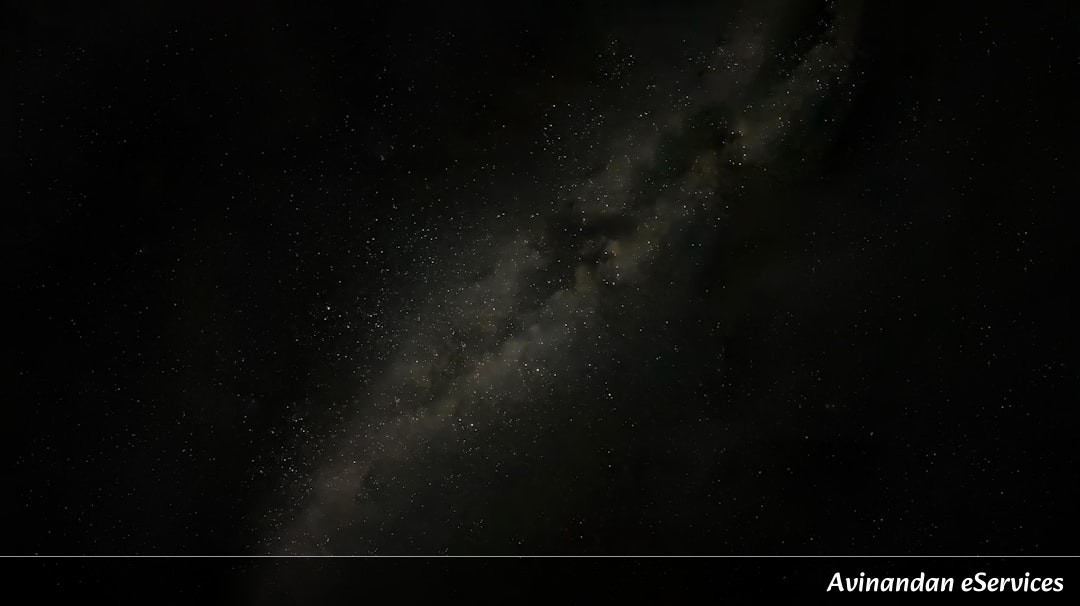
Mira: Well, during the day, they use the sun. But the really amazing part happens at night. Scientists discovered that certain species of dung beetles are the only animals we know of—besides humans—that use the Milky Way galaxy to navigate!
Kabir: No way! The Milky Way? That’s a whole collection of billions of stars! How can a bug with a brain the size of a poppy seed see a galaxy?
Mira: It doesn't see individual stars like we do when we look through a telescope. Instead, it sees the soft, glowing streak of light that the Milky Way creates across the night sky. To the beetle, that stripe of light acts like a giant permanent road sign in the sky.
Kabir: Wow! But why do they need to move in a straight line so badly? Can’t they just wander around until they find a nice spot to bury their ball?
Mira: That’s the thing, Kabir. The dung pile is a very competitive place. Once a beetle makes a ball, other beetles will try to steal it! To keep its prize, the beetle needs to get as far away from the pile as possible, as fast as possible. A straight line is the quickest way out of the 'danger zone.' If it moved in circles, it might accidentally roll right back into the crowd of thieves!
Kabir: That makes sense. But how did scientists figure this out? Did they ask the beetle for directions?
Mira: Not quite! Scientists in South Africa did some very funny experiments. They put the beetles in a large circular arena and timed how long it took them to reach the edge. Under a clear night sky, the beetles moved in a straight line. But when the scientists put little cardboard hats on the beetles—yes, actual tiny hats!—to block their view of the sky, the beetles started rolling their balls in random circles.
Kabir: Tiny hats! I wish I could have seen that. So the hats blocked the stars, and the beetles got lost?
Mira: Exactly. They even took the beetles into a planetarium—a big dome that shows a projection of the night sky. When they showed only the brightest stars, the beetles were confused. But when they showed the hazy glow of the Milky Way, the beetles moved perfectly! It proved that they weren't looking at single stars, but at the whole galaxy’s light.
Kabir: That is so cool. So, if it’s a cloudy night, are they just stuck? Do they have to call a beetle Uber?
Mira: Haha, not quite. If it's too cloudy to see the Milky Way or the Moon, they do struggle. They might wait for the clouds to clear or just move much more slowly and erratically. They also use something called 'polarized light,' which is a type of light pattern that humans can't see, but many insects can. It helps them stay on track even when the sun or moon is hidden behind a few clouds.
Kabir: I can’t believe a beetle is an astronomer. I struggle to find my way to the kitchen at night without a nightlight, and this bug is using a galaxy to move a ball of poop!
Mira: It really shows how much we still have to learn about the world, doesn't it? Even the smallest creatures have developed incredible ways to survive using the physics of the universe.
So, What Did We Learn Today?
- Mira: We learned that Dung Beetles are the first known animals to use the Milky Way galaxy for navigation.
- Kabir: I learned that moving in a straight line is super important for them so their lunch doesn't get stolen by other beetles!
- Mira: We also learned that they don't look at single stars, but rather the collective glow of the galaxy to keep their bearings.
- Kabir: And the best part—scientists actually put tiny hats on beetles to prove they were looking at the sky!
- Mira: Science shows us that no matter how small you are, the entire universe can help you find your way.