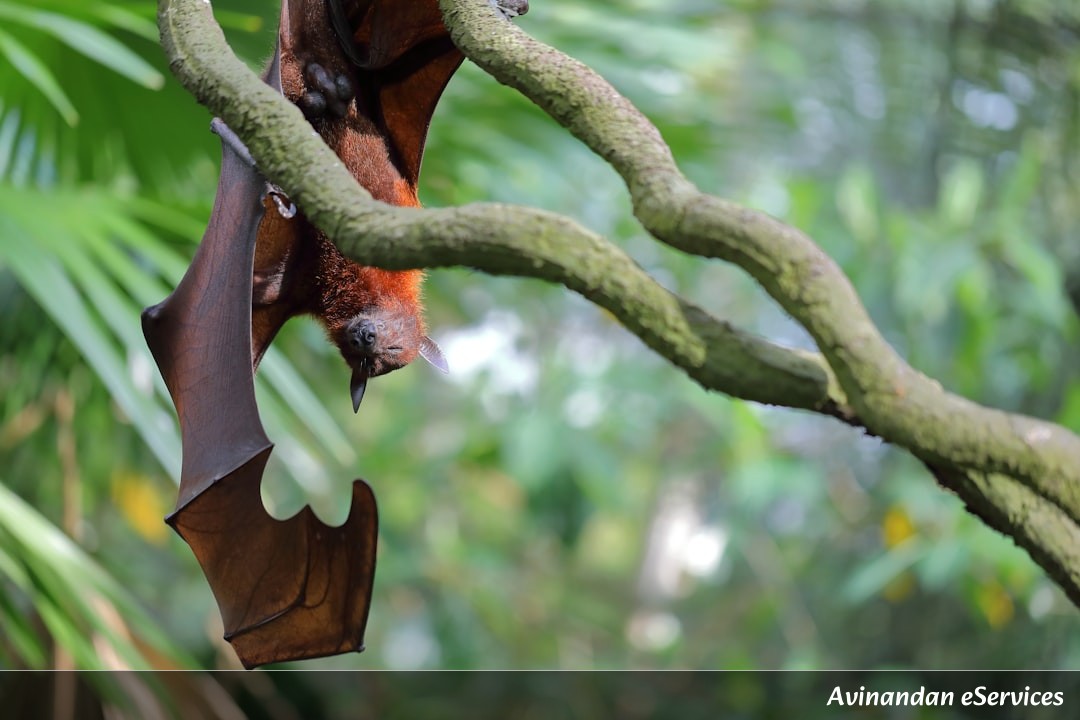
Samir: Ananya, come quick! Look at that bat circling the mango tree in the backyard. It’s been diving at that little white moth for five minutes, but it keeps missing! It’s like the bat is suddenly blind. Is that bat just a bad hunter, or is it a baby learning to fly?
Ananya: Neither, Samir! You are actually watching a high-tech spy mission happening right in our garden. That bat isn’t bad at hunting; it’s being 'jammed' by the moth!
Samir: Jammed? Like how the radio gets static when we drive under a bridge? But moths don't have radios, Ananya. They’re just... well, snacks with wings.
Ananya: That’s where you’re wrong! Some moths, specifically the Tiger Moth, have a secret superpower. They are one of the few creatures on Earth that can perform 'acoustic jamming.' It’s the same technology fighter pilots use to hide from enemy radar.
Samir: No way! How can a tiny insect have better technology than a bat? I thought bats were the kings of the night because of their echolocation.
Ananya: They are! Bats are incredible. To 'see' in the dark, they shout out ultrasonic pulses—sounds so high-pitched we can’t hear them. These sound waves hit an object, like a moth, and bounce back to the bat's ears. By listening to those echoes, the bat’s brain creates a perfect 3D map of the world. It knows exactly where the moth is, how fast it’s flying, and even which way it’s turning.
Samir: So the bat has a built-in GPS and sonar system. That makes it even weirder that the moth is winning. If the bat knows exactly where it is, how does it miss?
Ananya: Because the Tiger Moth talks back! Most moths just try to fly away or drop to the ground when they hear a bat's 'ping.' But the Tiger Moth has a special organ called a 'tymbal' on its thorax. When it hears a bat getting close, it vibrates that organ to produce its own series of super-fast ultrasonic clicks—up to 4,500 clicks per second!
Samir: 4,500 clicks! That’s faster than a machine gun! But does the clicking just scare the bat away?
Ananya: Actually, it does something much cooler. Scientists used to think it was just a warning, like a bright-colored frog saying 'don't eat me, I'm poisonous.' But then they did an experiment with 'Big Brown Bats' and Tiger Moths. They found that the clicks actually blur the bat's vision. Well, its sound-vision.
Samir: Wow, how does that work? Does it create a 'wall of sound'?
Ananya: Precisely! Think of it like this: the bat sends out a 'ping' to find the moth. It expects one 'pong' back. But instead, the Tiger Moth sends back thousands of 'pongs' all at once. This confuses the bat’s brain. It starts seeing 'phantom' moths everywhere. The bat thinks the moth is to the left, then to the right, then five feet higher than it actually is. By the time the bat realizes it's been tricked, the real moth has fluttered away into the bushes.
Samir: That is unbelievable! It’s like the moth is using a cloaking device. Do all moths do this?
Ananya: Not all of them, which is what makes the Tiger Moth so special. It’s an evolutionary arms race, Samir. For millions of years, bats have been getting better at hunting, and moths have been getting better at hiding. Some moths have fuzzy wings that absorb sound waves like a stealth bomber, so they don't send an echo back at all. But the Tiger Moth is the only one bold enough to actively scramble the bat's signal.
Samir: So, if humans could figure out how the Tiger Moth does it, could we use it for our own technology?
Ananya: We already are studying it! Engineers look at these moths to understand how to make better sonar for ships or even to help develop technology that helps visually impaired people navigate using sound. Nature solved the problem of 'noise interference' millions of years before we even invented the wheel.
Samir: I’ll never look at a moth the same way again. I thought they were just dusty little things that liked lightbulbs. Now I know they’re basically tiny, winged ninjas with sound-scramblers.
Ananya: Exactly! It just goes to show that even the smallest creatures have amazing ways to survive. The night sky isn't just quiet and dark; it's filled with invisible battles of sound and strategy.
So, What Did We Learn Today?
- Echolocation is Sound-Vision: Bats use high-frequency sound pulses to create a 3D map of their surroundings to hunt in total darkness.
- The Tiger Moth's Secret Weapon: Tiger Moths have a special organ called a tymbal that produces ultrasonic clicks to defend themselves.
- Acoustic Jamming: By clicking thousands of times per second, the moth creates 'phantom' echoes that confuse the bat's sonar, making it impossible for the bat to aim correctly.
- Stealth Technology in Nature: This is a perfect example of an evolutionary arms race, where prey develops high-tech defenses to stay one step ahead of predators.
- Biomimicry: Humans study these moths to improve sonar technology and help create navigation tools for people who cannot see.
Samir: I guess that bat better find a different snack tonight, because that Tiger Moth is way too smart to be caught!