Introduction: What is the Full Form of URL?
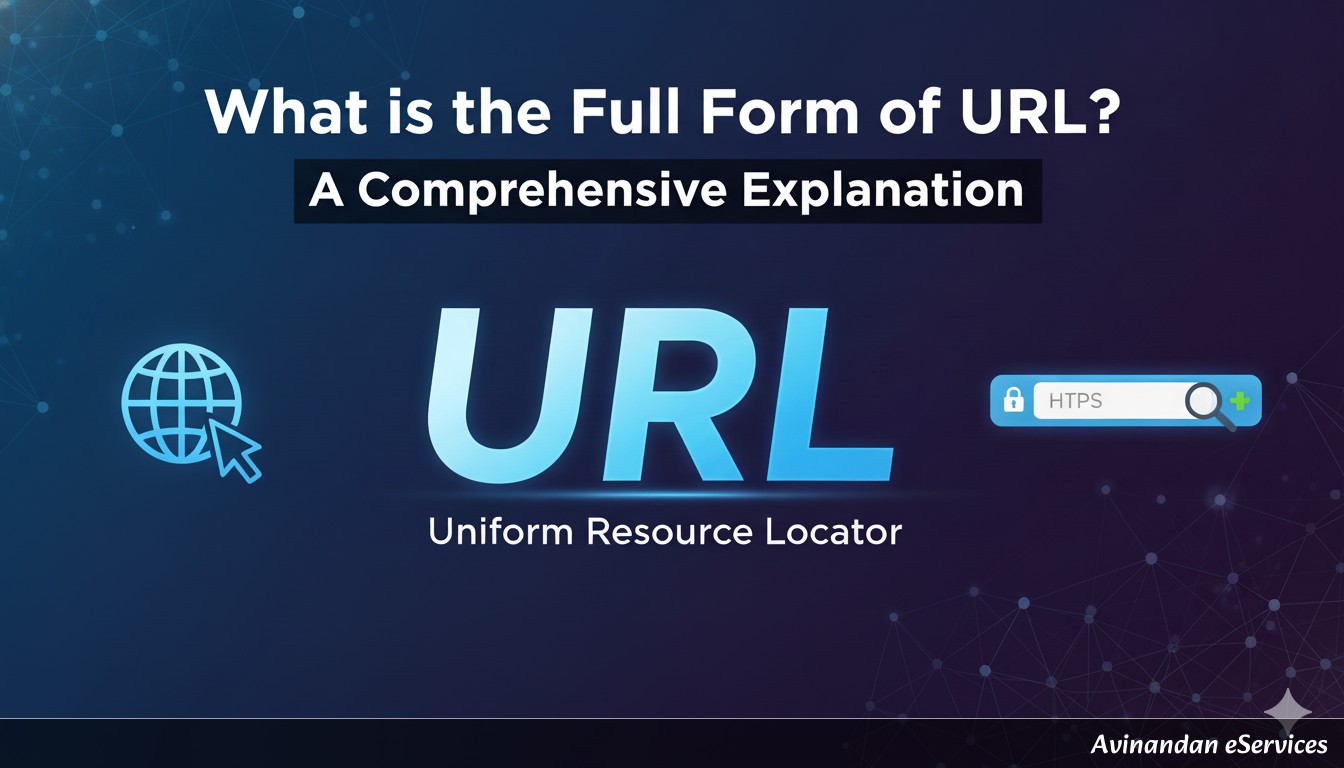
The full form of URL is Uniform Resource Locator. In simple terms, a URL is the unique web address that tells your browser exactly where to find a specific resource on the internet, whether it's a webpage, an image, a video, or a document. It acts as a digital roadmap, guiding users and browsers to the correct online destination.
Detailed Breakdown of the Acronym
Let's break down what each word in 'Uniform Resource Locator' signifies:
- Uniform: This emphasizes that URLs follow a standardized format, ensuring consistency and predictability across the internet.
- Resource: This refers to any piece of information or content available online, such as a webpage, image, video, or file.
- Locator: This indicates that the URL specifies the exact location of the resource on the network.
History and Purpose
The concept of the URL was first defined in 1994 by Tim Berners-Lee, the inventor of the World Wide Web, along with the URI working group of the Internet Engineering Task Force (IETF) [3, 7]. The primary purpose behind its creation was to establish a standardized way to reference and access resources across the nascent World Wide Web [16, 18, 19]. Before URLs, accessing information online was cumbersome, often requiring users to know complex protocols or navigate through hierarchical systems like Gopher [19]. Berners-Lee's innovation combined existing domain name systems with file path syntax, creating a universal addressing system that made the web navigable and accessible [3, 19]. The goal was to enable documents to link to one another, bringing 'Hypertext' to life [18].
Importance and Usage
URLs are fundamental to how we interact with the internet today. They are essential for several reasons:
- Navigation: URLs are the primary way users find and access content online. Whether typed directly into a browser's address bar or clicked via a hyperlink, URLs direct browsers to the correct resource [1, 2, 8].
- Indexing and SEO: Search engines like Google use URLs to understand a website's structure and content [9, 11, 14]. Well-structured, keyword-rich URLs can improve a site's visibility and search engine rankings [6, 9, 11].
- User Experience: Clear and concise URLs can convey the content of a page, improving user experience and building trust [6, 9, 12].
- Linking and Sharing: URLs facilitate the linking between different web pages and make it easy for users to share content [8, 12].
- Security: Secure URLs, starting with 'HTTPS', encrypt data exchanged between a user and a website, protecting sensitive information like passwords and credit card details [11, 14].
A typical URL consists of several key components:
- Scheme (Protocol): Such as HTTP or HTTPS, indicating how data is transferred [1, 4, 13].
- Domain Name: The human-readable address of the website (e.g., google.com) [4, 7].
- Path: Specifies the exact location of a resource on the website (e.g., /blog/article) [4, 15].
- Other components can include subdomains, ports, query parameters, and fragments [4, 17].
Frequently Asked Questions (FAQs) about URL
- What is the main purpose of a URL? The main purpose of a URL is to provide a unique address that allows web browsers and users to locate and access specific resources on the internet.
- Who invented the URL? The URL was invented by Tim Berners-Lee in 1994, along with the World Wide Web and HTTP protocol.
- Are URLs important for SEO? Yes, URLs are very important for SEO. Search engines use them to understand page content, and user-friendly URLs can improve rankings and click-through rates.
- What is the difference between a URL and a URI? A URL is a specific type of Uniform Resource Identifier (URI) that not only identifies a resource but also specifies how to retrieve it (its location and access mechanism). A URI is a broader term for any identifier.