Introduction: What is the Full Form of SIM?
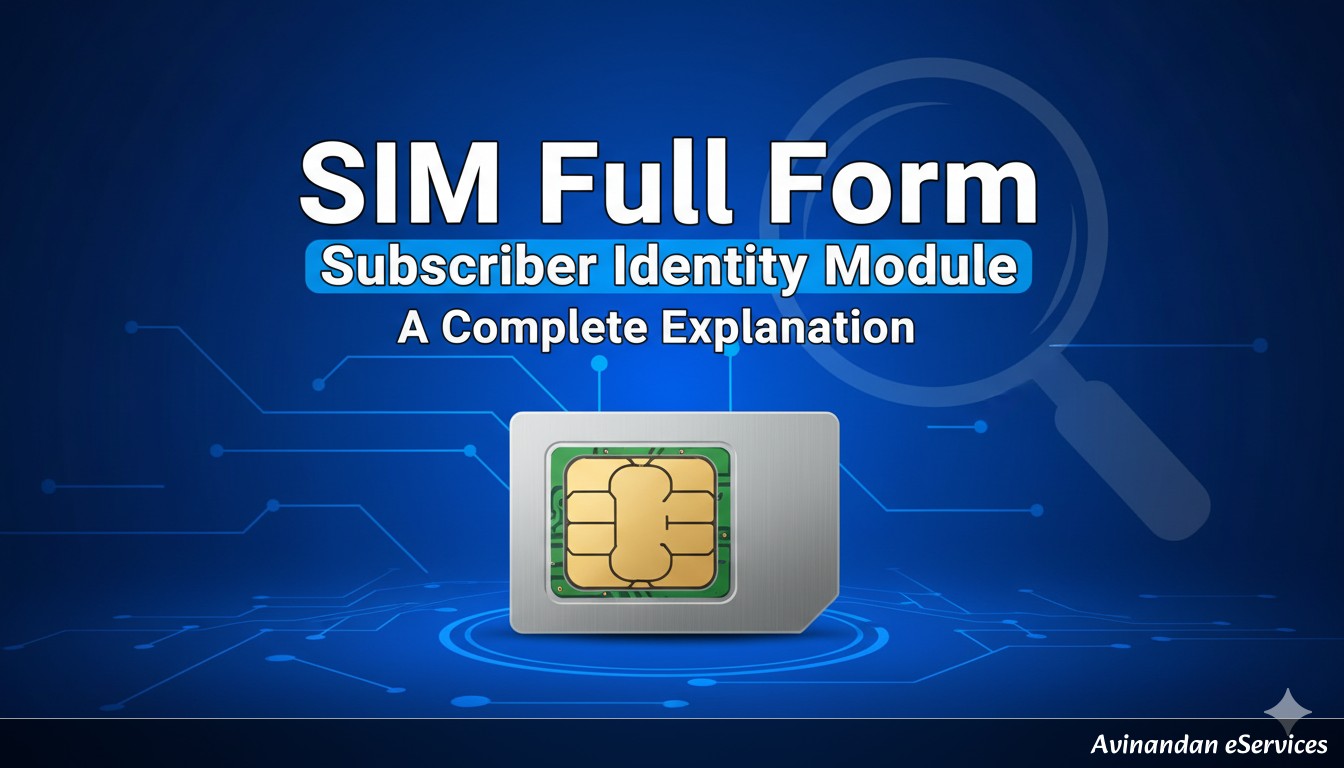
The full form of SIM is Subscriber Identity Module, and it can also be referred to as a Subscriber Identification Module. A SIM is a small, portable smart card or chip that is essential for any mobile device to connect to a cellular network. It securely stores an integrated circuit that holds a unique identification number called the International Mobile Subscriber Identity (IMSI) and a related key. This information is crucial for mobile network operators to identify and authenticate a subscriber's device, enabling services like calls, text messages, and mobile data.
Detailed Breakdown of the Acronym
Each word in the acronym 'Subscriber Identity Module' plays a vital role in describing its function:
- Subscriber: This refers to you, the user or customer, who has subscribed to the services of a mobile network operator. The SIM card links your specific device to your account with the service provider.
- Identity/Identification: The primary role of the SIM is to provide a unique identity to your device on the network. It contains key data that authenticates you as a legitimate user, ensuring that services are delivered to the correct person and billed accurately. This data includes your IMSI, a unique serial number (ICCID), and security authentication keys.
- Module: This term refers to the physical component itself—a small, self-contained electronic circuit. The SIM is an integrated circuit embedded in a PVC card, which is why it's commonly known as a SIM card. This module can be transferred between different compatible devices, allowing you to keep your phone number and subscription details when you change phones.
History and Purpose
The Invention and Early Days
The concept of the SIM card emerged alongside the development of the Global System for Mobile Communications (GSM) standard in Europe. The first SIM card was invented and manufactured in 1991 by the Munich-based smart-card maker Giesecke+Devrient. They sold the first 300 SIM cards to a Finnish wireless network operator called Radiolinja, marking a pivotal moment in mobile technology history.
Initially, SIM cards were the size of a credit card (a format known as 1FF or full-size SIM) and were used in early mobile phones and car phones. The purpose was to create a standardized, secure way to authenticate users on the new digital GSM networks. Before SIM cards, user information was often programmed directly into the phone itself, making it difficult to switch devices or carriers without reprogramming. The SIM card revolutionized this by separating the user's identity from the handset, giving consumers unprecedented flexibility.
The Evolution of SIM Card Sizes
As mobile phones became smaller and more compact, the SIM card had to shrink as well. This led to a series of reductions in size over the years:
- Mini-SIM (2FF): Introduced in 1996, this became the standard for over a decade and is what many people remember as the "regular" SIM card size.
- Micro-SIM (3FF): Launched in 2010, this smaller format was popularized by devices like the iPhone 4 to save internal space as phones became slimmer.
- Nano-SIM (4FF): Introduced in 2012, this is the current standard for most modern smartphones, measuring just 12.3 x 8.88mm.
Despite the changes in physical size, the core functionality of the embedded chip has remained largely the same, focusing on secure network authentication.
Importance and Usage
The SIM card is indispensable in the world of mobile communications. Without it, a GSM phone cannot connect to a cellular network to make calls, send SMS messages, or use mobile data services like 4G and 5G.
Core Functions and Stored Data
A SIM card performs several critical functions by storing specific pieces of information:
- Authentication: It uses its stored IMSI and security keys to prove to the network that you are a legitimate subscriber. This secure authentication process protects against unauthorized use of your mobile account.
- Data Storage: While modern smartphones primarily store data on internal memory, SIM cards can hold a limited amount of information, including contact lists and SMS messages. They also store network-specific data, such as the SMS center number and service provider name.
- Portability: One of the most significant advantages is portability. You can easily move your SIM card from one unlocked phone to another and instantly transfer your phone number and service plan.
- Global Roaming: SIM cards make international travel more convenient. A traveler can swap their regular SIM with a local one to avoid high roaming charges and get local rates for calls and data.
The Rise of eSIM and iSIM
The next stage in SIM technology is the eSIM (embedded SIM). An eSIM is a digital SIM that is built directly into the device's hardware, eliminating the need for a physical, removable card. Users can activate a cellular plan from a carrier remotely, often by scanning a QR code. This offers greater flexibility for switching carriers, managing multiple numbers on a single device (dual-SIM), and designing smaller, more water-resistant devices like smartwatches. The newest evolution, the iSIM (integrated SIM), goes a step further by integrating the SIM functionality directly into the device's main processor, promising even greater efficiency and space-saving benefits.
Frequently Asked Questions (FAQs) about SIM
- What does a SIM card do? A SIM card's main function is to connect a device to a cellular network. It identifies and authenticates the user's account with the mobile carrier, allowing them to make calls, send texts, and use mobile data.
- Can a phone work without a SIM card? A phone can perform many functions without a SIM card, such as connecting to Wi-Fi, using apps, and taking photos. However, it cannot connect to a cellular network to make or receive calls and text messages or use mobile data.
- What is the difference between a SIM and an eSIM? A physical SIM is a removable plastic card that you insert into your phone. An eSIM (embedded SIM) is a digital SIM that is built into the device's hardware and is activated remotely by the carrier. eSIMs are more convenient for switching plans and cannot be physically lost or stolen.
- What information is stored on a SIM card? A SIM card securely stores your International Mobile Subscriber Identity (IMSI), a unique serial number (ICCID), and security authentication keys. It can also store your phone number, network authorization data, contacts, and a limited number of SMS messages.