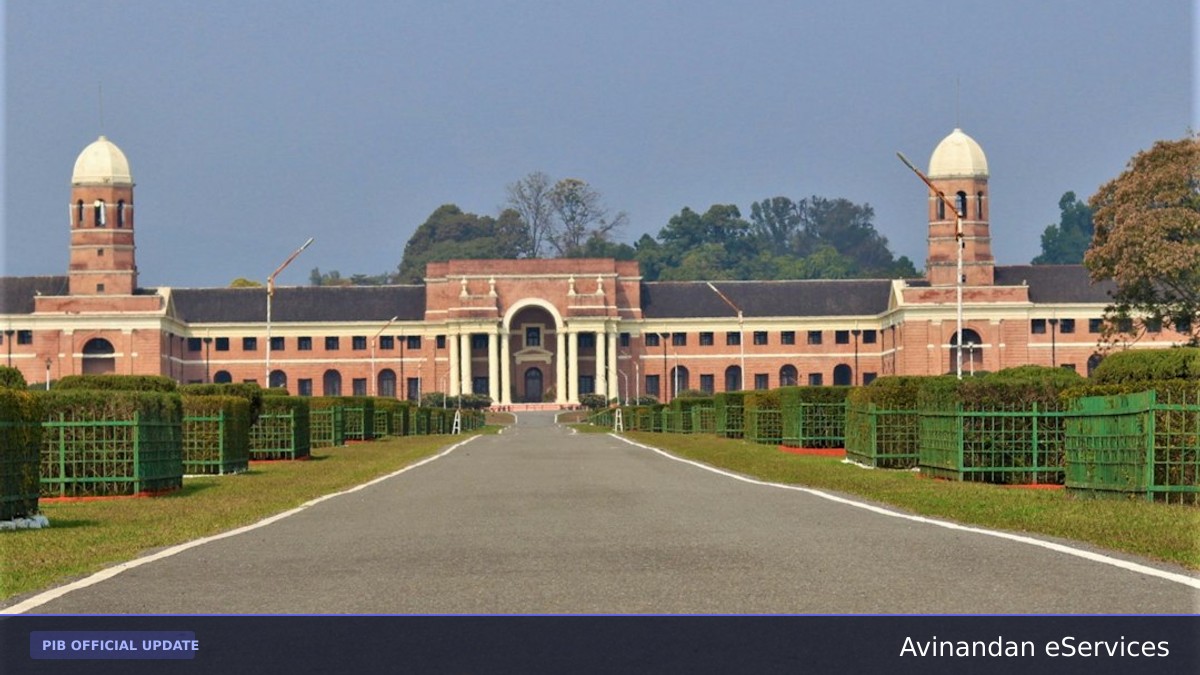
The Indian Institute of Corporate Affairs (IICA), Manesar, recently served as the epicentre of crucial academic and professional discourse regarding India's corporate insolvency framework. Operating under its flagship “Meet the Legend” programme, IICA hosted a high-level, insightful session titled “IBC as an Evolving Law Through the Amendments.” The special academic event featured Dr. M. S. Sahoo, former Chairperson of the Insolvency and Bankruptcy Board of India (IBBI) and a foundational pillar in the drafting, development, and maturation of the Insolvency and Bankruptcy Code (IBC). The session brought critical insights to postgraduate insolvency students and corporate governance aspirants, shedding light on how statutory frameworks must adapt dynamically to shifting market realities.
Key Highlights & Major Announcements
- Venerable Speaker: The session was headlined by Dr. M. S. Sahoo, former Chairperson of IBBI and a veteran architect of India's economic regulatory architecture.
- Institutional Leadership: The event was initiated and contextualised by Shri Gyaneshwar Kumar Singh, Director General and Chief Executive Officer (DG & CEO) of IICA.
- Core Theme: Focus on the continuous evolution of the Insolvency and Bankruptcy Code (IBC) through legislative amendments, subordinate legislation, and proactive regulatory interventions.
- Academic Objective: Empowering participants of the Postgraduate Programme (PGIP) with practical, real-world perspectives on economic law, moving beyond static textbook statutes.
Contextual Analysis: Understanding the IBC as a Dynamic Economic Statute
When the Insolvency and Bankruptcy Code was enacted in 2016, it was heralded as a watershed moment for the Indian economy, radically overhauling a fragmented and sluggish legacy framework for debt recovery and corporate restructuring. However, as Dr. M. S. Sahoo eloquently expounded during his keynote address at IICA, economic legislation cannot afford to remain static. Markets are inherently dynamic organisms that evolve at a pace far outstripping the slow-moving machinery of traditional litigation.
During the session, Dr. Sahoo introduced participants to the crucial philosophical concept of experimentation in economic laws. Unlike criminal or civil laws that rest on relatively permanent social norms, economic legislation must continuously iterate, adapt, and refine itself in response to emerging financial challenges, innovative corporate structures, and macroeconomic shifts.
The Interplay Between Legislation and Subordinate Regulations
One of the most profound takeaways from the IICA session was the distinction between primary legislation and subordinate legislation. Dr. Sahoo pointed out that because market dynamics shift rapidly, statutory amendments enacted by Parliament alone cannot always provide immediate remedies for real-time corporate distress. This is where subordinate legislation and regulatory mechanisms step in as agile instruments.
By framing targeted regulations aligned with the broader purposes and objectives of the Code, regulatory bodies such as the IBBI can bridge the gap between legislative intent and practical ground realities. This mechanism ensures that the insolvency ecosystem remains responsive, robust, and capable of addressing unforeseen commercial complexities without waiting for protracted parliamentary amendments.
“Markets evolve much faster than litigation can keep pace with, making subordinate legislation and regulatory mechanisms important instruments for responding to emerging situations.” — Dr. M. S. Sahoo, Former Chairperson, IBBI
Significance & National Impact
The continuous refinement of the IBC is not merely an academic exercise; it has far-reaching implications for India's ease of doing business, credit culture, and overall financial stability. By instilling a culture of professional rigour among young practitioners through institutions like IICA, India is building a specialized cadre of insolvency professionals who understand the law not as a rigid set of rules, but as an evolving economic tool.
Effective insolvency resolution protects lenders, revives distressed viable enterprises, and frees up stuck capital, directly injecting liquidity and vitality back into the Indian economy. Sessions like the “Meet the Legend” programme ensure that future leaders grasp the intersection of jurisprudence, economics, and market behaviour, ultimately strengthening India's financial architecture.
Frequently Asked Questions (FAQs)
What was the main theme of the IICA session under the “Meet the Legend” programme?
The session focused on “IBC as an Evolving Law Through the Amendments,” highlighting how the Insolvency and Bankruptcy Code adapts through legislative amendments and regulatory mechanisms to keep pace with changing market realities.
Who is Dr. M. S. Sahoo?
Dr. M. S. Sahoo is the former Chairperson of the Insolvency and Bankruptcy Board of India (IBBI) and is widely recognized as a key figure in the development and evolution of India's IBC framework.
What is the role of IICA in corporate governance education?
The Indian Institute of Corporate Affairs (IICA), Manesar, operates as a think-tank and capacity-building institution under the Ministry of Corporate Affairs, training professionals through specialized programmes like the Postgraduate Programme in Insolvency (PGIP).
Why are subordinate regulations important under the IBC?
Subordinate regulations act as agile instruments that allow regulatory authorities to respond swiftly to emerging practical challenges and market complexities, bridging the gap between static statutory laws and fast-paced commercial environments.
Official Source & Verification
This article is grounded on the official press release issued by the Press Information Bureau (PIB), Government of India (Release ID: 2312783, Ministry of Corporate Affairs). Access the official document: https://pib.gov.in/PressReleasePage.aspx?PRID=2312783&lang=1.