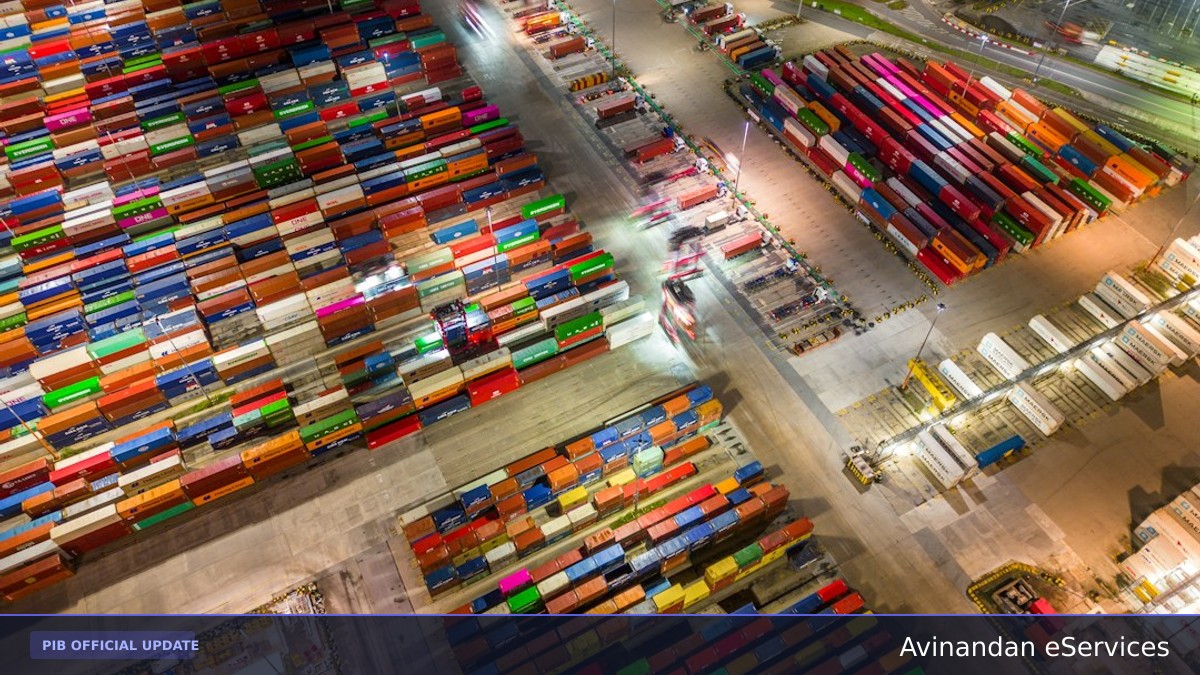
In a major crackdown on illegal imports, officers of the Directorate of Revenue Intelligence (DRI) have intercepted a massive consignment of smuggled firecrackers at the Nhava Sheva Port. Operating on actionable intelligence, investigative teams uncovered a sophisticated smuggling attempt where thousands of kilograms of restricted explosives were slyly concealed behind ordinary commercial goods.
Released officially by the Ministry of Finance via the Press Information Bureau (PIB) on September 23, 2026, the operation highlights the relentless vigilance of Indian customs enforcement agencies against clandestine commercial operations. The seized contraband, valued at approximately Rs. 3 crore in the domestic market, underscores the ongoing risks associated with unauthorized hazardous material imports entering through critical maritime trade routes.
Key Highlights & Major Announcements
- Seizure Location: Nhava Sheva Port, one of India's largest container handling ports.
- Contraband Details: 19,800 pieces of firecrackers (specifically known as '288 Gatling'), weighing roughly 10,000 kilograms.
- Estimated Market Value: Approximately Rs. 3 crore.
- Modus Operandi: Concealment under the guise of declared cover cargo labeled as “Bottle & Wallpaper,” with only the first three rows containing actual declared items.
- Legal Action: Seizure executed under the provisions of the Customs Act, 1962; key syndicate member orchestrating the clearance has been successfully arrested.
Anatomy of a Smuggling Operation: How the Con trick Unraveled
The operation showcases the meticulous profiling methods deployed by the DRI. Smugglers routinely attempt to bypass strict environmental, safety, and customs protocols by misdeclaring the contents of shipping containers. In this particular case, the perpetrators employed a classic "front-loading" concealment strategy. When customs officials inspected the container, the opening rows immediately presented the declared commercial cargo—“Bottle & Wallpaper”—giving the initial impression of a routine, legally compliant import.
However, deeper examination revealed that the vast expanse of the container behind the first few rows was tightly packed with heavily restricted hazardous explosives. The 19,800 pieces of '288 Gatling' firecrackers not only represented a massive economic violation but also posed severe safety and security hazards, bypassing all mandatory regulatory checks required for handling explosive substances at public ports.
Regulatory Framework: Why Firecracker Imports are Strictly Restricted
Under India's Foreign Trade Policy, the import of firecrackers is classified strictly as 'Restricted'. Bringing such items into the country requires explicit authorizations and licenses from multiple apex authorities:
- DGFT Authorisation: Valid prior approval from the Directorate General of Foreign Trade.
- PESO Licensing: Mandatory licensing and safety clearances from the Petroleum and Explosives Safety Organization (PESO) governed strictly under the Explosives Rules, 2008.
These stringent checks exist because fireworks are classified as hazardous materials that carry immense risk during maritime transit, port handling, storage, and eventual public consumption. Unauthorized imports bypass critical quality checks, often leading to sub-standard chemical compositions that present \textreme safety risks to end-users and public property.
“The operation underscores DRI’s continued focus on detecting misdeclaration and clandestine import of restricted goods through commercial cargo channels.” — Ministry of Finance, Government of India
Significance & National Impact
India's enforcement agencies have ramped up surveillance across major ports, airports, and land customs stations to curb revenue leakages and protect domestic markets from illegal dumping. The successful interception at Nhava Sheva Port prevents significant financial gain by rogue syndicates while safeguarding public safety. Furthermore, the arrest of the key syndicate member demonstrates the DRI's capability to dismantle entire criminal networks rather than merely intercepting physical goods.
As regulatory frameworks tighten and intelligence networks leverage advanced data analytics for cargo profiling, syndicates attempting to exploit commercial cargo channels are finding it increasingly difficult to evade the watchful eyes of Indian customs and intelligence authorities.
Frequently Asked Questions (FAQs)
1. What was the total value and weight of the seized firecrackers?
The DRI seized approximately 10,000 kilograms of firecrackers consisting of 19,800 pieces of '288 Gatling', with an estimated market value of about Rs. 3 crore.
2. How were the illegal firecrackers concealed inside the container?
The smugglers used a misdeclaration tactic, placing legitimate declared goods (“Bottle & Wallpaper”) in the first three rows of the container while packing the rest entirely with firecrackers.
3. What legal permissions are required to import firecrackers into India?
Importing firecrackers requires a valid authorization from the DGFT under the Foreign Trade Policy and a mandatory license from the Petroleum and Explosives Safety Organization (PESO) under the Explosives Rules, 2008.
4. Which agency executed this enforcement operation?
The operation was successfully carried out by officers of the Directorate of Revenue Intelligence (DRI) under the Ministry of Finance.
Official Source & Verification
This article is grounded on the official press release issued by the Press Information Bureau (PIB), Government of India (Release ID: 2314148, Ministry of Finance). Access the official document: https://pib.gov.in/PressReleasePage.aspx?PRID=2314148&lang=1.