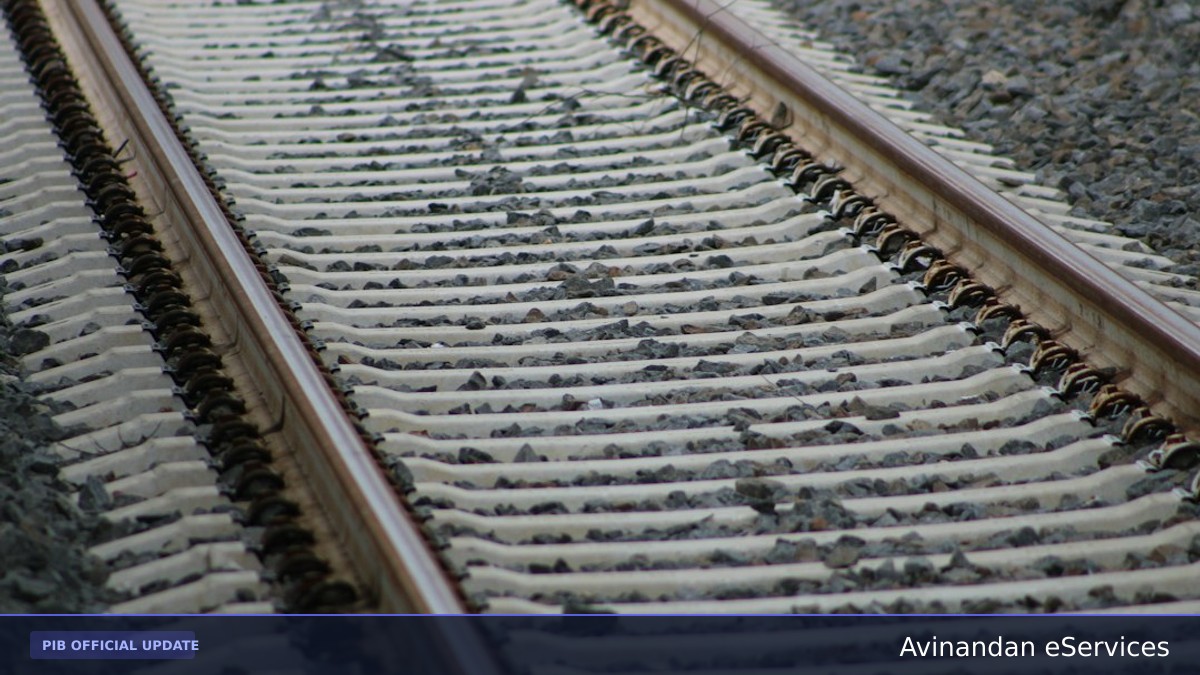
In a momentous leap forward for infrastructure development in left-wing \textremism-affected and remote terrains, Indian Railways has successfully completed the final section of the ambitious Dallirajhara-Rowghat New Rail Line Project. Falling under the Raipur Division of the South East Central Railway in Chhattisgarh, the completion of the 17.5-kilometer single-line electrified broad-gauge Taroki-Rowghat section marks the culmination of an arduous and strategically vital engineering endeavor. The successful completion was followed by rigorous statutory inspections and speed trials conducted by the Commission of Railway Safety (CRS), signifying that passenger and freight operations on this critical route are on the horizon.
Key Highlights & Major Announcements
- Project Milestone: Completion of the final 17.5 km Taroki-Rowghat section of the Dallirajhara-Rowghat New Rail Line Project in South Chhattisgarh.
- Technical Scope: A single-line electrified broad-gauge section featuring comprehensive modern bridging, culvert, signaling, and electrification systems.
- Total Project Length: The overall Dallirajhara-Rowghat New Line Project spans 95 kilometers, deeply penetrating historically isolated regions.
- Current Status: Regular passenger railway services are already operational from Dallirajhara to Taroki, with the latest section undergoing rigorous CRS inspection and speed trials.
- Strategic Economic Impact: Direct supply line for iron ore transportation to the Bhilai Steel Plant, alongside passenger transit and regional agricultural trade.
Technical Parameters and CRS Inspection Protocols
The commissioning of any new railway line in India is governed by stringent safety and operational standards set by the Commission of Railway Safety (CRS), an independent statutory body under the Ministry of Civil Aviation that functions separately from the Ministry of Railways to ensure unbiased safety audits. The recent CRS inspection and speed trial of the Taroki-Rowghat section encompassed a comprehensive technical evaluation of all civil, electrical, and signaling assets.
Engineering experts meticulously examined the structural integrity of bridges and culverts, tested overhead electrical wiring parameters, and evaluated modern signaling architecture designed to maintain seamless train dispatching and control. Furthermore, high-speed trial runs were executed to test the mechanical stability, track geometry, and braking distances of rolling stock moving across the newly laid broad-gauge corridor. Passing these rigorous evaluations certifies that the section meets national safety thresholds for regular commercial and passenger deployment.
Bridging the Isolation: Strategic and Socio-Economic Significance
For decades, the rugged and remote landscapes of south Chhattisgarh remained detached from the mainstream economic corridors of the country. The \textension of the rail network into Rowghat is much more than a routine infrastructure upgrade; it is a vital socio-economic lifeline. By seamlessly linking rural interiors with urban commercial hubs, the project promises transformative changes across multiple sectors.
"The railway line will facilitate the transportation of iron ore to Bhilai Steel Plant which will give a boost to the steel industry in the country. The railway line will also help in the transportation of agricultural products and local commercial goods and play an important role in connecting rural and remote areas with the wider railway network." — Ministry of Railways, Government of India
Industrial Growth and Heavy Manufacturing
At the heart of the industrial utility of the Dallirajhara-Rowghat rail line is its capacity to feed raw materials to heavy manufacturing hubs. The uninterrupted transportation of high-grade iron ore directly to the Bhilai Steel Plant ensures sustained production cycles, lowers logistical overheads, and bolsters the competitiveness of India's domestic steel manufacturing sector on the global stage.
Unlocking Educational, Healthcare, and Employment Avenues
Beyond heavy industry, the project delivers direct human dividends. The enhanced connectivity links south Chhattisgarh directly to the state capital of Raipur and Bhilai, which serves as a premier educational hub in the region. Citizens residing in remote interior pockets will now enjoy faster, safer, and more economical transit options, dramatically improving their access to higher education, specialized healthcare facilities, employment opportunities, and commercial trade markets.
Regional Development, Tourism, and Investment Potential
Modern infrastructure acts as a primary catalyst for regional development. With the integration of the Taroki-Rowghat section into the national railway grid, small-scale entrepreneurs, farmers, and local traders gain cost-effective access to distant consumer markets. Agricultural produce can now be transported swiftly without heavy transit decay, raising farmers' incomes. Additionally, improved accessibility is projected to unlock the untapped ecotourism potential of south Chhattisgarh's scenic landscapes, paving the way for hospitality investments, local micro-enterprises, and sustainable economic livelihoods for indigenous communities.
Frequently Asked Questions (FAQs)
What is the total length of the Dallirajhara-Rowghat New Rail Line Project?
The entire Dallirajhara-Rowghat New Line Project spans a total length of 95 kilometers, designed to connect remote pockets of south Chhattisgarh to the wider Indian Railways network.
What is the significance of the newly inspected Taroki-Rowghat section?
Covering 17.5 kilometers, the Taroki-Rowghat section is the final phase of the project. Its successful CRS inspection paves the way for complete commissioning, enabling seamless iron ore freight movement to the Bhilai Steel Plant and enhanced passenger travel.
Which railway division manages the Dallirajhara-Rowghat project?
The project is managed under the Raipur Division of the South East Central Railway (SECR) zone of Indian Railways.
How does the CRS inspection ensure passenger safety?
The Commission of Railway Safety (CRS) conducts exhaustive physical inspections of tracks, bridges, signaling, and electrification systems, followed by high-speed trial runs to verify that operational capacities comply strictly with national safety standards before commercial clearance is granted.
Official Source & Verification
This article is grounded on the official press release issued by the Press Information Bureau (PIB), Government of India (Release ID: 2314060, Ministry of Railways). Access the official document: https://pib.gov.in/PressReleasePage.aspx?PRID=2314060&lang=1.