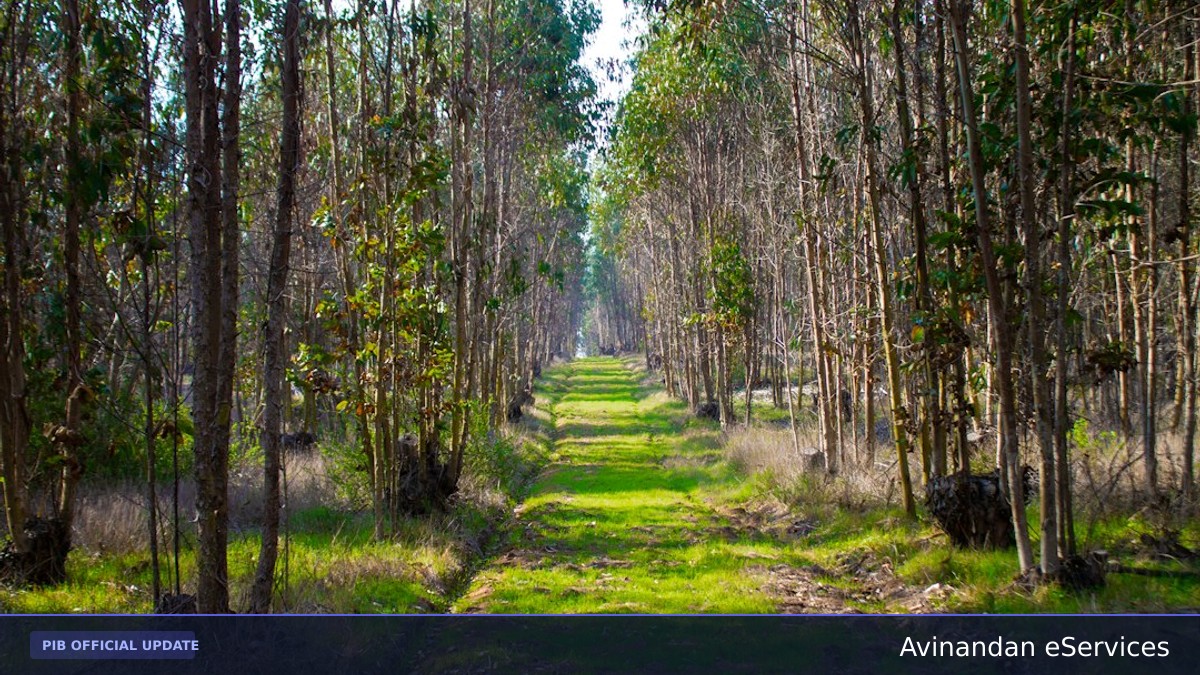
In an aggressive push towards marrying rapid industrial expansion with ecological preservation, the Bureau of Indian Standards (BIS), Chennai Branch Office, recently hosted a high-profile ‘Manak Manthan’ outreach programme. The core agenda of the session was to deliberate upon the newly minted Draft Indian Standard EED 05 (34110) WC, officially titled “Greenbelt Development and Management — Guidelines for Service Providers for Industrial Projects.” As India marches steadily toward its ambitious net-zero targets and sustainable development goals, this regulatory push marks a monumental shift in how manufacturing units, factories, and corporate enterprises approach environmental management.
The brainstorming session convened a diverse mix of elite industry stakeholders, environmental scientists, technical experts, and specialized greenbelt service providers. By engaging the private sector at the formulation stage, BIS aims to build a robust, practical, and scientifically backed standard that not only mitigates industrial pollution but actively fosters local biodiversity.
Key Highlights & Major Announcements
- Focus on Native Species: The draft standard strictly mandates prioritizing native, perennial, and pollution-tolerant plant species over invasive exotic varieties.
- Stratified Planting Approach: Encourages multi-tiered plantation structures (canopy, understory, and shrubs) to maximize particulate matter trapping and ecological benefits.
- Phased Timelines: Implementation of structured five-year development plans for industrial greenbelts rather than arbitrary, token plantation drives.
- Tech-Driven Accountability: Integration of digital geo-tagged monitoring and periodic survival audits to ensure long-term sustainability.
- Digital Governance: Leveraging the official BIS CARE App for seamless stakeholder engagement, tracking, and standard verification.
Contextual Analysis: Scientific Planning and Tiered Plantation
For decades, industrial greenbelts across India often translated to arbitrary rows of eucalyptus or poplar trees planted along boundary walls simply to tick regulatory compliance boxes. The Draft Indian Standard EED 05 (34110) WC seeks to upend this superficial approach by introducing rigorous ecological principles. During the event, delivered via a virtual technical presentation by Dr. Pankaj Srivastava, Scientist-G at the CSIR–National Botanical Research Institute (NBRI), Lucknow, attendees were walked through the imperative need for scientific precision.
Dr. Srivastava underscored that industrial zones act as localized heat islands and heavy pollution sinks. Consequently, greenbelts cannot be treated as mere aesthetic additions. Instead, they must function as functional ecological buffers. The draft standard outlines a sophisticated, tiered plantation model. By combining tall canopy trees, dense intermediate shrubs, and ground-cover flora, the greenbelt creates a physical barrier that dramatically reduces noise pollution, stabilizes surrounding soil, and acts as a dynamic filter for airborne particulate matter (PM2.5 and PM10).
Furthermore, the mandate against invasive species addresses a silent ecological crisis. Invasive flora often consume excessive local groundwater and fail to support native fauna, such as local bird and insect populations. By favoring hardy, native, perennial species, the new standards guarantee higher survival rates and genuine habitat restoration.
“The draft standard prioritises native, perennial, and pollution-tolerant species over invasive plants, recommending a stratified planting approach to maximise environmental benefits.” — Shri S.D. Dayanand, Scientist-F and Head of BIS Chennai Branch Office
Accountability Through Technology: Geo-Tagging and Survival Audits
A persistent challenge in Indian environmental compliance has been the lack of post-implementation tracking. Many industrial units plant saplings during monsoon season, only for the vast majority to wither away due to neglect or lack of watering over subsequent years, with no regulatory repercussions.
The newly deliberated BIS guidelines resolve this loophole by introducing mandatory phased five-year development plans coupled with digital geo-tagged monitoring and rigorous survival audits. Under these provisions, corporate and industrial service providers must digitally map their greenbelt assets. Periodic audits will use geo-tracking to verify tree canopy growth, health, and survival percentages over a sustained five-year period. This effectively transitions greenbelt management from an honor system to a verifiable, data-driven science.
Significance & National Impact
As India positions itself as a global manufacturing powerhouse through initiatives like 'Make in India', balancing industrial output with carbon sequestration is non-negotiable. Industrial corridors, special economic zones (SEZs), and heavy manufacturing plants generate substantial localized emissions. Implementing standardized, high-efficiency greenbelts directly contributes to India's Nationally Determined Contributions (NDCs) under global climate pacts.
Speaking at the inaugural session, Shri S.D. Dayanand, Scientist-F and Head of BIS Chennai, emphasized the vital importance of bottom-up standardisation, noting that active feedback from industry practitioners ensures that rules are not just ideal on paper, but entirely executable on the ground. Shri Nandan Kumar, Scientist-B, coordinated the exhaustive feedback mechanism, confirming that all rational inputs from industry participants will be formally placed before the governing technical committee for integration.
Additionally, during the open-house session, Shri Pakki Balu, Scientist-C, introduced participants to the wider digital ecosystem of the Bureau, highlighting tools like the BIS CARE App. Empowering consumers, industrial buyers, and auditors with instant digital access to standards fosters a transparent ecosystem where environmental compliance is visible and enforceable.
Frequently Asked Questions (FAQs)
1. What is the main objective of the BIS Manak Manthan programme on greenbelt development?
The programme aims to gather expert and industry stakeholder feedback on the Draft Indian Standard EED 05 (34110) WC, establishing standardized, scientific guidelines for greenbelt creation and management in industrial projects.
2. Why does the draft standard emphasize native species over exotic or invasive plants?
Native species are better adapted to local climatic and soil conditions, consume optimal water resources, and effectively support local biodiversity, whereas invasive species often disrupt local ecosystems and have lower pollution tolerance.
3. How will industrial greenbelts be monitored under the new guidelines?
The guidelines propose structured five-year development plans that incorporate digital geo-tagged monitoring and periodic survival audits to ensure long-term accountability and tree health.
4. How can stakeholders participate or check standard updates?
Stakeholders can provide inputs through official BIS committee channels and utilize digital tools like the BIS CARE App to stay updated on standardization initiatives and compliance norms.
Official Source & Verification
This article is grounded on the official press release issued by the Press Information Bureau (PIB), Government of India (Release ID: 2314647, Special Service and Features). Access the official document: https://pib.gov.in/PressReleasePage.aspx?PRID=2314647&lang=1.