Marking a momentous milestone in the nation's economic and industrial trajectory, the landmark 'Make in India' initiative has officially completed 12 years of transforming the country's manufacturing and economic landscape. Prime Minister Shri Narendra Modi highlighted the profound significance of the initiative, emphasizing that the flagship program is fundamentally about building robust infrastructure, fostering vibrant enterprise, and encouraging cutting-edge innovation to propel India toward unprecedented national growth and prosperity.
Reflecting on the journey since its inception, the Prime Minister took to social media to share a special video and reiterate the core philosophy that has driven the initiative over the past decade. The observance of this 12-year milestone serves as an important juncture to evaluate how far the Indian industrial ecosystem has evolved, shifting from an import-dependent market to a self-reliant global manufacturing powerhouse.
Key Highlights & Major Announcements
- 12 Years of Transformative Impact: The 'Make in India' initiative celebrated its 12th anniversary, marking a decade-plus commitment to transforming India into a global hub for manufacturing, design, and innovation.
- Pillars of Growth: Prime Minister Narendra Modi reiterated that the initiative focuses heavily on three core pillars: creating robust infrastructure, empowering enterprise, and fostering innovation.
- Digital and Social Engagement: To mark the milestone, the Prime Minister shared an engaging video on official platforms using the dedicated campaign hashtag #12YearsOfMakeInIndia.
- Catalyst for Prosperity: The initiative continues to serve as an overarching national program designed to facilitate investment, foster innovation, enhance skill development, and build best-in-class manufacturing infrastructure across sectors.
Contextual Analysis: A Decade of Structural Economic Shifts
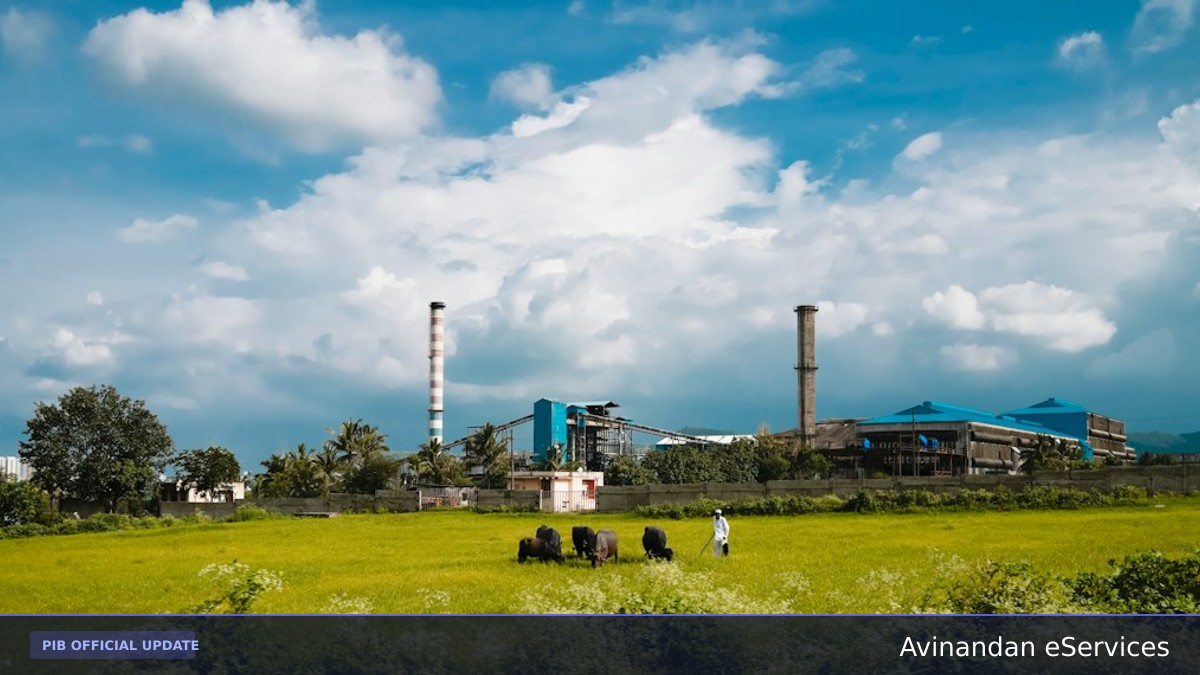
Launched in 2014, the 'Make in India' initiative was conceived as a major national program designed to facilitate investment, foster innovation, protect intellectual property, and build best-in-class manufacturing infrastructure within the country. Over the past 12 years, the scope of the initiative has expanded far beyond traditional manufacturing, embedding itself deeply into high-tech sectors, defense production, electronics, renewable energy, and space technology.
The strategic framework of the initiative relies on ease of doing business, sweeping regulatory reforms, reduction of compliance burdens, and the introduction of Production-Linked Incentive (PLI) schemes across key sectors. These synchronized efforts have successfully attracted foreign direct investment (FDI), energized domestic MSMEs, and integrated Indian supply chains into global trade networks.
Infrastructure Development and Enterprise Empowerment
Infrastructure is the bedrock upon which industrial growth is built. Over the last 12 years, massive investments in multi-modal connectivity—ranging from Bharatmala and Sagarmala to dedicated freight corridors and modernizing railway networks—have significantly reduced logistics costs and improved turnaround times for manufacturers.
Simultaneously, enterprise empowerment has taken center stage through targeted credit support, digital public infrastructure, and initiatives like Startup India, which works hand-in-hand with the manufacturing ecosystem. By nurturing a culture of innovation among young entrepreneurs, India has transformed into the world's third-largest startup ecosystem, translating ground-breaking ideas into scalable commercial enterprises.
“‘Make in India’ is about creating infrastructure, enterprise and innovation that allow India to grow and prosper!” — Prime Minister Shri Narendra Modi
#12YearsOfMakeInIndia
Significance & National Impact
The completion of 12 years of 'Make in India' is not merely a chronological milestone; it represents a fundamental psychological and structural shift in the Indian economy. By championing domestic manufacturing and self-reliance (Atmanirbhar Bharat), the initiative has shielded the domestic economy from \texternal global shocks while generating millions of direct and indirect employment opportunities for India's youth.
Sectors such as mobile phone manufacturing, defense exports, automobile production, and renewable energy equipment have witnessed exponential leaps. India has transitioned from being one of the world's largest importers of mobile phones to a major net exporter. Similarly, indigenous defense manufacturing has gained unprecedented momentum, with Indian-made equipment being supplied to friendly foreign nations.
Furthermore, the emphasis on innovation has enabled Indian industries to adopt Industry 4.0 standards, integrating artificial intelligence, the Internet of Things (IoT), and green technologies into production lines. This ensures that Indian manufacturing is not only competitive in terms of scale and cost but also environmentally sustainable and future-ready.
Frequently Asked Questions (FAQs)
When was the 'Make in India' initiative launched?
The 'Make in India' initiative was launched by Prime Minister Narendra Modi in September 2014 with the objective of transforming India into a global manufacturing and investment hub.
What are the primary focus areas of 'Make in India'?
The initiative focuses on creating world-class infrastructure, fostering domestic and foreign enterprise, encouraging innovation, enhancing skill development, and building robust manufacturing capabilities across 25 key sectors.
How has 'Make in India' impacted the Indian economy over the past 12 years?
Over the last 12 years, the initiative has successfully driven massive foreign direct investment (FDI), boosted ease of doing business, enhanced domestic manufacturing output, reduced import dependency in critical sectors, and created vast employment opportunities.
Official Source & Verification
This article is grounded on the official press release issued by the Press Information Bureau (PIB), Government of India (Release ID: 2314750, Prime Minister's Office). Access the official document: https://pib.gov.in/PressReleasePage.aspx?PRID=2314750&lang=1.