In a powerful demonstration of environmental stewardship and community-led governance, the Indian Council of Agricultural Research (ICAR) has stepped to the forefront of the nationwide Swachhata Hi Seva campaign. Spearheaded by the Ministry of Agriculture & Farmers Welfare, ICAR institutes nationwide have rolled out comprehensive cleanliness and sustainable waste management initiatives, focusing heavily on post-Ganesh Visarjan environmental protection and the conversion of ritual waste into useful organic resources.
Key Highlights & Major Announcements
- Nationwide Cleanliness Drive: ICAR institutes organized targeted awareness and sanitation programs focusing on post-Ganesh Visarjan cleanups and public space maintenance.
- Eco-Friendly Advocacy: Citizens were actively sensitized about utilizing eco-friendly clay idols instead of hazardous Plaster of Paris (PoP) and chemically colored alternatives.
- Water Resource Protection: Campaigns strongly emphasized avoiding natural water bodies for idol and Puja Samagri immersion, directing communities toward designated safe sites.
- Waste-to-Wealth Model: ICAR-NISA (Ranchi, Jharkhand) and ICAR-CIRCOT (Mumbai, Maharashtra) successfully collected, segregated, and processed biodegradable offerings into high-grade organic manure.
- Community Engagement: The initiatives heavily leveraged collective responsibility, bridging scientific institutions with local communities to foster sustainable behavioral shifts.
Contextual Analysis: Merging Tradition with Scientific Waste Management
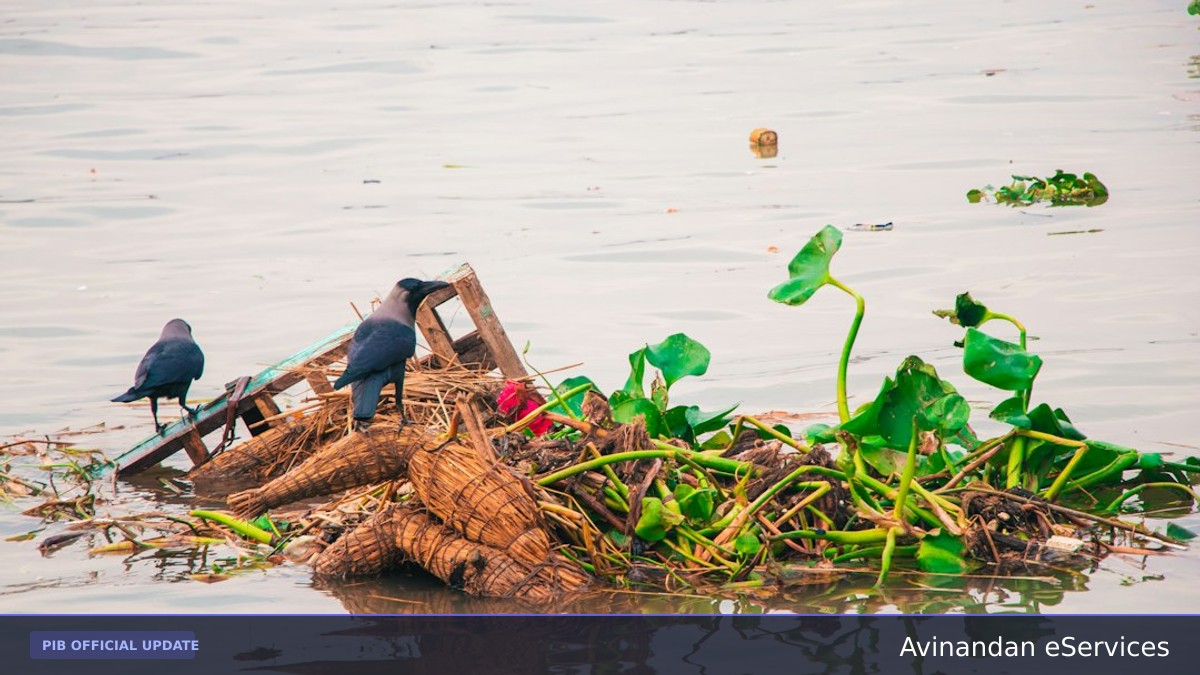
Festivals are deeply ingrained in the cultural fabric of India, with Ganesh Chaturthi standing out as one of the nation’s grandest celebrations. However, the sheer scale of celebrations often leaves behind a staggering environmental footprint, particularly concerning water pollution from non-biodegradable idol materials and the accumulation of massive quantities of floral and plastic waste.
Recognizing the urgency of environmental conservation, the Ministry of Agriculture & Farmers Welfare through ICAR has adopted a proactive governance model. Rather than relying solely on post-event enforcement, ICAR institutions have integrated grassroots awareness with cutting-edge agricultural science—specifically, converting organic festival waste into nutrient-rich compost.
Targeted Awareness at the Grassroots
As part of the Swachhata Hi Seva mandate, specialized awareness programs were established directly at local Ganesh pandals. Agricultural scientists and administrative staff engaged directly with festival organizers and citizens. The core message focused on two critical pillars: material substitution and responsible disposal.
Participants were educated on the grave ecological hazards posed by Plaster of Paris (PoP) idols and synthetic chemical colors, which do not dissolve easily and drastically spike toxicity levels in drinking water reservoirs. By promoting traditional clay idols, the campaign championed a sustainable return to indigenous practices. Furthermore, clear instructions were issued to bypass natural water bodies, encouraging the use of designated artificial or controlled immersion tanks.
Turning Waste into Wealth: The ICAR-NISA and ICAR-CIRCOT Models
One of the most remarkable operational highlights of this year's drive was the localized execution of the "Waste to Wealth" concept. Biodegradable offerings—including marigold garlands, loose flowers, leaves, and organic Puja Samagri—were systematically collected and segregated.
At ICAR-NISA (National Institute of Secondary Agriculture) in Ranchi, Jharkhand, and ICAR-CIRCOT (Central Institute for Research on Cotton Technology) in Mumbai, Maharashtra, this humongous volume of organic waste was diverted away from municipal landfills. Instead, it was routed directly into specialized institutional composting facilities. Through controlled decomposition processes, this organic debris was successfully transformed into premium organic manure, closing the loop on festival waste and demonstrating a circular economy model that cities across India can emulate.
"The initiatives aimed to promote environmental protection, safe practices and community participation in maintaining clean surroundings after Ganesh Visarjan, turning collective responsibility into a tangible resource through scientific composting."
Significance & National Impact
The intervention by ICAR institutes transcends mere physical sweeping; it represents a strategic shift toward scientific sanitation and behavioral modification. Water security is a paramount developmental challenge for India, and protecting aquatic ecosystems from heavy metal pollution and synthetic debris is critical for public health and agricultural sustainability alike.
By demonstrating how organic festival waste can be rapidly converted into organic manure, ICAR has provided a blueprint for urban local bodies (ULBs) and village panchayats. This framework proves that large-scale cultural events can coexist harmoniously with environmental protocols when scientific expertise meets grassroots public participation. It reinforces the broader vision of the Swachh Bharat Mission, driving home the reality that cleanliness is not just a government duty, but a shared national habit essential for sustainable development.
Frequently Asked Questions (FAQs)
1. What was the main objective of the ICAR cleanliness initiative?
The primary objective was to promote post-Ganesh Visarjan cleanliness, prevent water pollution, encourage eco-friendly idol usage, and manage festival waste responsibly through community engagement and scientific composting.
2. Which ICAR institutes played a key role in processing festival waste into manure?
ICAR-NISA based in Ranchi, Jharkhand, and ICAR-CIRCOT based in Mumbai, Maharashtra, actively collected, segregated, and processed biodegradable offerings into organic manure using advanced composting facilities.
3. Why are Plaster of Paris (PoP) idols discouraged during Ganesh Visarjan?
Plaster of Paris does not dissolve easily in water, settles at the bottom of water bodies, blocks natural water channels, and contains heavy metal-based chemical paints that severely pollute drinking water sources and harm aquatic life.
4. How does the initiative align with the Swachhata Hi Seva campaign?
It directly supports the national Swachhata Hi Seva movement by combining active public sanitation drives, reduction of single-use plastics, and innovative biological waste recycling techniques at institutional and community levels.
Official Source & Verification
This article is grounded on the official press release issued by the Press Information Bureau (PIB), Government of India (Release ID: 2315336, Ministry of Agriculture & Farmers Welfare). Access the official document: https://pib.gov.in/PressReleasePage.aspx?PRID=2315336&lang=1.