India’s New Watershed Strategy: A Scientific Blueprint for River Rejuvenation
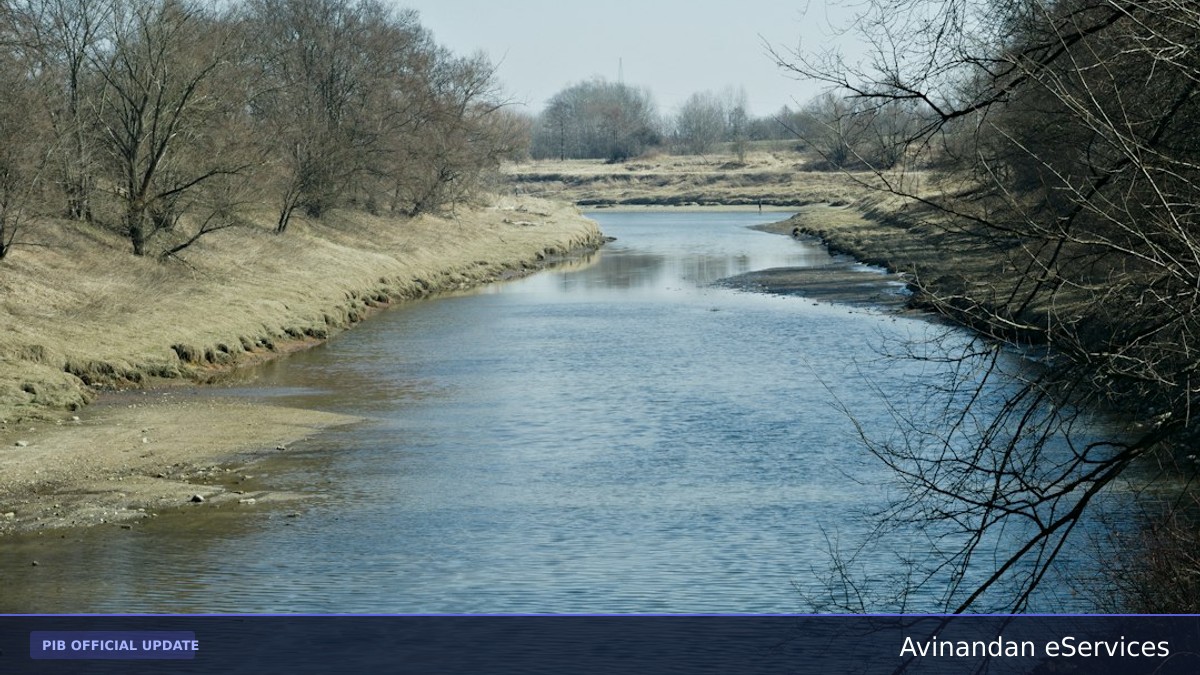
In a significant move toward sustainable water management, the Department of Land Resources (DoLR) under the Ministry of Rural Development has launched a national initiative to rejuvenate India’s rivers through a targeted watershed development approach. Announced on September 29, 2026, in New Delhi, this strategic framework aims to bridge the gap between landscape management and hydrological restoration, marking a shift toward data-driven environmental governance.
Key Highlights & Major Announcements
- Scientific Integration: The initiative focuses on treating landscapes that feed rivers, utilizing high-resolution mapping and geospatial science.
- Twin Objectives: The program aims to achieve simultaneous watershed development and river rejuvenation, ensuring both ecological health and agricultural productivity.
- Data-Driven Planning: Future interventions will be based on rigorous hydrological baselines, including rainfall patterns, groundwater levels, and water balance analysis.
- Collaborative Framework: The project involves a 'Whole of Government' approach, integrating expertise from IITs, the National Remote Sensing Centre (NRSC), the Central Ground Water Board, and international organizations.
- Focus Areas: Pilot projects will prioritize first-, second-, and third-order streams, targeting areas with historical flow declines and significant groundwater depletion.
The Vision: Treating the Landscape to Save the River
Secretary of the Department of Land Resources, Shri Narendra Bhooshan, emphasized that river rejuvenation cannot be achieved in isolation. Instead, it requires a holistic treatment of the catchment areas that feed these water bodies. By tailoring interventions to the specific hydrological conditions of each catchment, the government aims to restore the lost hydrological functions of streams that have suffered from years of neglect.
“River/Streams Rejuvenation through Watershed Development Approach can achieve twin objectives of watershed development as well as river rejuvenation. We need to scientifically understand the hydrology of each catchment and establish whether targeted interventions can restore the lost hydrological function of a river or stream,” stated Shri Narendra Bhooshan.
The core philosophy here is that a river is merely the final output of a complex landscape system. By improving soil and water conservation in the upper reaches, the government expects to see a marked improvement in base and lean-season flows, which are critical for sustaining rural livelihoods during dry months.
Strategic Execution and Technical Framework
The initiative is not merely a policy directive but a technical endeavor. The National Rainfed Area Authority (NRAA), led by CEO Dr. Chandra Shekhar Kumar, has highlighted the necessity of a systematic, data-based framework. Since many small rivers lack long-term flow data, the project will utilize legacy data, scientific analysis, and Decision Support Systems (DSS) to guide the selection of rivers for treatment.
The Four-Dimensional Monitoring Framework
To ensure accountability and measurable impact, the DoLR has proposed a comprehensive monitoring framework that evaluates outcomes across four critical dimensions:
- Hydrological: Measuring changes in stream flow, groundwater recharge rates, and water table levels.
- Environmental: Assessing the restoration of local biodiversity and the health of the riparian ecosystem.
- Agricultural: Tracking improvements in crop yields and the economic stability of farmers within the catchment area.
- Socio-economic: Evaluating the overall increase in rural income and community participation in water management.
Significance & National Impact
The implications of this initiative are far-reaching. By aligning watershed development with river rejuvenation, the Ministry of Rural Development is addressing the dual challenges of water scarcity and agrarian distress. In many parts of India, the decline of small streams has led to increased dependence on groundwater, which is rapidly depleting. This project seeks to reverse that trend by recharging aquifers and ensuring that water remains in the landscape for longer periods.
Furthermore, the emphasis on a 'Whole of Society' approach ensures that local communities, NGOs, and state governments are active participants. This decentralization of water management is expected to foster long-term maintenance of the infrastructure created under the pilot projects, moving away from the 'build and abandon' model of the past.
Frequently Asked Questions (FAQs)
What is the primary goal of the new river rejuvenation pilot projects?
The primary goal is to restore the hydrological function of rivers and streams by treating their catchment areas through watershed development, thereby improving groundwater recharge and lean-season water flows.
How will the government select rivers for these pilot projects?
Selection is based on a data-driven framework that considers parameters such as historical decline in flow, catchment condition, rainfall patterns, groundwater depletion levels, and the availability of scientific data.
Who are the key stakeholders involved in this initiative?
The initiative involves a multidisciplinary team including hydrologists, geospatial scientists from IITs, the Central Ground Water Board, the National Remote Sensing Centre (NRSC), state governments, NGOs, and international organizations.
Official Source & Verification
This article is grounded on the official press release issued by the Press Information Bureau (PIB), Government of India (Release ID: 2316698, Ministry of Rural Development). Access the official document: https://pib.gov.in/PressReleasePage.aspx?PRID=2316698&lang=1.