Introduction to the Topic
Welcome to a fascinating journey back in time! In this chapter, we explore how the map of the Indian subcontinent changed dramatically between the seventh and twelfth centuries. If you have ever wondered how new kingdoms emerged, how rulers legitimized their power, or what administration looked like in medieval India, you are in the right place. Based on the NCERT Class VII History curriculum, Chapter 2 titled 'New Kings and Kingdoms' walks us through the rise of new dynasties that shaped the cultural, political, and architectural landscape of medieval India.
During the early medieval period, political developments were dynamic. While empires rose and fell, regional identities began to take firmer shape. Understanding these developments helps us connect the dots to our modern political and cultural boundaries. Let us dive deep into the origins of these new rulers, how they managed their vast territories, and the incredible monuments they left behind.
Key Concepts Explained
1. The Emergence of New Dynasties
By the seventh century, there were big landlords or warrior chiefs in different regions of the Indian subcontinent. Existing kings often acknowledged them as their subordinates or samantas. Samantas were expected to bring gifts for their kings or overlords, be present at their courts, and provide them with military support.
As these samantas gained power and wealth, they declared themselves to be maha-samanta, maha-mandaleshvara (the great lord of a circle or region), and sometimes even asserted their independence from their overlords. A classic example of this is the Rashtrakutas in the Deccan. Initially, they were subordinate to the Chalukyas of Karnataka. In the mid-eighth century, Dantidurga, a Rashtrakuta chief, overthrew his Chalukya overlord and performed a ritual called hiranya-garbha (literally, the golden womb). It was believed that this ritual, when performed with the help of Brahmans, led to the "rebirth" of the sacrificer as a Kshatriya, even if he was not one by birth.
Other interesting examples include men who used their military skills to carve out kingdoms. For instance, the Kadamba Mayurasharma and the Gurjara-Pratihara Harichandra were Brahmans who gave up their traditional professions and successfully established kingdoms in Karnataka and Rajasthan respectively.
2. Administration in the Kingdoms
How did these new kings govern their newly acquired territories? They adopted high-sounding titles like maharaja-adhiraja (king of kings), tribhuvana-chakravartin (lord of the three worlds), and so on. However, despite such grand titles, they often shared power with their samantas as well as with associations of peasants, traders, and Brahman priests.
Resources to finance the king's establishment, as well as for the construction of temples and forts, and for fighting wars (which were expected to lead to the acquisition of wealth in the form of plunder and access to land) were obtained from the producers—namely, peasants, cattle-keepers, and artisans. They were often forced to part with what they produced. Sometimes these were claimed as "rent" due to a lord who asserted that he owned the land. Revenue was also collected from traders.
In the inscriptions of the Cholas who ruled in Tamil Nadu, there are references to more than 400 terms for different kinds of taxes. The most frequently mentioned tax is vetti, taken not in cash but in the form of forced labour, and kadamamai, or land revenue. There were also taxes on thatched houses, on the use of ladders to climb palm trees, on a cess for succession to family property, etc.
3. Prashastis and Land Grants
Kings often rewarded Brahmanas by grants of land. These were recorded on copper plates, which were given to those who received the land. Rulers also often commissioned learned Brahmanas to recount their achievements in glowing terms. These compositions are called prashastis (a Sanskrit word meaning 'in praise of').
While prashastis may not be literally true, they tell us how rulers wanted to depict themselves—for example, as valiant, victorious warriors. The Brahmanas occasionally helped in the administration too. For instance, a famous prashasti written in Sanskrit and found in Gwalior, Madhya Pradesh, details the exploits of Nagabhata, a Pratihara king.
4. Warfare for Wealth
You may have noticed that each of these ruling dynasties was based in a specific region. At the same time, they tried to control other areas. A particularly prized area was the city of Kanauj in the Ganga valley. For centuries, rulers belonging to the Gurjara-Pratihara, Rashtrakuta, and Pala dynasties fought for control over Kanauj. Because there were three parties in this long-drawn conflict, historians often refer to it as the "tripartite struggle."
Rulers also tried to demonstrate their power and resources by building large temples. Therefore, when they attacked one another's kingdoms, they often chose to target temples, which were sometimes \textremely rich. One of the best-known of such rulers is Sultan Mahmud of Ghazni, Afghanistan. He ruled from 997 to 1030 and \textended control over parts of Central Asia, Iran, and the north-western part of the subcontinent. He raided the subcontinent almost every year—his targets were wealthy temples, the most famous of which was the temple of Somnath, Gujarat. Much of the wealth Mahmud looted was used to create a splendid capital city at Ghazni.
5. A Closer Look: The Cholas
Let us travel south to the Chola Empire to understand how a powerful regional empire functioned. The Cholas rose to prominence in the ninth century when a minor chiefly family known as the Muttaraiyar held power in the Kaveri delta. They were subordinate to the Pallava kings of Kanchipuram. Vijayalaya, who belonged to the ancient royal family of the Cholas from Uraiyur, captured the delta from the Muttaraiyar in the middle of the ninth century. He built the town of Thanjavur and a temple for goddess Nishumbhasudini there.
The successors of Vijayalaya conquered neighbouring regions and the kingdom grew in size and power. The Pandya and Pallava territories to the south and north were made part of this kingdom. Rajaraja I, considered the most powerful Chola ruler, became king in 985 and expanded control over most of these areas. He also reorganized the administration of the empire. His son, Rajendra I, continued his policies and even raided the Ganga valley, Sri Lanka, and countries of Southeast Asia, developing a navy for these expeditions.
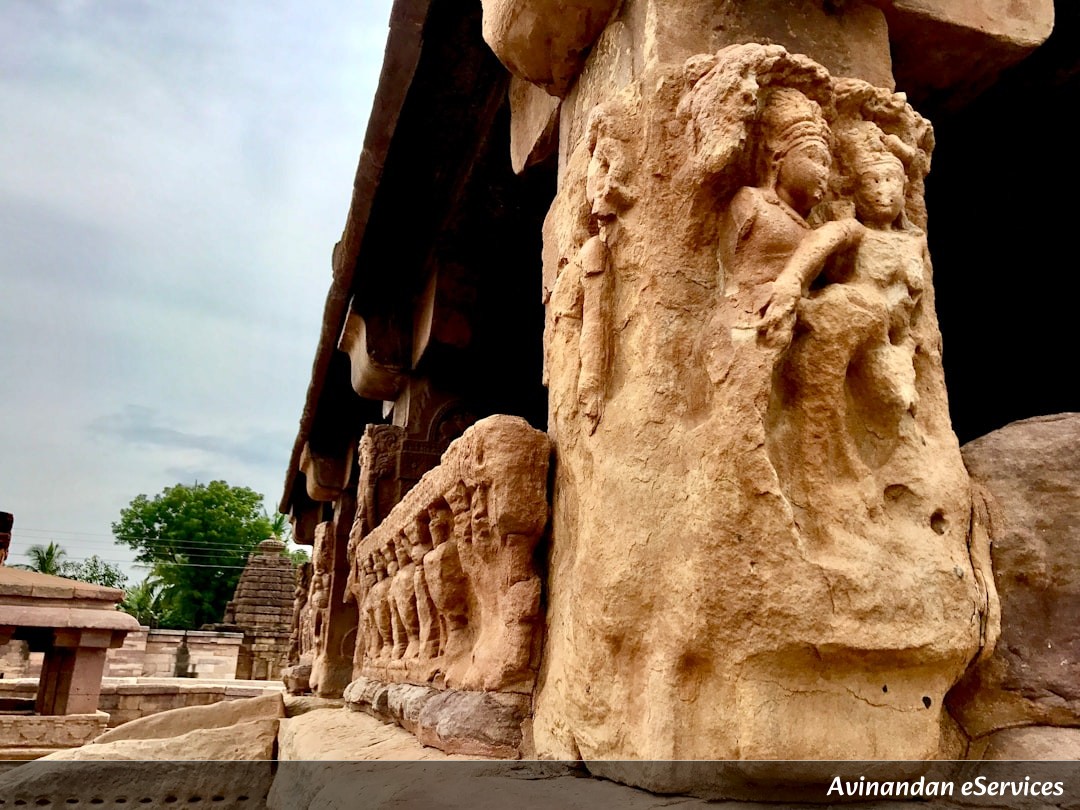
Magnificent Temples and Bronze Sculpture: Rajaraja and Rajendra I built monumental architecture, such as the temples of Thanjavur and Gangaikondacholapuram. These architectural and sculptural marvels are standing testaments to the skill of Chola artisans. Chola temples often became the hubs of economic, social, and cultural life. Around them grew the settlements of those who worked near the temple—priests, garland makers, cooks, sweepers, musicians, dancers, etc. In other words, temples were not only places of worship; they were the centre of economic, social, and cultural life.
Among the crafts associated with temples, the making of bronze image statues is most prominent. Chola bronze images are considered amongst the finest in the world. While most images were of deities, sometimes images were made of devotees as well.
Agriculture and Irrigation: Much of the achievements of the Cholas were made possible through new developments in agriculture. Notice that the river Kaveri branches off into the Bay of Bengal before emptying into it. These branches overflowed frequently, depositing fertile soil on their banks. Water from the channels provided the necessary moisture for agriculture, particularly the cultivation of rice. Although agriculture had developed earlier in other parts of Tamil Nadu, it was only from the fifth or sixth century that this area was opened up for large-scale cultivation. Forests had to be cleared in some regions, land had to be levelled in other areas. Embankments had to be built to prevent flooding and canals had to be constructed to carry water to the fields. In many areas two crops were grown in a year.
6. The Administration of the Chola Empire
How was the administration organized? Settlements of peasants, known as ur, became prosperous with the spread of irrigation agriculture. Groups of such villages formed larger units called nadu. The village council and the nadu performed several administrative functions including dispensing justice and collecting taxes.
Rich peasants of the Vellala caste exercised considerable control over the affairs of the nadu under the supervision of the central Chola government. The Chola kings gave some rich landowners titles like muvendavelan (a velan or peasant serving three kings), araiyar (chief), etc., as markers of respect, and entrusted them with important state offices at the centre.
We also have information from Uttaramerur in Chingleput district, Tamil Nadu, that gives details of how the sabha (an assembly of Brahman landowners) was organized. The sabha had separate committees to look after irrigation works, gardens, temples, etc. Names of eligible members of these committees were written on small slips of paper and kept in an earthenware pot; a young boy was asked to take out the slips, one by one, for each committee.
Key Terms to Remember
- Samanta: Subordinate warlords or chiefs who acknowledged a king as their overlord.
- Hiranya-garbha: A ritual performed by non-Kshatriya chiefs with the help of Brahmans to attain Kshatriya status symbolically.
- Prashasti: Sanskrit compositions written in praise of kings by learned Brahmanas.
- Nagara: An association of traders.
- Ur: Settlements of peasants that became prosperous with agricultural expansion.
- Nadu: Larger administrative units formed by grouping several 'ur' (villages together).
Summary & Key Takeaways
As we conclude this chapter on New Kings and Kingdoms, let us review the major learnings:
- Between the 7th and 12th centuries, new dynasties emerged across the Indian subcontinent as samantas (subordinate chiefs) gained power and declared independence.
- Kings legitimized their rule through grand rituals like hiranya-garbha, elaborate prashastis composed by Brahmans, and generous land grants recorded on copper plates.
- Political dominance often translated into bitter conflicts for resources, such as the famous Tripartite Struggle for control over Kanauj, and invasions targeting wealthy temples like Somnath by Mahmud of Ghazni.
- In the south, the Chola Empire built a centralized, highly organized administrative structure supported by advanced irrigation systems in the Kaveri delta.
- Chola kings like Rajaraja I and Rajendra I patronized magnificent temple architecture (such as the Thanjavur temple) and world-renowned bronze sculptures, making temples the hub of economic, religious, and social life.
- Local governance in Chola times included assemblies like the ur, nadu, and Brahman-run sabhas with fascinating democratic-style lot systems for committee selections.
Understanding these historical shifts helps us appreciate the foundations of regional cultures, administration, and art that continue to influence India today. Keep exploring, stay curious, and happy learning!