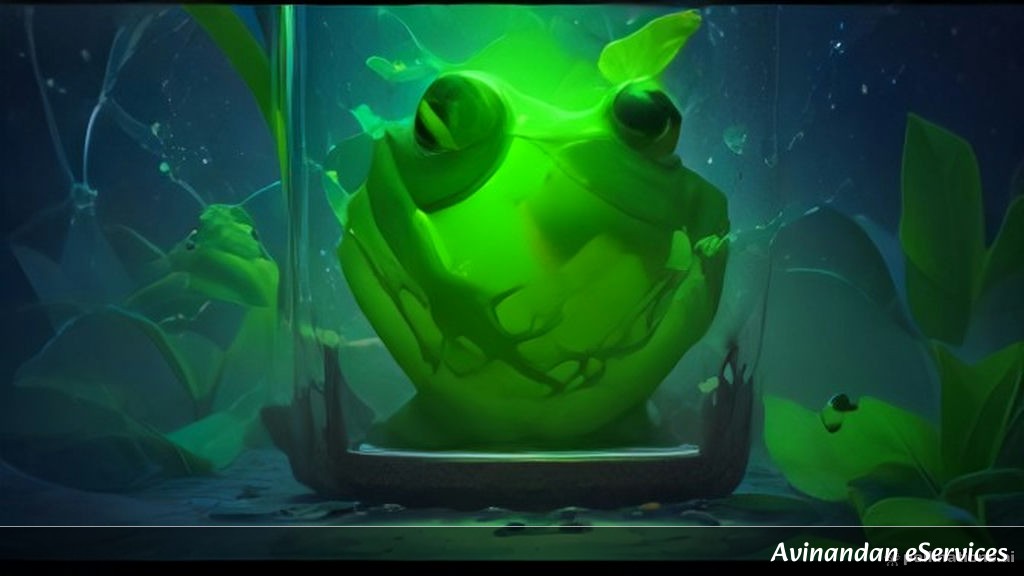
Kabir: Mira, look at this cool magazine photo! This little green frog looks like it is made of jelly. Can you actually see its beating heart right through its chest?
Mira: You are looking at a real glass frog, Kabir! They belong to the family Centrolenidae, and their belly skin is completely transparent, meaning you can see their internal organs, bones, and even blood vessels.
Kabir: Wow, how does that even work? Why would a frog want to be see-through instead of having regular skin like us?
Mira: It is all about clever camouflage, Kabir! When glass frogs sleep during the day, they sit on green leaves. Because their skin is see-through, they do not cast a dark shadow, and their edges blend softly into the leaf using a trick scientists call "edge diffusion."
Kabir: That sounds like wearing an invisibility cloak from a fantasy story! But wait, what happens to their bright red blood? Won't red blood cells give away their hiding spot?
Mira: That was a huge mystery for scientists until recently! Researchers used special imaging tools and found that when a glass frog goes to sleep, it packs nearly ninety percent of its red blood cells into its liver.
Kabir: Whoa! Can a liver hold all those blood cells without bursting? How do they survive without blood flowing everywhere?
Mira: Excellent question, Kabir! The liver acts like a safe storage box, wrapping the red cells tightly together. Because the red cells are tucked away, the rest of the frog's body becomes almost twice as transparent, making them nearly impossible for hungry birds or snakes to spot.
Kabir: And what happens when the sun goes down and the frog wakes up to hunt for tasty insects?
Mira: Once they wake up and start moving around, their heart pumps the stored red blood cells back out into their bloodstream to carry oxygen through their body. Their metabolic rate increases, and they turn slightly less see-through while active at night.
Kabir: That is incredible biology! It is like having a biological switch for invisibility. Do scientists study them to learn human medicine too?
Mira: They sure do, Kabir! Because glass frogs can pack so much blood into one organ without forming dangerous blood clots, researchers hope studying them might help us understand human heart and circulatory conditions better.
So, What Did We Learn Today?
- Glass frogs are amazing amphibians with transparent belly skin that lets you see their organs and beating hearts.
- They use transparency as camouflage by softening their body edges against leaves so predators cannot spot them.
- To achieve maximum invisibility during the day, they hide nearly ninety percent of their red blood cells inside their liver.
- At night, they release the blood back into their circulatory system to stay active and hunt for food.
Kabir: Nature never ceases to amaze me. Next time I play hide and seek, I am going to wish I had a glass frog liver to hide my red blood cells!