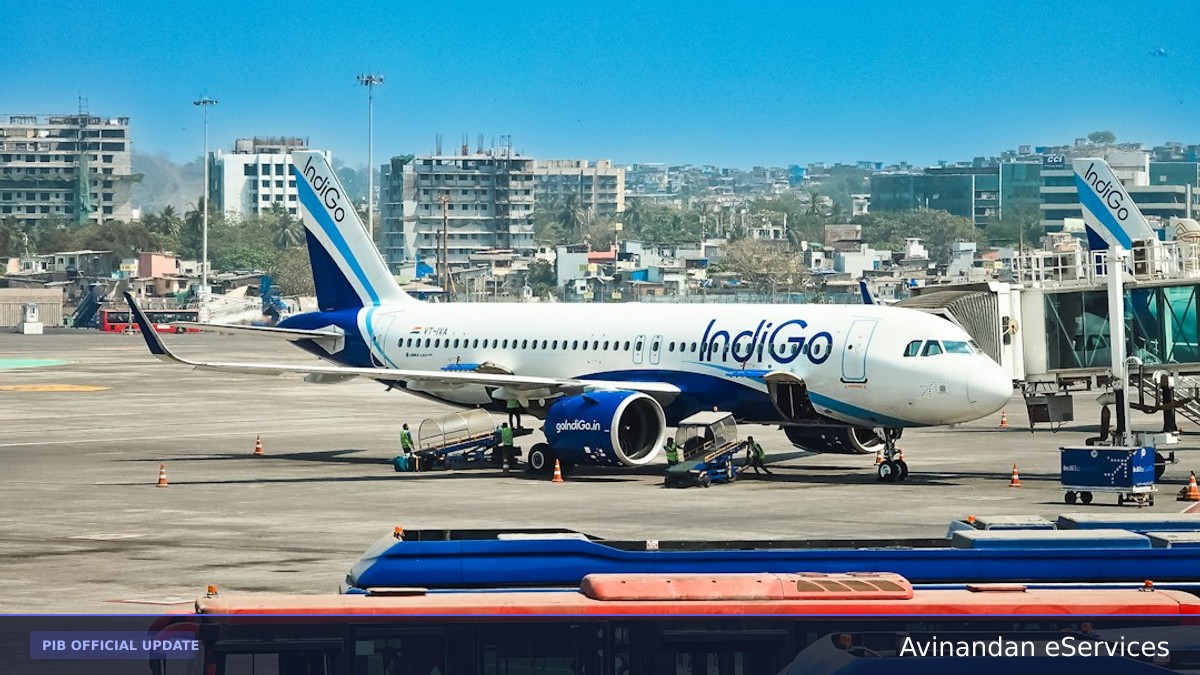
In a major push to democratize air travel and strengthen regional infrastructure across the country, the Ministry of Civil Aviation has officially launched the Challenge Mode Portal for Aerodrome Development alongside the signing of 21 crucial Memoranda of Understanding (MoUs) with various States and Union Territories. Held at The Ashok in New Delhi, the high-profile ceremony marked the rollout of the next ambitious phase of the flagship UDAN (Ude Desh ka Aam Nagrik) scheme, aiming to bridge geographical divides and foster inclusive economic growth through enhanced air connectivity.
The landmark event was spearheaded by the Union Minister of Civil Aviation, Shri Kinjarapu Ram Mohan Naidu, alongside Minister of State for Civil Aviation, Shri Murlidhar Mohol, Ministry Secretary Shri Samir Kumar Sinha, and Airports Authority of India (AAI) Chairman Shri Vipin Kumar. This collaborative framework between the Centre and the states establishes a solid foundation for accelerating regional aviation, ensuring that remote and underserved regions are seamlessly integrated into India's mainstream economic grid.
Key Highlights & Major Announcements
- Massive MoU Signings: 21 States and UTs signed formal MoUs with the Ministry of Civil Aviation and the Airports Authority of India (AAI) to develop regional aviation infrastructure.
- Challenge Mode Portal: Launched to enable State Governments and UT Administrations to proactively nominate airstrips and helipads for infrastructure development.
- Four Pillars of Modified UDAN: Passenger affordability, operational sustainability, transparent Challenge Mode framework, and the promotion of indigenous manufacturing for 'Made in India' civil aircraft.
- Decadal Targets: The modified scheme targets the operationalization of 120 new destinations and serving 4 crore additional passengers over the next decade.
- Impressive Growth Track Record: Since its inception, UDAN has operationalized 687 routes, 95 aerodromes, and flown 1.71 crore passengers across 3.66 lakh flights.
Contextual Analysis: The Evolution and Strategic Vision of UDAN
Since its launch in 2016, the UDAN scheme has fundamentally transformed the civil aviation landscape in India, shifting the paradigm from elitist air travel to mass regional accessibility. Remote hubs like Tezu in Arunachal Pradesh and Purnea in Bihar, which were previously isolated by hundreds of kilometers of arduous road journeys, have been successfully brought onto the national aviation map, triggering local economic booms, tourism growth, and employment opportunities.
Building upon the foundational roadmap laid out by Prime Minister Shri Narendra Modi during the Jodhpur inauguration on July 4, 2026, and the subsequent stakeholder workshops, the next phase of UDAN introduces structural reforms tailored for long-term sustainability. The newly introduced Challenge Mode is a game-changing decentralization initiative. Instead of top-down planning, state governments can now leverage the dedicated portal to identify, nominate, and prioritize local airstrips and helipads based on immediate regional demands and economic potential.
"With these MoUs, Team Bharat is joining hands to take India's regional aviation to greater heights. Under the leadership of Prime Minister Shri Narendra Modi, Viksit Rajya is the foundation of Viksit Bharat, with every State as an equal partner in this journey." — Shri Kinjarapu Ram Mohan Naidu, Minister of Civil Aviation
Furthermore, the simultaneous release of the Scheme Document for the next phase of UDAN Route Bidding opens up competitive, transparent avenues for commercial airlines. Carriers can now bid for identified routes with greater financial clarity, backed by government support mechanisms that guarantee viability and affordability.
Significance & National Impact
The economic ramifications of a robust regional aviation network \textend far beyond passenger convenience. According to Ministry statistics, employment within the Indian aviation sector has experienced exponential growth, climbing from roughly 3 million jobs in 2014 to nearly 7.7 million today, with projections indicating a massive leap to 25 million jobs by 2040.
By embedding indigenous manufacturing goals into the modified UDAN framework, the government is not only expanding operational networks but also laying the groundwork for a self-reliant domestic aerospace manufacturing ecosystem. As states become equal co-investors in 'Team Bharat', the synergy between local administrative priorities and central aviation policy ensures balanced, equitable regional development across all corners of the nation.
Frequently Asked Questions (FAQs)
What is the Challenge Mode for Aerodrome Development under UDAN?
The Challenge Mode is a transparent, portal-based framework that allows State Governments and UT Administrations to proactively nominate, identify, and prioritize local airstrips and helipads for development and upgradation based on regional connectivity needs.
How many MoUs were signed during the recent Ministry of Civil Aviation event?
A total of 21 Memoranda of Understanding (MoUs) were signed between the Ministry of Civil Aviation, participating States/UTs, and the Airports Authority of India (AAI).
What are the core pillars of the modified UDAN scheme?
The modified UDAN scheme rests on four pillars: passenger affordability, operational sustainability, a transparent Challenge Mode framework for infrastructure projects, and the promotion of indigenous manufacturing for civil aircraft.
What are the future targets set for the next phase of UDAN?
Over the next ten years, the modified scheme aims to connect 120 new destinations and cater to approximately 4 crore additional passengers.
Official Source & Verification
This article is grounded on the official press release issued by the Press Information Bureau (PIB), Government of India (Release ID: 2313612, Ministry of Civil Aviation). Access the official document: https://pib.gov.in/PressReleasePage.aspx?PRID=2313612&lang=1.