NRIDA Partners with IIM Kolkata for 4-Year Impact Study on PMGSY-IV and PM-JANMAN Rural Connectivity
In a significant move toward data-driven governance, the National Rural Infrastructure Development Agency (NRIDA), under the Ministry of Rural Development, has entered into a strategic Memorandum of Understanding (MoU) with the Indian Institute of Management (IIM) Kolkata. This partnership marks the commencement of a comprehensive four-year longitudinal impact assessment study focused on the transformative effects of rural road connectivity under the Pradhan Mantri Gram Sadak Yojana-IV (PMGSY-IV) and the Pradhan Mantri Janjati Adivasi Nyaya Maha Abhiyan (PM-JANMAN).
The agreement was formalized by Ms. Aditi Singh (IAS), Director General of NRIDA, and Prof. Alok Kumar Rai, Director of IIM Kolkata, in the presence of Shri Rohit Kansal, Secretary of Rural Development. This collaboration underscores the government's commitment to evidence-based policy formulation, ensuring that infrastructure investments translate into tangible socio-economic progress for the nation's most remote regions.
Key Highlights & Major Announcements
- Strategic Collaboration: A four-year longitudinal study between NRIDA and IIM Kolkata to evaluate rural infrastructure outcomes.
- Scope of Study: The assessment covers roads constructed under the ambitious PMGSY-IV and PM-JANMAN initiatives.
- Evidence-Based Governance: The study aims to provide robust data for future policy planning, outcome monitoring, and program review.
- Holistic Evaluation: The research will analyze socio-economic indicators, including livelihood diversification, healthcare access, and women's empowerment.
- Focus on Vulnerable Groups: Special emphasis is placed on assessing variations in impact across different regions and marginalized communities.
Contextual Analysis: PMGSY-IV and PM-JANMAN
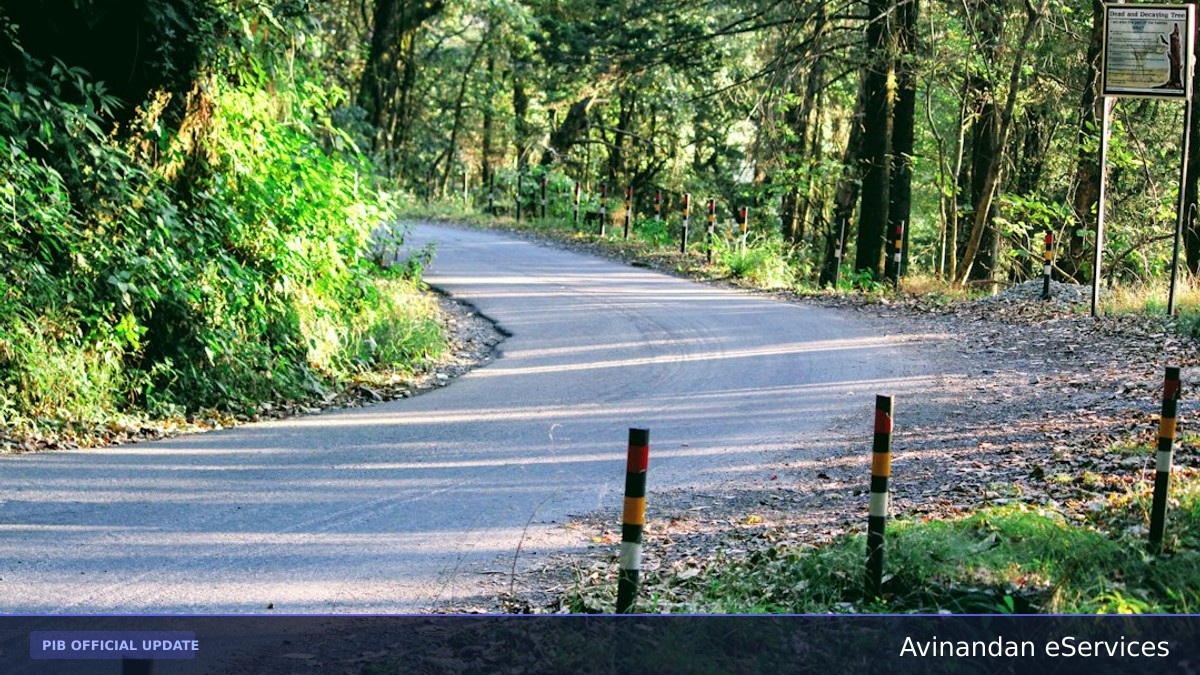
The Pradhan Mantri Gram Sadak Yojana (PMGSY) has long been the backbone of rural connectivity in India. With the introduction of PMGSY-IV, the government has shifted focus toward modernizing and expanding the rural road network to meet the demands of a growing economy. Simultaneously, PM-JANMAN represents a targeted effort to reach the Particularly Vulnerable Tribal Groups (PVTGs), ensuring that the benefits of development reach the last mile.
The four-year timeline of this study is critical. Unlike short-term surveys, a longitudinal study allows researchers to observe the 'ripple effect' of road connectivity. When a road is built, the immediate impact is improved mobility. However, the secondary impacts—such as the establishment of new markets, the shift from subsistence farming to commercial agriculture, and improved school attendance—take time to manifest. By tracking these changes over four years, IIM Kolkata will provide the Ministry of Rural Development with a granular understanding of how infrastructure acts as a catalyst for rural transformation.
"The collaboration between NRIDA, MoRD and IIM Kolkata will provide valuable inputs for programme review, outcome monitoring, evidence-based policy formulation and future planning in rural infrastructure development." – Official Statement from the Ministry of Rural Development.
Significance & National Impact
The impact of this study \textends far beyond simple road construction metrics. By analyzing travel time reduction and transportation costs, the study will provide a clear picture of how connectivity influences the rural economy. For instance, lower transportation costs directly increase the profit margins for small-scale farmers, while improved access to healthcare facilities can significantly reduce maternal and infant mortality rates in remote areas.
Furthermore, the study will examine the gendered impact of infrastructure. Improved roads often lead to better safety and mobility for women, enabling them to participate more actively in the workforce and access financial services. By identifying implementation gaps and emerging challenges, the findings will empower the government to refine its strategies, ensuring that future infrastructure projects are not only efficient but also inclusive and sustainable.
Frequently Asked Questions (FAQs)
What is the primary objective of the NRIDA and IIM Kolkata MoU?
The primary objective is to conduct a four-year longitudinal impact assessment study to evaluate the socio-economic and developmental outcomes of rural roads constructed under PMGSY-IV and PM-JANMAN.
Why is a longitudinal study necessary for rural infrastructure?
A longitudinal study allows for the observation of long-term changes in livelihoods, education, healthcare, and economic mobility, providing a more accurate picture of how infrastructure influences rural life over time compared to a one-time survey.
How will this study benefit the Ministry of Rural Development?
The study will provide evidence-based insights, identify implementation gaps, and offer data-driven recommendations that will assist the Ministry in future policy formulation, program review, and strategic planning for rural infrastructure.
Official Source & Verification
This article is grounded on the official press release issued by the Press Information Bureau (PIB), Government of India (Release ID: 2316732, Ministry of Rural Development). Access the official document: https://pib.gov.in/PressReleasePage.aspx?PRID=2316732&lang=1.